Get Full Government Meeting Transcripts, Videos, & Alerts Forever!
Get email alerts on the Water Leaks Repair topic
No spam. Unsubscribe anytime.
Fort Smith directors press staff for plan to speed up water-leak repairs; request proposals by April 1
Summary
The board discussed causes of repeated leaks, staffing, certification and equipment shortfalls in the Water Utilities Department. Staff was asked to return with a package of proposals and ordinances to accelerate repairs by April 1.
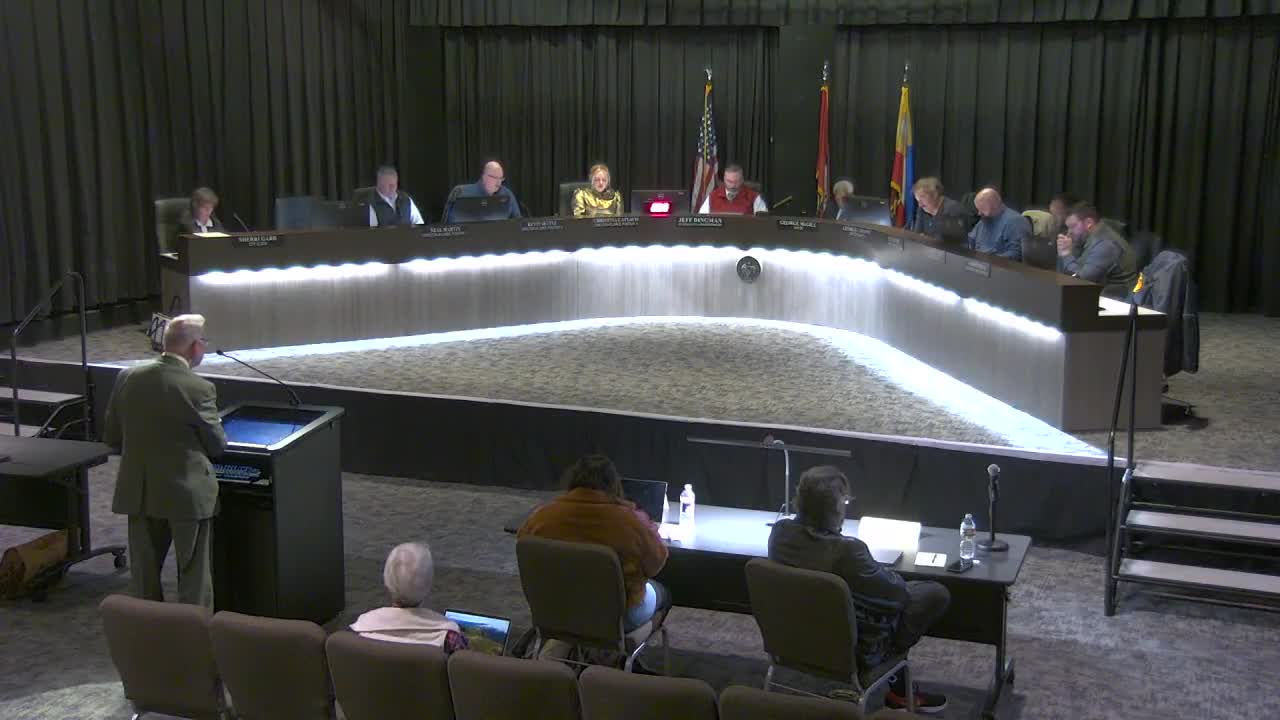
The Fort Smith City Board of Directors on Feb. 11 spent most of its study session on water-system leaks and directed staff to return with a package of proposals and ordinances to accelerate repairs by April 1.
Lance McEvoy, director of Water Utilities, told the board that galvanized mains and service lines account for a large share of repeat service-line failures and that replacing long runs of undersized, tuberculated pipe will require major projects. McEvoy said two ready-to-design-and-build projects to replace roughly 40% of the galvanized service lines would cost an estimated $15 million to $20 million.
"Galvanized pipe is about 25% of where we see our service line leaks," McEvoy said. He described mains taken from the ground this year and the problem of tuberculation and undersized lines reducing flow and pressure.
McEvoy and board members discussed three categories of obstacles to faster repairs: workforce certification, equipment availability, and funding/prioritization. On certification, McEvoy said Arkansas Department of Health rules require a licensed Grade 4 distribution operator or a licensed engineer to observe work on the distribution system; the state'offered training includes an 8-hour compliance course, 16 hours of math/related training, additional multi-day classes and a national test that the director said has a low pass rate.
Board members pressed whether plumbers could do some of the work if observed by a licensed operator. McEvoy said the ADH requirement is for a Grade 4 operator or an engineer to be on-site while the work is performed; that supervision requirement, he said, constrains the city's ability to use outside plumbers for unsupervised work.
Equipment was a second recurring theme. McEvoy said crews often idle waiting for backhoes, dump trucks and service trucks because much of the fleet has "aged out." He estimated that fully functional crews with reliable equipment would fix many more leaks; his supervisors estimated a properly staffed and equipped crew can complete roughly 15 to 20 repairs per week per crew.
On staffing, McEvoy said the department has relied on temporary hires to evaluate candidates and currently has numerous positions filled by temporary workers; several positions require additional certifications and CDLs. Directors and administration discussed recruiting, options for contracting targeted work to outside companies, and triaging leak priorities (for example, by public-safety impact or imminent roadway damage).
Board members also pushed for clearer customer-side policy and enforcement. Directors noted cases where renters or property owners have delayed repairs and asked staff to report on legal remedies and ordinance enforcement for owner-responsible leaks.
Aboard discussion culminated in a board member moving that administration present a package of proposals and ordinances to accelerate leak repairs by April 1; a second was recorded and the board set that as the deadline. The board asked staff to include options for equipment acquisition, workforce development/certification plans, contractor use, triage/prioritization criteria, and any needed budget or rate impacts.
The session also included several operational details McEvoy provided: the department has eight total utility crews (five regular leak-repair crews), one crew for new taps, one for hydrants/valves and one for water quality/transmission, and the department fielded roughly 1,615 leak repairs in 2024, the highest annual total on record. McEvoy said roughly 25% of repaired leaks require follow-up because they are on galvanized lines or tie into aging infrastructure.
Next steps: staff will return with a proposed ordinance/package of measures on or before April 1 for board consideration, including equipment and personnel cost estimates and a triage/prioritization plan for repairs.