Get Full Government Meeting Transcripts, Videos, & Alerts Forever!
Get email alerts on the Capital Improvement Program topic
No spam. Unsubscribe anytime.
Milpitas staff present $245 million five-year CIP; council warned of $579-million funding gap
Summary
City staff presented a proposed 2026'30 five-year Capital Improvement Program totaling about $245 million and recommended funding 37 projects in FY 2025-26; staff highlighted a multi-year funding shortfall and several large projects that will require grants or bonds.
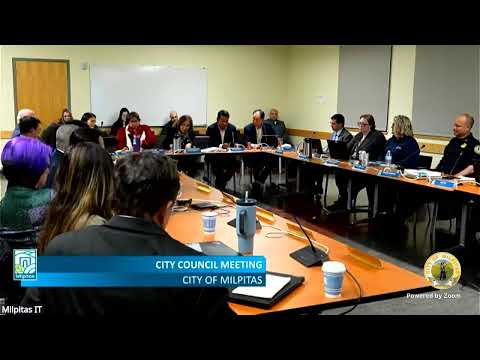
At a Feb. 11 study session, Milpitas public works and engineering staff presented the proposed five-year Capital Improvement Program (CIP) for 2026'30 and a recommended $38.7 million funding plan for fiscal year 2025-26.
Staff described the CIP as a five-year planning tool that lists projects for streets, parks, water, sewer and storm drain systems. Presenters said the draft CIP includes roughly 148 projects with a combined estimated cost of $245 million (staff later summarized the five-year plan as 149 projects totaling the same amount). Staff proposed funding 37 projects in the first year, with a first-year budget of approximately $38.7 million.
Public Works Director Christian Dorenzo and City Engineer Michael Severa highlighted major cost drivers and funding challenges. Staff identified an estimated funding gap across the five-year plan of roughly $57 million to $60 million, with a particular concentration in fiscal year 2027-28. Staff flagged several large projects that contribute to the gap:
- Replacement of an aging force main (Force Main A), built in 1974, estimated at about $20 million and planned for design and replacement in the 2026-27 period. - A pedestrian overcrossing project (Montague pedestrian overcrossing, adjacent to Penitencia Creek) estimated at about $21 million; design is complete but construction funding is lacking. Staff said the project was submitted for competitive federal grants (RAISE and related programs) but was not selected. - Cardozo Park softball-field improvements, estimated at roughly $7 million; staff has finished feasibility work and will present findings to council in spring, but construction funding remains unfunded. - Community Center roof replacements and Sandalwood Park renovations (estimated $4 million and $2.2 million, respectively) also contribute to the 2027-28 funding shortfall.
Staff described existing and new funding sources: federal and state grants (SS4A, CTC grants, OBAG/MTC, RAISE), gas-tax revenue and local measures (Measure F references in questions from council), parking-impact fees allocated to park improvements, sewer and water enterprise funds and possible bond financing. Staff said the city expects approximately $165 million in projected available funding over five years and anticipates receiving about $22.9 million in combined grant and bond revenue, leaving a large funding gap.
Other projects and program notes discussed at the meeting:
- Streets: staff presented a multi-year resurfacing plan and described a strategic pause on part of the Great Mall Parkway resurfacing to pursue a competitive state grant; staff said about $2 million in in-hand funds would be used this summer for a tape-and-slurry preventive maintenance project while pursuing grant funding for larger work. - Parks: ARPA-funded park improvements (about $4.4 million approved last year) and a $1.5 million bleacher replacement at the Sports Center were highlighted. Staff said the Metro/Tango Park planning and Scenic Park playground design are moving toward construction phases in 2026-27. - Safe Streets/SS4A grant: the city received $2.9 million in SS4A grant funds with a local match requirement of $725,000 for bike and pedestrian safety improvements; staff is finalizing the funding agreement to begin design in 2026. - Library: council previously approved renaming the library; staff recommended a $17,000 monument sign and two bronze plaques (alternative sign replacement options would cost much more), and staff said the monument sign option is within the city manager's authority to proceed. - Storm drain and street deformation: staff described a deformation on Technology Drive caused by soil instability and deteriorated storm drain/sewer pipes; staff recommended about $4.6 million for design and repair. - Public safety and fleet: the fire department requested an urban search-and-rescue replacement vehicle (staff proposed using equipment-replacement funds, estimated about $1.85 million). Fire staff said the current vehicle was purchased in 1999 and is functionally past life expectancy; the department said replacing and consolidating vehicles could produce long-term operational savings. - Wastewater facility contribution: the city will continue to budget its proportionate share of work at the San Jose wastewater facility; staff cautioned that the city's share reflects San Jose's multi-year CIP for the plant. - Technology: staff proposed an initial phase to replace 235 of about 750 city computers and to modernize audiovisual systems; staff noted a multi-year replacement cycle would be formalized. - Pickleball and parks feedback: staff confirmed Hall Park courts were resurfaced in November and said staff will return with a final recommendation in early spring; staff anticipates using $100,000 from the park fund toward the final recommendation pending council approval.
Staff presented a calendar: March outreach to Parks & Recreation and Planning commissions, and an April 15 public hearing and possible adoption of the five-year CIP. Council members asked staff to return with certain clarifications, including: a list of consultant contracts and expenditures for 2024, details on MyMilpitas service-request statistics, a briefing on grant opportunities and grant-writing resources, a report on a proposed solar street-light pilot (Hammond Way), and a cost-benefit analysis for some equipment-replacement items (for example, the urban search-and-rescue vehicle consolidation proposal).
No CIP adoption vote occurred on Feb. 11; the meeting functioned as a study session to gather council feedback and direct follow-up work.