Get Full Government Meeting Transcripts, Videos, & Alerts Forever!
Get email alerts on the Special Education topic
No spam. Unsubscribe anytime.
Interim assistant superintendent outlines rising special-education needs, recommends program and staffing adjustments
Summary
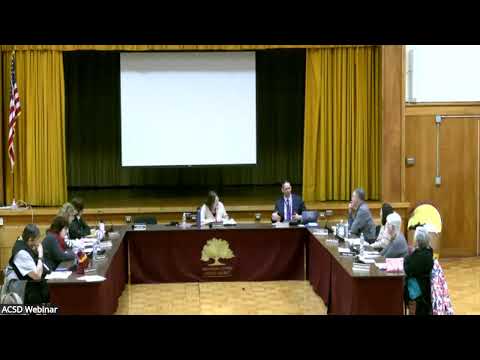
Lisa Castaldo, interim assistant superintendent for Pupil Personnel Services, told the board that the district is seeing rising numbers and deeper needs among students requiring special-education services and recommended adjustments to programs and clinical staffing to meet demand.
Lisa Castaldo, interim assistant superintendent for Pupil Personnel Services (PPS), told the board that the district is seeing rising numbers and deeper needs among students requiring special-education services and recommended adjustments to programs and clinical staffing to meet demand.
Castaldo described the PPS portfolio and emphasized the department’s role in foundational student supports, saying much of PPS’s work aligns with ensuring students have the safety and services they need before academic instruction can be effective. ‘‘A good way to think about what PPS does is… Maslow before Bloom,’’ she said.
Key numbers Castaldo gave the board: - Preschool special-education (CPSC) enrollments and referrals are rising; the district’s CPSC count was 292 with 28 pending referrals at the time of the report. She reported that approximately 40 preschool referrals could become classified and enter kindergarten with special-education needs. - K–12 classified students totaled about 1,513 and 1,337 were receiving in-district programming; the number of classified students has increased from prior years. - The district is seeing more students with deeper needs who require self-contained placements; some elementary cohorts have increased demand (for example, an unexpected kindergarten cohort at Overlook discussed earlier in the meeting). - Out-of-district placements have risen relative to BOCES placements because many BOCES programs are full; Castaldo and business staff described out-of-district placements as materially more expensive and in some cases requiring specialized transportation. She said some out-of-district placements can cost ‘‘as much as half a million dollars’’ depending on services and transportation.
Castaldo also gave operational and staffing context: counseling ratios vary widely across buildings (one example cited was roughly one counselor per 251 students in a specific building), CPS reports and self-harm risk assessments are nontrivial and likely to rise as the year progresses, and threat-assessment processes have been tightened; a forensic psychologist will assist staff to deepen the district’s threat-assessment work.
Her near-term program recommendations for next year included establishing a new primary K–2 self-contained class (12–1–1), creating a new secondary ‘‘Journeys’’ class (6–8, 12–1–3), and modifying the resource room/RSP program to ensure better fit with student needs. She also recommended reapportioning clinical staff to reduce disparities in counselor/psychologist/social-worker ratios across buildings.
Castaldo said PPS’s projected budget for the department is roughly $19 million for the current year and that she did not anticipate lower spending for 2025–26 given the projected increases in students needing services.
What happens next: Castaldo said administrators will continue reviewing referrals, work with principals on placement and staffing decisions, and provide more granular school-by-school data on clinical ratios and classified-student counts. Business staff indicated BOCES and district leaders are exploring hosting arrangements but cautioned about on-site support and staffing constraints.
Ending: The board heard a data-heavy PPS briefing; members asked clarifying questions about preschool classification pathways and out-of-district cost drivers and requested more school-level clinical-ratio detail at upcoming budget meetings.