Get Full Government Meeting Transcripts, Videos, & Alerts Forever!
Get email alerts on the Transportation Safety topic
No spam. Unsubscribe anytime.
Indianapolis Vision Zero task force lays out hiring, enforcement and public‑engagement steps toward eliminating traffic deaths by 2035
Summary
At its second meeting the Indianapolis Vision Zero Task Force heard updates from the police and consultants, was told the city has posted a Vision Zero administrator job, and reviewed outreach and data steps meant to inform a draft action plan timed to influence the 2026 budget.
At its second meeting, the Indianapolis Vision Zero Task Force received updates on enforcement staffing, consultant findings and a public‑engagement plan as it works toward an action plan to eliminate traffic deaths and serious injuries by 2035.
The task force — created after the City-County Council adopted a Vision Zero ordinance in 2024 — heard from Indianapolis Metropolitan Police Department Chief Chris Bailey that IMPD is reallocating resources for traffic enforcement and from consultant Burgess & Niple on existing city projects, data priorities and outreach plans. The Department of Public Works confirmed the Vision Zero administrator position is posted and under review.
The work matters because the task force and administration intend the action plan to guide capital and operating budget requests. Chair Barth and several councilors said the first draft is timed to feed the 2026 budget process so priorities in the plan can receive funding commitments.
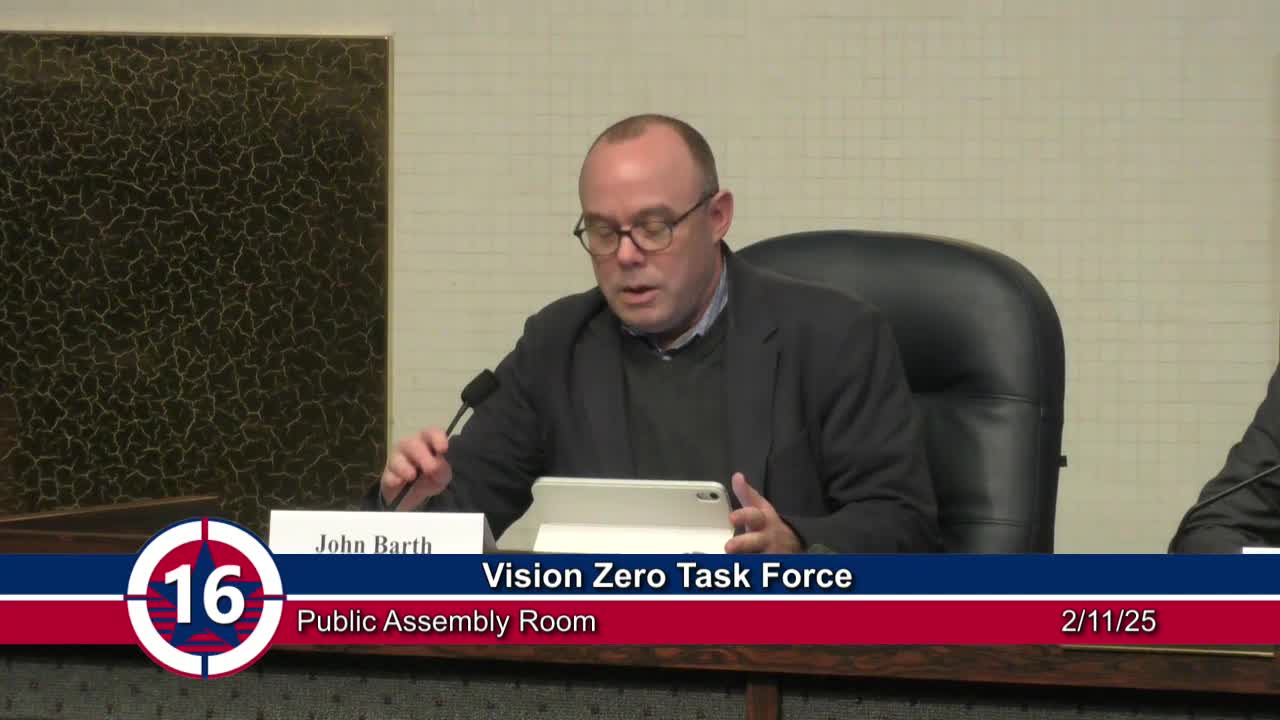
"Traffic fatalities are preventable through thoughtful planning, community engagement, and strategic action," Chair Barth said in opening remarks, framing the task force's long‑term goal and the need to coordinate city and council efforts.
IMPD updates and donations
Chris Bailey, chief of the Indianapolis Metropolitan Police Department, told the task force he asked IMPD staff to add eight officers to the traffic enforcement unit immediately and aims to add five more in 2025, bringing the unit to 27 officers to expand data‑driven enforcement in locations identified by crash data. Bailey also said the department received an approximately $20,000 donation from community members to outfit eight motorcycle units with moving radar and that the department is adding drug recognition experts and training to assist officers during traffic stops and crash investigations.
Vision Zero administrator and consultant work
Todd Wilson, director of Public Works, and DPW staff member Natalie VanDogen said the Vision Zero administrator position is posted on the Indianapolis‑Marion County government jobs site and will remain open through February; city staff are reviewing applicants. "We have gotten very, very many applicants," VanDogen said.
Consultant Burgess & Niple presented an inventory of existing city efforts relevant to Vision Zero and discussed next steps for an action plan. Maria Cantrell, an engineer with Burgess & Niple, highlighted ongoing processes the consultants recommend building on: the fatal crash review team (expanded in July to include incapacitating crashes), a complete‑streets project checklist that screens for speed‑management and proven countermeasures, and corridor projects that shorten pedestrian crossings and add separated bike facilities.
Cantrell showed completed or ongoing projects as examples: a Michigan Street project that added a separated bikeway and bus pullouts to shorten crossings; a Morris Street road diet with a separated shared‑use path; a roundabout and sidewalks at Post Road and Raymond Street funded with state Highway Safety Improvement Program money; and a College Avenue conversion from one‑way to two‑way traffic with a separated bicycle facility.
Data, equity and peer comparisons
Burgess & Niple said their work will include updating crash data, developing a high‑injury network of corridors with concentrated fatal and serious‑injury crashes, a systemic risk analysis to identify road types with high intrinsic risk, and an equity analysis to prioritize neighborhoods with higher vulnerability (for example, communities with higher rates of households without vehicles).
The consultants compared Indianapolis with peer cities and noted Indianapolis maintains a substantially larger lane‑mile network (the consultants cited roughly 8,400 lane miles for Indianapolis versus about 5,700 for the next city in their sample). They flagged scale and funding formulas as persistent constraints: speakers said Marion County contributes funds that also support other counties and that state route controls can limit changes the city can make on some corridors.
Public engagement and timeline
Health by Design will lead public engagement, which consultants and staff said will begin with an online survey and a “mark‑the‑map” tool that lets residents identify trouble spots, followed by spring in‑person popups at existing events (for example, First Fridays and libraries). Cantrell said the consultants plan to complete the data updates and produce a draft action plan in time for the July iteration so council and administration can use it when developing the 2026 budget.
Funding and implementation challenges
Councilors and staff repeatedly emphasized that Vision Zero will take years and must be tied to ongoing budget allocations rather than one‑off planning. Chair Barth urged advocates to track the action plan through the budget cycle so recommended projects receive funding. Several task force members and consultants identified resources, coordination across city departments and authority limits on state‑controlled streets as constraints.
What the task force directed or decided
No formal votes were recorded at this meeting. Staff posted the Vision Zero administrator position and are reviewing applicants; IMPD announced immediate staffing shifts in the traffic unit and equipment donations; consultants will update crash data, develop the high‑injury network and conduct outreach under the schedule described above.
Ending
Task force leaders said the group will continue meeting on the same early‑evening schedule to accommodate staff and nonprofit participants and emphasized the need to keep momentum by tying an actionable Vision Zero plan to the city's budget process.