Get Full Government Meeting Transcripts, Videos, & Alerts Forever!
Get email alerts on the Fall Prevention topic
No spam. Unsubscribe anytime.
Skagit County coalition launches renewed fall-prevention effort, seeks contractors for in-home fixes
Summary
A newly revived Falls Prevention Coalition described local impacts — about seven EMS fall calls per day for older adults — and plans including a home health equipment loan program, connections with service organizations and efforts to address in-home repair gaps.
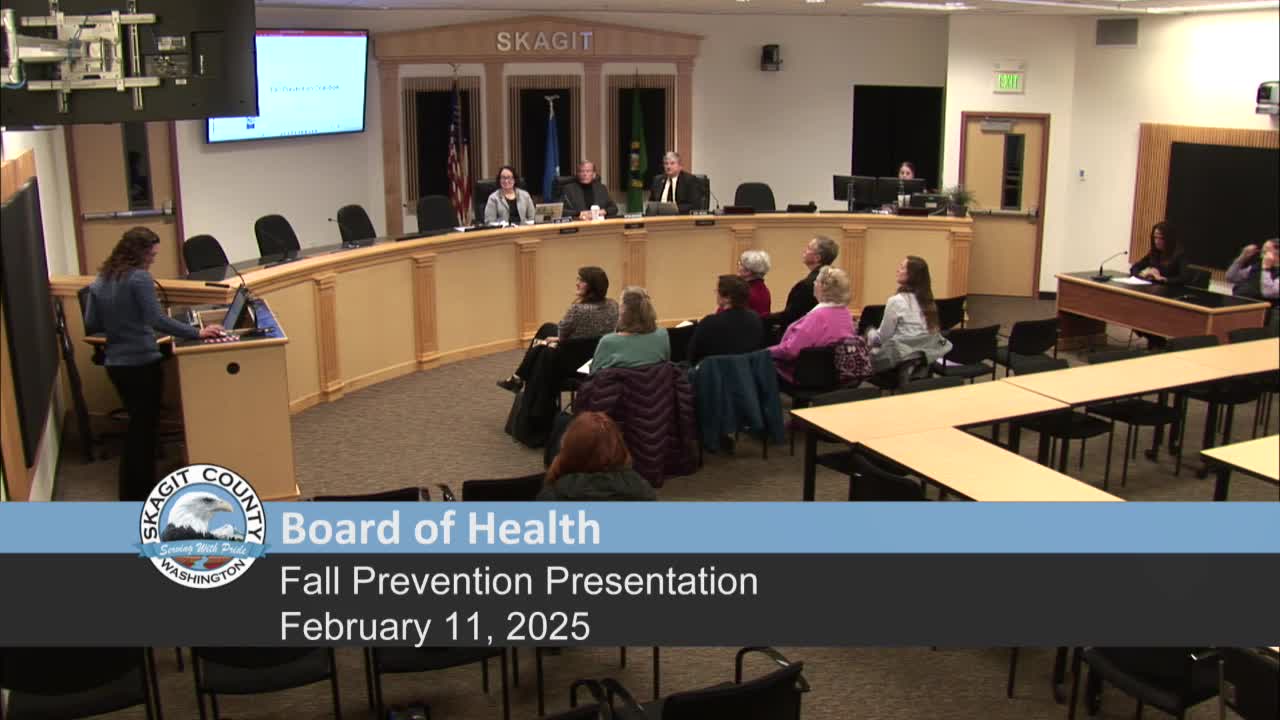
Lanny Miller, presenting to the Skagit County Board of Health on Feb. 11, outlined a renewed Falls Prevention Coalition that organizers launched last fall to reduce fall-related injuries among older adults.
Miller said falls are the leading cause of injury and injury death among adults 65 and older and described local impacts: EMS agencies reported roughly seven older-adult fall responses per day last year. He said many falls occur at home and that common contributing factors include undernutrition, uncoordinated medications, uncorrected vision or hearing loss, and home environmental hazards such as loose rugs, poor lighting and missing grab bars.
"We have an older county here," Miller said, noting that about a quarter of Skagit County residents are age 65 or older. "A lot of those falls are happening at home, so we may not reach those folks who are staying home to prevent risk."
Miller described coalition activities and partnerships: volunteers and retired clinicians, EMS partners, physical and occupational therapists, local Lions Clubs and Soroptimists, the YMCA, Skagit Habitat (which runs a Critical Home Repairs program for ramps and exterior work), and hospital partners. He said the coalition is exploring expansion of home health equipment loan programs that currently exist in Anacortes (run by Soroptimists) and hopes to partner with service organizations and local contractors to provide low-cost in-home repairs such as grab-bar installation.
Miller said the coalition had 15 partners and "we got up to 17 just today," and that the Washington State Department of Health is providing epidemiologist time to help analyze local fall patterns by geography and insurance status.
Board members and attendees praised the coalition and raised follow-up questions. One asked whether alcohol involvement was being tracked; Miller said some fire departments and EMS agencies are using detailed questionnaires and the coalition hopes to standardize those items countywide to assess contributing factors consistently. Another attendee asked about resources for individuals who want help installing grab bars; Miller said current EMS resource packets reach people after a fall and the coalition is working on proactive outreach via Meals on Wheels and other channels.
The presentation was informational; the Board did not take formal action but members expressed support for continuing the coalition's work.