Get Full Government Meeting Transcripts, Videos, & Alerts Forever!
Get email alerts on the Lemon Law Sb26 topic
No spam. Unsubscribe anytime.
Senate Judiciary committee approves SB 26 to add opt-in and notification rules to California lemon law
Summary
The Senate Committee on Judiciary voted 10-1 to pass SB 26, a cleanup bill tied to AB 1755 and the Song‑Beverly Consumer Warranty Act, adding a manufacturer opt-in process and a written-notice requirement for consumers who have filed lemon-law claims.
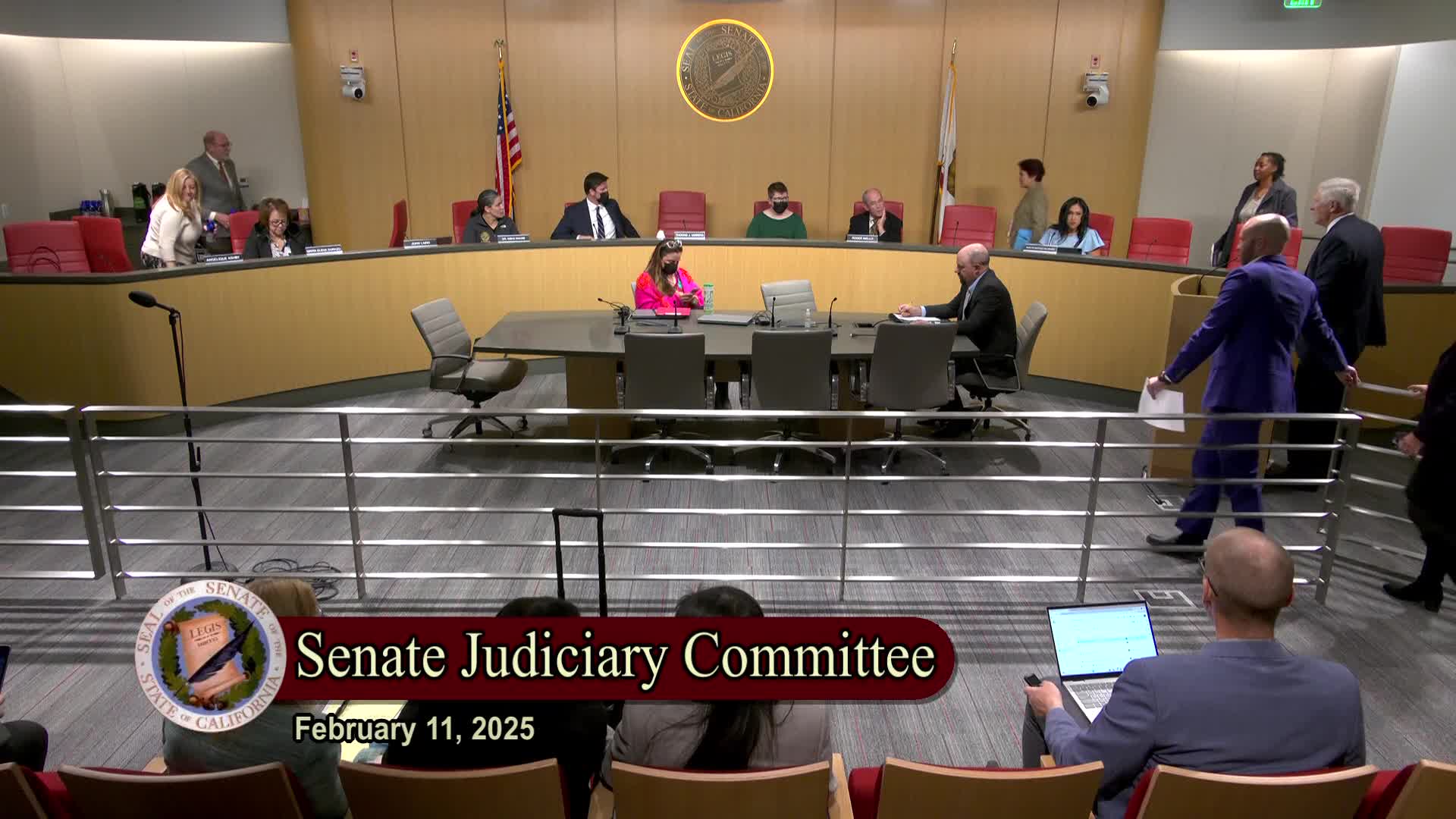
The Senate Committee on Judiciary voted 10-1 to pass SB 26 to the Senate Committee on Business, Professions and Economic Development after a hearing that featured testimony from consumer advocates, lemon-law attorneys and automaker representatives.
SB 26, presented in committee by Senator Redberg, is described in the hearing as a cleanup and compromise measure related to AB 1755 and the Song-Beverly Consumer Warranty Act (California’s “lemon law”). Senator Redberg said SB 26 “is a cleanup bill to the critical reforms that were contained in the Song Beverly Consumer Warranty Act” and that the bill implements an opt-in process tied to AB 1755 while including a written-notification requirement requested in the governor’s signing message.
The bill’s two principal substantive changes, as described in testimony, are (1) a process allowing manufacturers to affirmatively opt in to the procedural structure created by AB 1755 (often called the 1755 process) and thereby be bound by it for a multi-year period, and (2) a requirement that a consumer who has sought a buyback or who has a pending lemon-law complaint notify a subsequent private-party buyer that a claim is pending. Supporters said the opt-in option provides flexibility to manufacturers while preserving early-discovery procedures that reduce litigation cost; opponents said the notice requirement shifts burdens and liabilities onto consumers and dealers and could reduce manufacturers’ accountability.
Nancy Drabble, CEO of Consumer Attorneys of California, testified in support: “This bill is a follow-up to AB 17 55 of last year.” Automaker representatives including Matt Klopfenstein of Summit Advocacy and a coalition of manufacturers including Volkswagen, General Motors, Honda, BMW, Rivian, Tesla, Stellantis, Toyota, Lucid and Kia registered support and said SB 26 implements a negotiated compromise that they view as necessary to finalize changes before AB 1755’s effective date. Klopfenstein told the committee SB 26 "will require that automakers affirmatively opt in, and then it locks them into that for a period of 5 years to ensure that there is consistency.”
Opposition witnesses, including Roger Kironos of Knight Law Group and Armee Khodani of Prestige Legal Solutions, argued SB 26 raises significant consumer-protection concerns. Kironos said the notice provision (identified in testimony as section 871.24 subdivision I) "creates yet another obstacle and burden on consumers" because the written notice must be provided by the consumer and dealerships are not expressly required to pass that notice to the ultimate buyer. He said the bill currently contains multiple instances where the statute uses the word “new” rather than the defined term “new motor vehicle,” creating ambiguity that could exclude some warranty-covered used vehicles from protections.
Committee members pressed both sides on several points: whether the notice obligation should instead rest with manufacturers (and be sent via DMV notice or title branding), whether the opt-in option will create two different standards that confuse consumers, and whether SB 26 actually reduces litigation costs by preserving AB 1755’s early-discovery features. Senator Wahab and others said they prefer the manufacturer to provide notice or limit the consumer notice requirement to private-party transactions. Senator Weber Pearson asked whether changes had accounted for newer vehicle types such as electric vehicles; the author said those issues were not part of the negotiated text before the committee.
Senator Laird moved the bill on the floor of the committee; a second was not specified on the record. The roll call on the committee motion recorded the following votes: Yes — Senators Umberg, Nilo (reluctant aye), Allen, Caballero, Durazo, Laird, Stern, Valadares, Weber Pearson and Weiner; No — Senator Ashby. The clerk reported the tally as 10 to 1 and announced the bill passed to the Senate Committee on Business, Professions and Economic Development.
Committee members and witnesses asked for several technical cleanups if the measure advances, including replacing the isolated word “new” with the defined phrase “new motor vehicle” in specified subdivisions to maintain consistency with the Song‑Beverly Act and clarifying which parties bear notification duties. Multiple speakers urged further cleanup legislation or follow-up work to address remaining ambiguities.
SB 26 now proceeds to the Senate Committee on Business, Professions and Economic Development. The committee hearing record contains testimony from consumer advocates, lemon-law practitioners and company representatives on both the practical impact and the trade-offs of the opt-in and notice provisions.
Votes at a glance: SB 26 — motion to pass to Senate Business, Professions and Economic Development; outcome: passed, 10 yes, 1 no (Ashby).