Get Full Government Meeting Transcripts, Videos, & Alerts Forever!
Get email alerts on the Juvenile Rehabilitation Capacity topic
No spam. Unsubscribe anytime.
Bill would set safe operating capacity for juvenile institutions and allow limited transfers to DOC; witnesses urge safeguards
Summary
House Bill 1917 would require DCYF to define safe operational capacity for juvenile rehabilitation institutions and allow specified responses — including transfers to DOC in narrow situations — when those limits are exceeded.
House Bill 1917 would require the Department of Children, Youth, and Families (DCYF) to define a "safe operational capacity" for juvenile rehabilitation institutions and take specified actions if populations exceed thresholds of that capacity. The bill also revises transfer and placement rules for people sentenced in adult court for crimes committed as juveniles.
Staff explained that the state operates two juvenile rehabilitation institutions: Green Hill School (Chehalis) serving males 17–25, and Echo Glen (Snoqualmie) serving females and younger males. Under the bill, DCYF must set rules defining the maximum number of people who can safely be housed and must plan when population reaches 90% of that limit. If a facility exceeds 105% of safe operational capacity, the department could transfer certain individuals to DOC, prioritizing the oldest people with the longest terms. The bill also authorizes transfers after a review‑board hearing when continued placement presents a "significant safety risk" or when an individual requests a voluntary transfer. The provisions apply to people whose offense occurred before age 18.
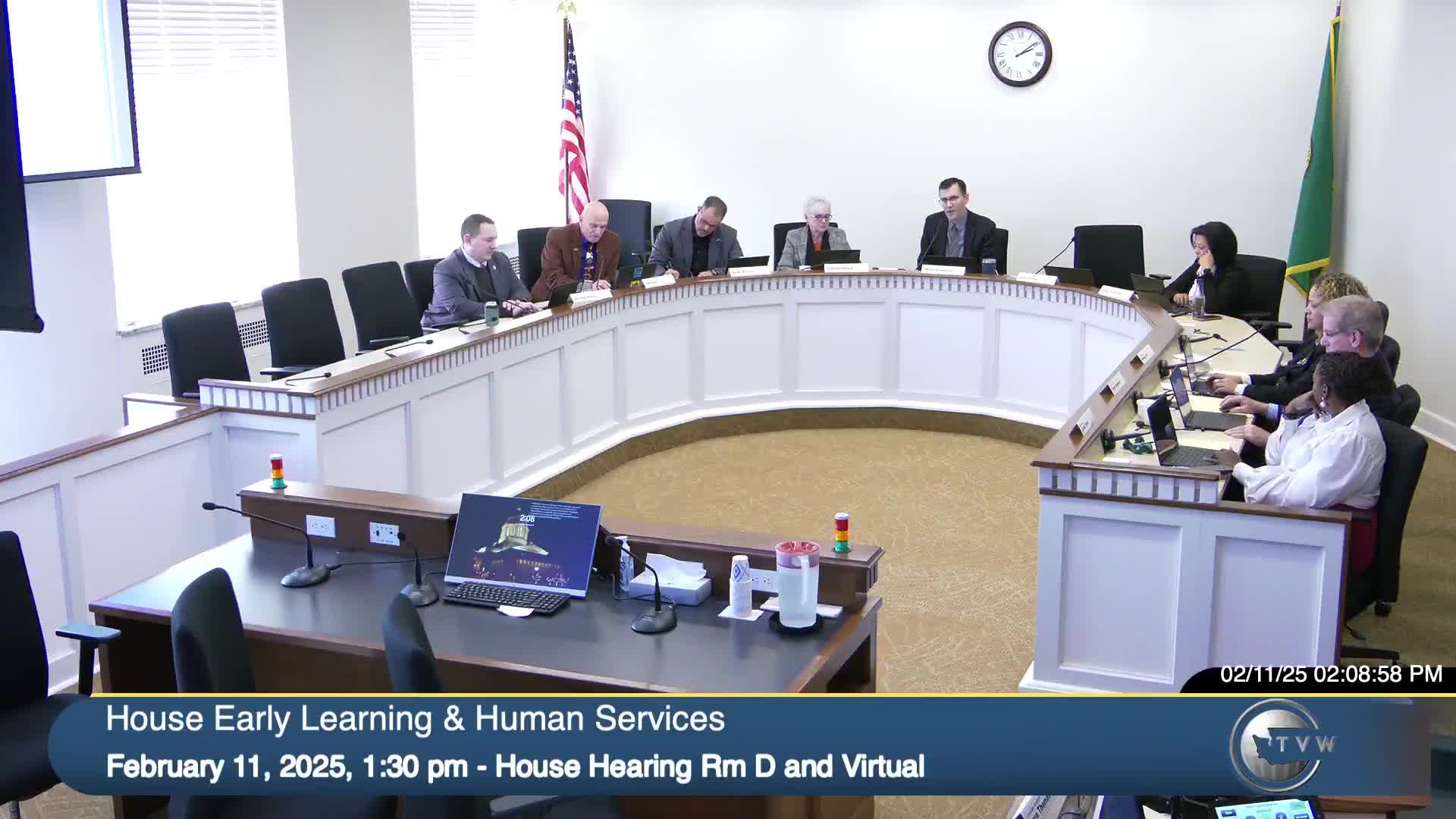
The hearing drew extensive testimony on the causes of overcrowding and the consequences of potential transfers. DCYF officials described emergency steps taken last summer — freezing intakes and temporarily transferring some residents to DOC — and said the bill offers a framework to plan and respond to overcrowding while urging continued attention to long‑term capacity solutions. "We need to be able to operate safe environments," Allison Kreutzinger of DCYF said.
Unions and staff who work in juvenile rehabilitation described dangerous conditions when facilities are over capacity and called for permanent investment in smaller, well‑staffed community placements. The Washington Federation of State Employees and DCYF staff opposed unilateral outsourcing or transfers as written and urged safeguards to protect due process and rehabilitation goals. Legal advocates and child welfare groups expressed strong concern that broad transfer authority could undercut the state's policy of keeping juvenile rehabilitation up to age 25 ("JR to 25") and the science‑based rationale for developmentally appropriate treatment. "This effectively ends JR to 25," testified a CCYJ representative.
Youth who have lived at Green Hill gave emotional testimony opposing transfers and describing education, college and mentoring opportunities under JR‑to‑25 that they said would be cut if the policy were undone. Their accounts underscored the bill's human stakes and were echoed by TeamChild and Columbia Legal Services, which urged the legislature to pursue alternatives such as stronger use of community facilities, planned exits and voluntary transfers.
Committee members and witnesses discussed other interim actions: opening additional capacity at Stafford Creek, reviewing closed facilities for re‑use and strengthening pre‑planning to avoid emergency transfers. The hearing closed with no formal committee vote; sponsors and stakeholders said they would continue negotiations on guardrails, notification requirements to local law enforcement and alternatives to DOC transfers.