Get Full Government Meeting Transcripts, Videos, & Alerts Forever!
Get email alerts on the Family Reconciliation Services Frs topic
No spam. Unsubscribe anytime.
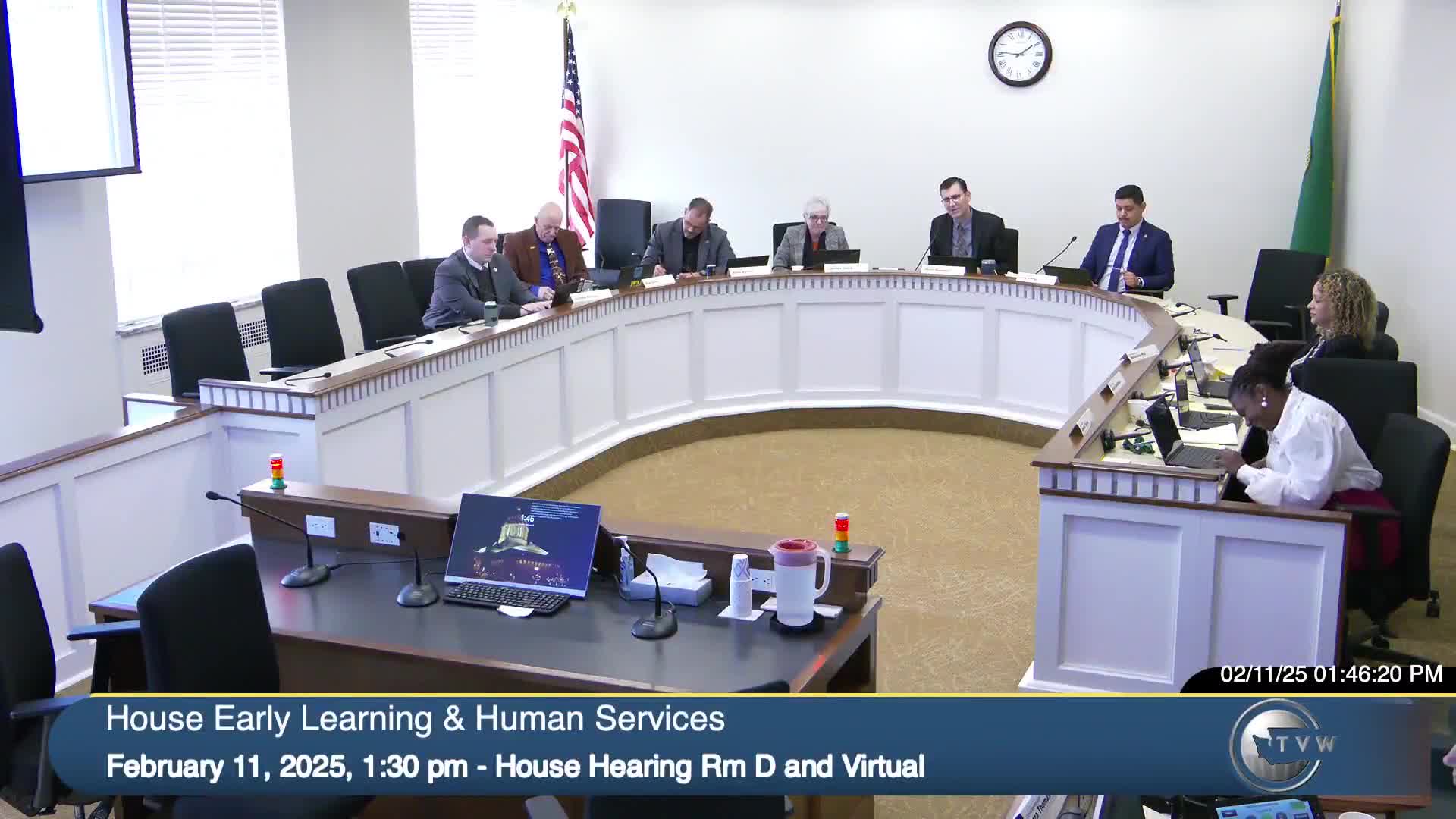
Debate in committee over shifting family reconciliation services to community providers
Summary
House Bill 1509 would require DCYF to contract with community‑based providers to deliver family reconciliation services in multiple regions by 2026 and statewide by 2030.
House Bill 1509 would require DCYF, subject to funding, to contract with community‑based providers to offer family reconciliation services (FRS) in at least three regions by Jan. 1, 2026, and statewide by Jan. 1, 2030. The bill expands the circumstances in which FRS may be provided and would add reporting requirements about requests and referrals to community providers.
Proponents, including Representative Taylor (prime sponsor), providers and advocacy groups, said community‑based, culturally relevant, trauma‑informed services better reach families who avoid or mistrust state systems. "Family reconciliation services are not reaching families who need help, especially families of color," Kim Justice of Partners for Our Children said, noting data show higher request rates for Black, American Indian and Alaska Native families. Jim Theophilus of NorthStar Advocates and lived‑experience participants described the model as an upstream prevention approach that can keep young people out of juvenile and child welfare systems.
Several witnesses associated with DCYF or the state workforce voiced concerns about moving work out of the agency. Katie Durkin of the Washington Federation of State Employees said union members oppose outsourcing parts of FRS without assurances that state employees' jobs and bargaining rights will be protected; she said the agency has previously proposed state cuts and that staff worry about lost FTEs. A DCYF staff member who testified remotely said agency workers "love the work" and that private providers may decline cases or close them when youth refuse services, potentially reducing access for some families.
Supporters described a co‑design process and pilot sites—including an Everett pilot referenced by the Raikes Foundation—that informed the community model. The Raikes Foundation said it will fund an evaluation of the community FRS pilot. Testimony from TeamChild and Columbia Legal Services urged stronger safeguards and due process to avoid unintended transfers of responsibility and to preserve families' access to services without increasing system involvement.
Committee members asked DCYF staff and witnesses about implementation details, the fiscal note and workforce impacts. No formal committee vote was recorded at the hearing; sponsors and stakeholders indicated further negotiations and technical fixes would follow.