Get Full Government Meeting Transcripts, Videos, & Alerts Forever!
Get email alerts on the Workforce Health topic
No spam. Unsubscribe anytime.
House committee tables proposal to create state certification for community health workers
Summary
Representative Taylor introduced House Bill 291 (LC 520,735), which would establish a state certification and a certification committee for community health workers under the Department of Public Health.
Representative Taylor introduced House Bill 291 (LC 520,735), saying the proposal would create a state-recognized certification program for community health workers and establish a certification committee within the Department of Public Health. Taylor described community health workers as a workforce that “play a pivotal role” in connecting patients to care and supporting outreach, particularly in diverse and rural communities.
Kim Jones, executive director of NAMI Georgia, testified in support and said people with mental health conditions have difficulty navigating care and would benefit from certified community health workers. Natasha Taylor, deputy director of Georgia Watch and co-lead of the Georgia Community Health Worker Advocacy Coalition, told the committee “the certification initiative will be housed under Department of Public Health.” She and other witnesses described existing training programs at Emory, Morehouse School of Medicine and the Department of Public Health and said certification would create a uniform credential across those programs.
Sponsors and witnesses emphasized the bill would create certification only, not licensure. Roxy Boliver noted, “This is not a licensure bill.” Natasha Taylor and other proponents said certification would standardize core competencies — described as an eight-part core competency framework based on national guidance — and that the measure would not itself create a funding mechanism to pay community health workers.
Committee members repeatedly asked who would pay community health workers once they are certified. Witnesses and the sponsor said most current community health workers are grant-funded by universities, hospitals and foundations. Several members noted that Medicaid reimbursement would require a separate state plan amendment; supporters said some other states have secured Medicaid payment for community health worker services but that would be a separate policy and fiscal process.
Members also asked about committee composition, removal standards, background checks and grandfathering for experienced community health workers. Supporters said the certification committee would set rules including a potential grandfathering process and that employers (hospitals, clinics, FQHCs) would continue to hire and supervise workers; certification would document minimum competencies.
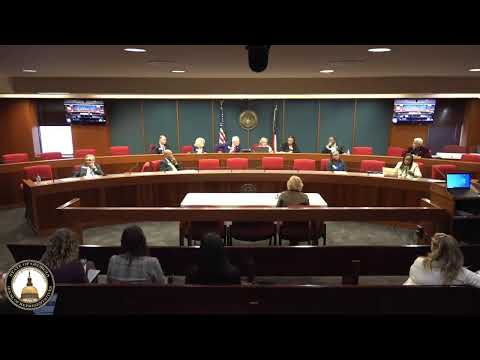
After extended questioning on scope, funding, oversight and the bill’s interaction with existing programs, a member moved to table the bill so sponsors could provide additional materials (core competencies, implementation details, fiscal implications). The committee voted by voice to table House Bill 291. The transcript records committee discussion and the tabling motion but no roll-call vote.
Key points left unresolved at the hearing included a fiscal estimate for any Medicaid cost if the state later sought reimbursement, the specific fee for certification (witnesses referenced a potential fee in the low tens of dollars), and whether background checks and supervision standards would be mandated in statute or left to employers and the certification committee.
The bill was tabled pending further information and refinement.