Get Full Government Meeting Transcripts, Videos, & Alerts Forever!
Get email alerts on the Legislation topic
No spam. Unsubscribe anytime.
Board reviews bills on apprenticeship, burial timelines and cemetery rules; self‑sufficiency hearing shows 1.4–1.5 years in reserve
Summary
Board staff reviewed three introduced bills affecting apprenticeship, burial timelines and cemetery trust rules, and reported the board’s reserve is about 1.4–1.5 years following a self‑sufficiency hearing.
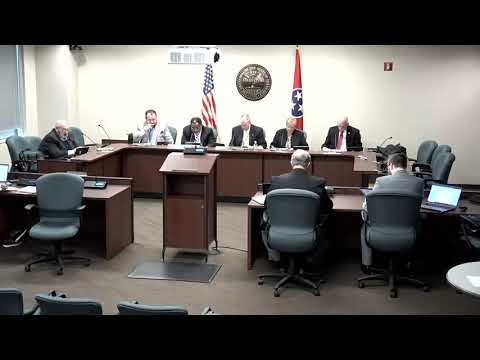
Board staff delivered a legislative update and a summary of a January self‑sufficiency hearing at the Tennessee Board of Funeral Directors and Embalmers' February meeting.
The executive director and department staff reviewed three introduced bills under consideration by the General Assembly: House Bill 0860 / Senate Bill 1149, which would allow applicants with an associate degree in funeral service education to substitute one year of apprenticeship for the current two‑year apprenticeship requirement for funeral directors; House Bill 1286 / Senate Bill 1145, which would require that a body placed into custody for burial by a person or government agency be buried within 48 hours after the agency or person waives an autopsy or embalming; and House Bill 0713 / Senate Bill 0715, which would alter cemetery trust calculations and clarify memorial care fee limits.
Why it matters: the apprenticeship bill aims to accelerate entry of qualified funeral directors into the workforce; the 48‑hour burial bill would impose a specific timetable in cases where custody is assumed and the agency waives autopsy or embalming; the cemetery bill would change trust‑fund accounting and memorial care fee rules.
Self‑sufficiency hearing and board reserves
Assistant Commissioner Reed Witcher and executive director reported on a January joint operations self‑sufficiency hearing held pursuant to Tenn. Code Ann. 4‑29‑121. The board’s reserve was presented as roughly 1.4 to 1.5 years of operating expenses. The department’s guidance to boards is: if reserves fall below one year, consider raising fees; if reserves exceed 2.5 years, consider decreasing fees. Given the board’s reserve level, staff recommended no fee increase or decrease at this time and to monitor finances.
Meeting discussion and administrative items
Board members asked about the origins and practical implications of the apprenticeship bill and raised concerns about the 48‑hour requirement and whether refrigeration or scheduling of cremations would affect compliance. Staff noted the bills were in early stages and could be amended. The executive director also reported two establishment closures and provided a count of open complaints (69 total: 34 against licensees and 35 against establishments).
Ending note: staff said bills can change through the legislative process and the board typically does not take positions unless members opt to communicate personally to their legislators. The board asked staff to confirm scheduling details for a March special hearing and to continue monitoring the legislative progress of the listed bills.