Get Full Government Meeting Transcripts, Videos, & Alerts Forever!
Get email alerts on the Transportation Finance topic
No spam. Unsubscribe anytime.
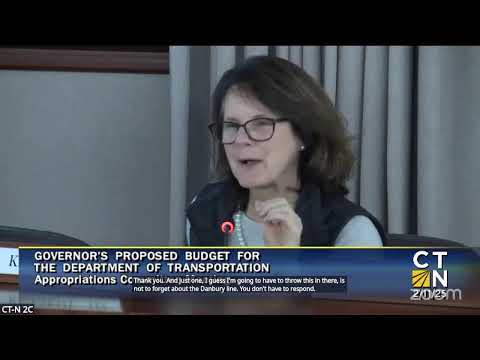
Appropriations committee hears DOT plan on fares, Town Aid Road and special-transportation fund pressures
Summary
Department of Transportation officials told lawmakers the governor's budget includes proposals to continue rail and bus service and to consider a modest fare increase; DOT discussed moving Town Aid Road funding back to bonding and warned the special transportation fund may show a deficiency in the next biennium.
Transportation leaders told the Appropriations Committee the governor's budget seeks to balance service needs with rising costs across transit, paratransit and municipal road assistance.
On bus fares, DOT staff said a proposed 25-cent fare increase is an option to avoid cutting service as labor and materials costs rise. The department described work on a statewide fare study and a pilot tap-and-pay system that could standardize fares and transfers across transit districts. "If it's a trade off between cutting service or increasing it by 25¢, I would on the side of increasing it 25¢," the secretary said; DOT staff noted seniors receive half-price fares.
The department told the committee an increase of about $10 per semester in the U-Pass program is proposed in the second year of the biennium; U-Pass arrangements remain subject to individual MOUs with institutions of higher education and coverage can vary by campus.
ADA paratransit funding was presented as increasing from about $40,000,000 to $50,000,000 to reflect new fixed-route service areas and higher operating costs. DOT cited the federal requirement that paratransit be provided where fixed routes are added.
On Town Aid Road (TAR), DOT said it recommended moving some allocations back to bond authorization because municipalities primarily use the funds for capital pavement, drainage and related infrastructure. Several legislators cautioned that small towns use TAR for near-term operational needs and that capital-bonding treatment can complicate small-town budgeting. "A road in Sprague costs the same as a road in Norwich to rebuild... it would take me 10 years of Town Aid Road before I could ever do that," one legislator said.
DOT also included a reduction option proposing elimination of a direct subsidy to the port authority, arguing some port revenues come from leases that could offset state support; the department offered to work with fiscal offices to provide revenue detail.
Why it matters: transit fare policy, paratransit obligations and how Town Aid Road is funded carry direct effects on municipal budgets, transit users, students and people with disabilities. DOT officials warned the Special Transportation Fund could face a deficiency in the next biennium and said long-term funding reforms deserve discussion.
The agency said it will start statutory processes needed for fare changes, hold public hearings and provide requested data on TAR utilizations and transit bargaining status.