Get Full Government Meeting Transcripts, Videos, & Alerts Forever!
Get email alerts on the Municipal Finance topic
No spam. Unsubscribe anytime.
Spartanburg posts clean audit for fiscal 2024; general fund cushion grows
Summary
Spartanburg City officials heard that the city—s 2024 Annual Comprehensive Financial Report (ACFR) received an unmodified (clean) audit opinion and that the general fund—s unassigned balance rose to about $9.7 million.
Spartanburg City officials heard that the city—s 2024 Annual Comprehensive Financial Report (ACFR) received an unmodified (clean) audit opinion and that the general fund—s unassigned balance rose to about $9.7 million.
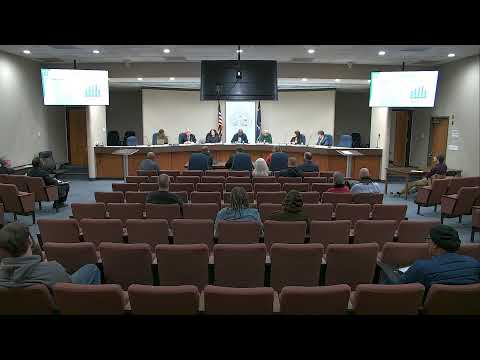
The finding was delivered during the council—s discussion of item 6, the 2024 annual comprehensive financial report. Auditor presentations and staff responses focused on fund-balance trends, revenue growth driven by property reassessments and transfers into the general fund, and accounting complexities arising from multiple large capital projects.
Why it matters: A clean audit affirms the city—s financial statements are materially accurate, and the larger unassigned fund balance gives the city discretionary capacity to fund capital projects without borrowing. Council members asked for clearer schedules on when long-term tax-abatement projects will begin to contribute full assessed value to the tax rolls.
David Phillip, CPA, financial director, summarized the audit approach and results, saying the auditors view financial statements through a materiality lens and aim to ensure "everything is materially correct, not perfect." He told council members the report shows the unassigned portion of the general fund grew to about $9.7 million (roughly 19% of 2024 general fund expenditures), up from about $8.5 million the prior year. "You have an unmodified, that's a weird term, but that's a clean opinion," Phillip said.
Auditors and staff described the revenue and transfer activity that supported the increase. The city recognized roughly $11% growth in property tax revenues tied to reassessments, and total revenues rose by about $4.4 million. Transfers into the general fund included roughly $8.5 million of American Rescue Plan Act (ARPA) monies that were used to reimburse lost revenue and then transferred to capital projects, about $3.5 million from the hospitality tax fund and approximately $1.4 million from other enterprise and governmental funds. On the transfers out side, council had previously planned approximately $6.8 million to move to the capital projects fund and transferred about $1.9 million to an equipment replacement reserve.
Councilors and staff noted the year was unusually busy on capital work. City officials said capital asset additions totaled about $76 million, with roughly $68 million net increase, and that major projects included the new baseball stadium, an ongoing fire station project and airport work. The auditors said the heavy project activity made the audit more complex, requiring additional accruals and close coordination with contractors to ensure costs were recorded in the proper fiscal period.
Auditors reported participation in multiple federal single-audit programs because the city spent more than the federal single-audit threshold, identifying work on four federal grant programs: the Public Safety Partnership and Community Policing grants, the Airport Improvement Program, Highway Planning and Construction, and the ARPA grant. They disclosed a single, small finding: the city's annual report for the Airport Improvement Program had been prepared but not submitted; staff said they were already working to correct that.
The presentation also highlighted accounting and disclosure topics to watch. Auditors pointed to new Governmental Accounting Standards Board (GASB) guidance that will change how compensated absences (vacation, sick leave, PTO) are reported and called attention to guidance on tax abatements that requires disclosure of amounts not recognized as revenue because of fee-in-lieu arrangements. Auditors told council that the ACFR's notes and supplemental schedules already list tax-abatement amounts but do not currently show expiration schedules; council members asked staff to add clearer schedules showing when abated projects will roll onto the tax rolls. Staff agreed to work on a clearer schedule for future reports.
The presenters also discussed pension plan contributions. Auditors noted state pension plans have reached scheduled high contribution rates and that employee contributions on those state plans are significant; the presentation referenced the state's public-employee benefit plan funding status and the effect on employer/employee rates.
Council members thanked the finance team and auditors for the work; no formal council action on the ACFR was recorded in the transcript beyond questions and discussion.
The city manager and finance staff indicated they will continue to refine disclosures in future ACFRs and to coordinate with the county auditor on tax-abatement schedules and implementation questions.