Get Full Government Meeting Transcripts, Videos, & Alerts Forever!
Get email alerts on the Global Development Finance topic
No spam. Unsubscribe anytime.
International commission calls for permanent debt‑restructuring mechanism and higher aid in new financing report
Summary
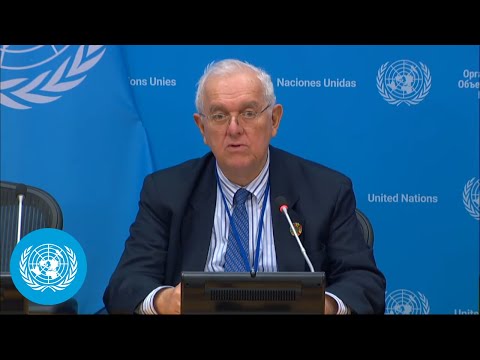
Jose Antonio Ocampo, chair of the International Commission of Experts on Financing for Development and professor at Columbia University, briefed the UN Correspondents Association on a report recommending a permanent sovereign debt‑restructuring mechanism and higher official development assistance.
Jose Antonio Ocampo, chair of the International Commission of Experts on Financing for Development and professor of professional practice in international and public affairs at Columbia University, told the UN Correspondents Association that the commission’s report, Financing a Sustainable Future: Proposals for a Renewed Global Development Finance Agenda, recommends a permanent mechanism to negotiate sovereign debt and a short‑term improvement to existing restructuring processes.
“...we must have a much better mechanism for the renegotiations, in the short term,” Ocampo said, adding that such a permanent mechanism could be set up as either a United Nations institution or “in the IMF” provided its decisions would be independent of the IMF board.
The report, prepared by 14 experts convened at Spain’s initiative and scheduled for public release tomorrow, addresses nine broad topics: tax cooperation, development cooperation, the role of multilateral and national development banks and domestic bond markets, official development assistance (ODA) and concessional finance, environmentally sustainable finance, trade and investment, debt restructuring, strengthening the global safety net (international monetary system), and financial regulation.
On debt restructuring, Ocampo told reporters that the G20 common framework has been difficult to use and has been applied to just four African countries after lengthy negotiations. The commission recommends both a better short‑term mechanism and a permanent institutional solution with access extended to middle‑income countries—an access category the current G20 process excludes.
The commission also calls for increased ODA and specifically reiterated long‑standing United Nations targets: 0.7% of gross national income for developed countries overall and a 0.2% GNI target for least developed countries. “The U.S. has never met that criteria,” Ocampo said, and the report urges developed countries to meet and modestly exceed those targets. The report additionally recommends increased humanitarian assistance.
On the role of development banks, the commission supports a substantial scaling up of multilateral development bank (MDB) financing and greater use of local‑currency lending to protect borrowers from exchange‑rate shocks. Ocampo said the expert group of the G20 last year recommended a large increase in MDB financing and that the commission pushes to meet that ambition, including measures to deepen domestic bond markets in middle‑income countries over time.
During a question‑and‑answer session, reporters asked about the potential effects of changes to U.S. foreign assistance architecture. Pamela Falk of U.S. News & World Report asked whether the reported absorption of USAID into the State Department and possible cuts would change the commission’s conclusions. Ocampo said the commission advocates increasing development assistance and that specific U.S. decisions are still unfolding. “We don't know exactly how much of these funds are going to be cut,” he said, noting that some NGOs have already paused hiring and warehouses have closed amid uncertainty.
Mercedes Gallego of El Correo asked how changes in U.S. policy might affect aid‑dependent programs. Ocampo cited Colombia as an example of a major USAID recipient, noting USAID support for the Colombian peace process, counternarcotics efforts and humanitarian assistance. He said the size and institutional form of U.S. assistance remain uncertain and that the commission’s recommendations call for increases rather than cuts in development finance.
The commission’s report is timed ahead of the fourth U.N. Financing for Development conference in Spain in July. Ocampo said the commission’s recommendations are broadly aligned with the draft texts prepared by co‑facilitators and are meant to inform the government negotiations in Spain. He said the report will be posted on the United Nations website at the time of the launch.
The briefing did not include formal votes or decisions by governments; the commission’s document is a set of recommendations for consideration by national governments and international institutions.