Get Full Government Meeting Transcripts, Videos, & Alerts Forever!
Get email alerts on the Medical Respite topic
No spam. Unsubscribe anytime.
Westminster leaders oppose proposed Sinai-funded respite beds at Access Carroll site, citing public-safety and jurisdiction concerns
Summary
The Westminster mayor and full council voiced opposition to a proposed three‑year Sinai Hospital-sponsored medical respite pilot to place non‑Carroll County patients at Access Carroll’s downtown Westminster facility, raising concerns about notification, local resources and public safety.
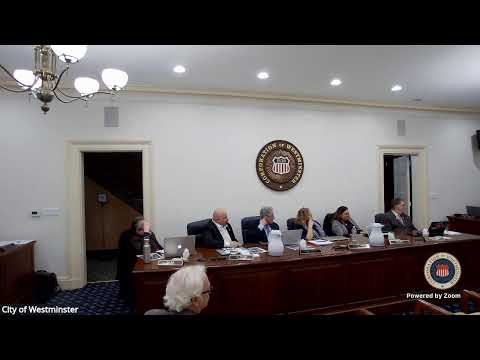
Mayor Becker and the full City Council pressed concerns on Monday about a proposed Sinai Hospital-funded medical respite pilot that would locate beds at Access Carroll’s existing facility at 10 Distillery Drive in downtown Westminster.
In a prepared statement Councilmember Preston (speaker identified on the record) described Access Carroll as “an important part of the landscape of Westminster and Carroll County” but said city officials were not notified until late in the planning process and that the pilot’s primary population would be non‑Carroll County patients brought from Sinai Hospital in Baltimore. "The proposal has a pilot project of 3 years during which time the residents of the program would be relocated from Sinai to Westminster," Preston said, noting the project would house up to 10 beds at the Access Carroll site.
Council members raised multiple concerns: the proposed clients would be non‑residents of Carroll County; the program could bring roughly "on the order of about 100 per year" into the city under the pilot as described to the council; county and city law‑enforcement resources are already stretched; and downtown businesses and the city’s economic redevelopment goals could be harmed.
At least five council members and the mayor spoke in opposition or expressed discomfort with the project. Councilmember Kovacji (public safety chair) called it "an awful idea" on public‑safety grounds and said the council should listen to law‑enforcement leaders. Kovacji urged the council to heed three local public‑safety experts he named: the city police chief, the county sheriff and the state’s attorney, each of whom had expressed opposition, he said.
Councilmember Gilbert, who identified herself as an adult protective services worker for Carroll County Department of Social Services, said Carroll County needs a medical respite facility for county residents but said the Sinai‑funded model that would bring Baltimore City patients to Westminster "is unfair to our county and our city residents" because it would put strain on local resources.
Councilmember Moss said he and colleagues were troubled that the city learned about the plan secondhand and that the city was not consulted despite the site being in downtown Westminster. Multiple speakers said the county commissioners had not consulted the city on the proposal.
Tammy Black, identified in the presentation materials as an Access Carroll official, presented project information to county officials (per council comments). Preston said Black had shown statistical information on the county’s homeless population and explained that the respite approach reduces hospital costs. Preston quoted figures provided at a meeting: a four‑day hospital stay at Sinai averages about $3,000, while a medical respite day at Access Carroll was cited in the presentation as about $246 per day; he said typical program stays for these patients could run four to six weeks, which would increase the aggregate cost-savings for hospitals but also raise questions about local impacts.
No formal action by the Westminster council was taken at Monday’s meeting; councilmembers said they would convey concerns to county officials and expected the county to revisit the decision. Several council members said they had received outreach from the sheriff, the state’s attorney and the city’s state legislative delegation, all of whom had communicated opposition, according to council remarks.
The city’s concerns fell into three categories: process (the city was not consulted during planning), population (the pilot as described would primarily serve non‑Carroll County residents), and public safety/resource impacts (police and social‑service strains and potential effects on downtown redevelopment and businesses). Council members said they support a county‑based respite facility that serves Carroll County residents, but they opposed the Sinai‑funded model as described.
Council members asked county officials to engage the city directly and to consider alternatives that prioritize Carroll County residents and local resources.
No vote was taken and council staff did not direct immediate city action; council members said they would continue discussing the issue and expected county leaders to respond.