Get Full Government Meeting Transcripts, Videos, & Alerts Forever!
Get email alerts on the Economic Development Redevelopment topic
No spam. Unsubscribe anytime.
Romulus council establishes commercial redevelopment district for former Roadway Inn site despite objections over proposed 12‑year abatement
Summary
The Romulus City Council voted to establish a commercial redevelopment district for a parcel that includes the former Roadway Inn, allowing hotel developers to apply for tax abatements to cover demolition and redevelopment costs. Councilwoman Abdo opposed the action, citing concerns about a requested 12‑year tax break for a large corporation.
Romulus City Council voted Monday to establish a commercial redevelopment district covering a parcel that includes the closed Roadway Inn, a step councilmembers said is required before hotels can apply for possible tax abatements to fund demolition and redevelopment.
The resolution, moved by Councilwoman Talley and reported by Councilman Jones, passed on a majority vote. Councilwoman Abdo voted no. The parcel was identified in the council packet with parcel identification number 80040990003008 and described during the meeting as “8 8500 Wicca” (as listed in the administration materials).
The council established the district after economic development staff described a plan by Cooper Hotels, which purchased the Roadway Inn, to demolish the existing building and build a campus with two new hotels. Kevin Krause, director of community safety and a city staff spokesperson in the discussion, told the council the district establishes the eligibility framework so hotel developers can submit abatements and the city can evaluate demolition and reinvestment costs.
“This is kind of a way to mitigate that,” Krause said, explaining why the city planned to approve the redevelopment district before any specific abatement is recommended. He added that Cooper Hotels had submitted paperwork requesting a 12‑year abatement but that the 12 years “is not set in stone,” and the city assessor and staff would calculate a recommended abatement based on demolition and redevelopment costs if an application is filed.
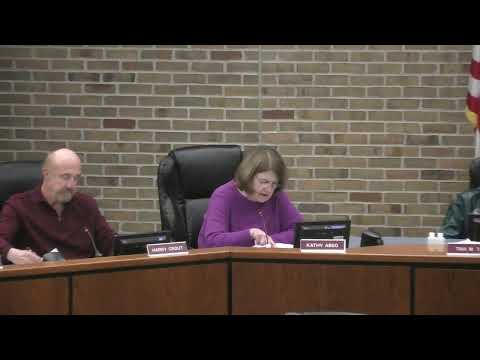
Councilwoman Abdo said she opposed creating the district because the initial paperwork requested a long tax break. “The sole purpose of establishing this redevelopment district is because they’re wanting this is a $6,700,000,000 company is wanting a 12 year tax break. I have had numerous calls. People do not wanna give big corporations tax breaks. Therefore, I cannot support setting up a development for that’s setting them up for that,” she said.
Other councilmembers said the district alone does not set a final abatement length and that any tax‑abatement recommendation would return to council for separate approval after staff review. Councilmember Kraut and others noted the city’s long‑term tax base could benefit if a long‑vacant property is redeveloped.
The action approved at the meeting establishes the commercial redevelopment district under the authority described in the council packet and allows developers to submit formal applications for tax abatements and demolition cost evaluation. Staff said any specific abatement proposal and final council decision would come at a later meeting following assessment of demolition and redevelopment cost estimates.
The council did not set a definitive abatement term during Monday’s vote; staff repeatedly said the recommended length would be based on costs and be the subject of a future council decision.
The motion was moved by Councilwoman Talley and reported by Councilman Jones. Recorded votes during the meeting show Talley and several councilmembers voting yes and Councilwoman Abdo voting no; the motion carried.