Get Full Government Meeting Transcripts, Videos, & Alerts Forever!
Get email alerts on the Public Recording Ordinance topic
No spam. Unsubscribe anytime.
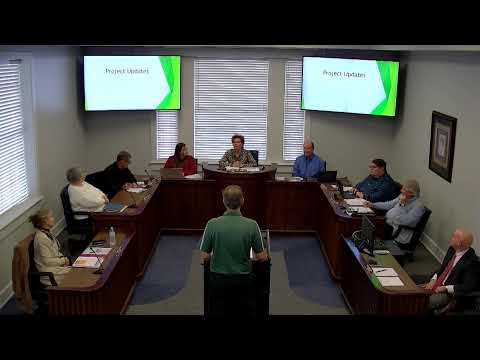
Easly City reviews ordinance to clarify recording rules in public buildings
Summary
City staff presented amendments to a local ordinance intended to clarify where and when people may video-record in Easly City-owned buildings, balancing First Amendment rights with time, place and manner limits; the measure was read for the first time with details to be refined for second reading.
Easly City Council heard a first reading of ordinance 2025-01 on proposed changes to “section 99 o 1 of chapter 99 of title 9 of the Easly City code” that would clarify where members of the public may record video inside city buildings.
City staff member Daniel, who presented the amendment at the council work session, summarized the goal: “the First Amendment protects someone's right to record in public. But the government has a right to make time, place, and manner restrictions as long as they're reasonable.” He said the draft would identify “public access areas [and] limited access areas” and give the mayor or city administrator authority to designate which interior spaces are restricted from recording.
The ordinance text presented to the council retains a public right to record in open areas, Daniel said, while creating clearer boundaries around spaces used by employees. He told the council the changes were intended to remove ambiguity in the current code rather than expand or contract rights, calling the net effect “neutral” in impact: “I would say that it would be a neutral impact. I think what I have done is better clarified and removed some vagueness within our current ordinance.”
During discussion, councilmembers asked how the ordinance would apply to areas sometimes used by employees — such as parking areas — and whether employee-only parking exists. Councilmember Gies noted the code refers to “employee parking lots”; Daniel replied the city has no designated employee-only lots except at the police department and confirmed that public recording would generally be allowed in parking areas that are not designated employee-only.
The draft also clarifies that an individual who arrives early for a public meeting and records is likely within their rights, Daniel said, while a person who enters the building solely to record and who attempts to access a limited area without invitation would be precluded from recording in that restricted space. The ordinance text gives the mayor or city administrator discretion to mark limited-access areas—examples discussed during the session included using bollards or ropes to separate lobby space from work areas.
Council members pointed out minor drafting issues; Daniel acknowledged a numbering error on page 5 and said it would be corrected before the second reading. No formal vote was recorded at the work session; the ordinance was read for the first time and will return for further review and a second reading before council action.
Ending
City staff indicated they used model language produced for local governments and referenced relevant Fourth Circuit case law when preparing the draft. The council did not take final action during the work session; staff will provide a corrected ordinance text and return the item for a subsequent reading and vote.