Get Full Government Meeting Transcripts, Videos, & Alerts Forever!
Get email alerts on the Water Irrigation topic
No spam. Unsubscribe anytime.
Idaho Falls staff outline plan to convert irrigation rights for new developments
Summary
City staff detailed a plan to use surface irrigation water for new residential developments to reduce potable water demand, describing operational, billing and design issues and a draft agreement with the irrigation district.
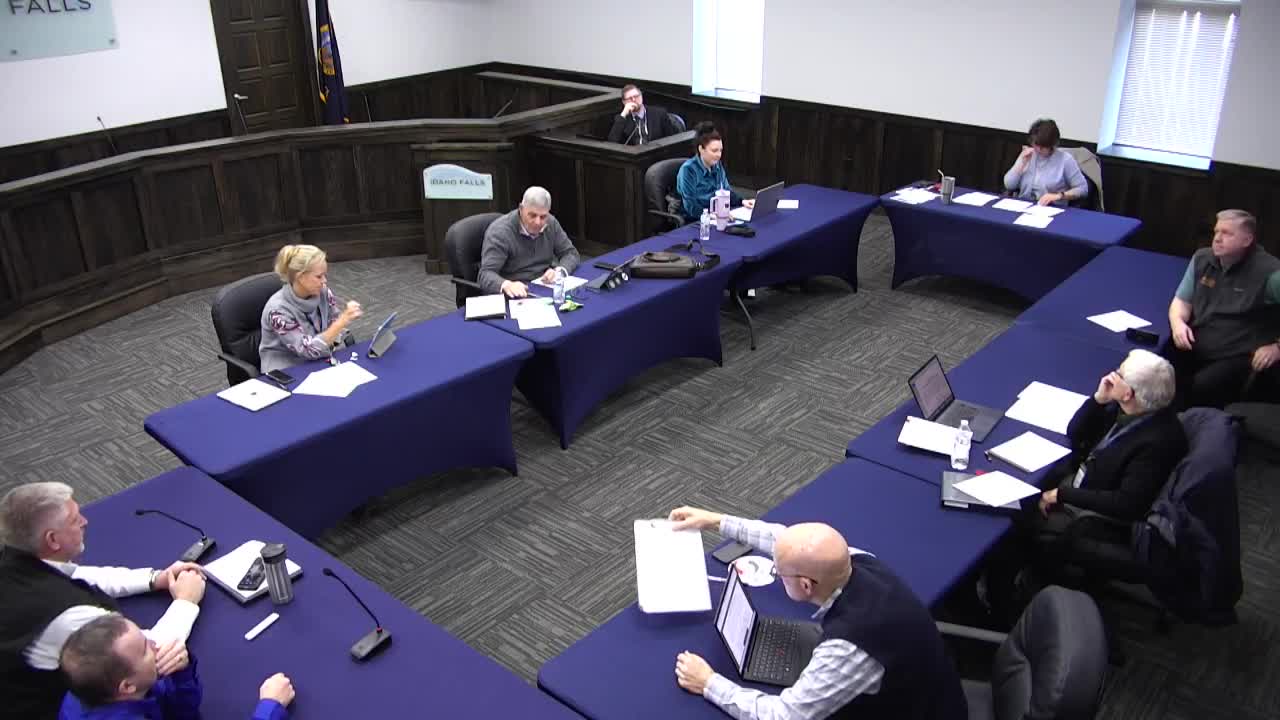
City staff told the Idaho Falls City Council at a Feb. work session that they are preparing to convert existing agricultural surface‑water irrigation rights into a secondary (nonpotable) irrigation system for new urban development.
The presentation by Public Works Director Keith explained the goal is to shift irrigation demand from treated potable supplies to district surface water where existing water rights allow, and to set design standards and an agreement with Idaho irrigation districts that would govern how developers connect to and use that water.
A key technical limit the city and irrigation district are using is 8.97 gallons per minute per acre for each converted parcel; the district also expects continuous, around‑the‑clock irrigation scheduling for the subdivisions that tie in to avoid sharp nighttime peaks that can draw down canal deliveries. “It is the key piece of the puzzle, you know, the two items, the 8.97 gallons per minute and then that that’s utilized in a 24 hour period,” Keith said during the presentation.
Why this matters: staff said the conversion reduces pressure on the city’s potable groundwater portfolio at peak hours (roughly overnight into early morning) and responds to state guidance encouraging surface‑water irrigation use. City staff also said using surface water avoids applying treated potable water to large turf areas such as parks and golf courses.
How it would work: staff proposed that future developers design and build the surface irrigation improvements (pump stations, meters and laterals) for each subdivision, with the city taking over operation and ongoing maintenance after subdivision acceptance. The irrigation district would stop its responsibility at a lockable headgate or point of diversion; from that point the city would operate the pumps and distribution in the public right‑of‑way.
Billing and cost: the irrigation district will continue to bill property owners for district assessments. Staff said those assessments are currently structured so a minimal assessment (lots under roughly seven acres) is about $102 annually. By comparison, the city’s current residential potable irrigation charge is $16.85 per month (about $202.20 per year). “The intent would be that they would be bringing [the resident] whole … whether they were just using potable water or surface water,” Keith said, describing an initial rate approach that offsets the irrigation district assessment so residents do not pay more overall while staff gathers operational data.
Metering and operations: staff said meter pits would be installed and that the city intends to meter both potable and surface irrigation eventually; however, implementation will initially use a flat monthly rate while staff collects usage and power‑cost data to design a usage‑based rate later. Staff emphasized a substantial public education and customer‑service workload initially to help property owners schedule irrigation and resolve low‑pressure complaints when canal draws are high.
Other operational points and tradeoffs: the city favors operating and maintaining the secondary system rather than shifting responsibilities to homeowners’ associations, citing long‑term replacement and capital needs the city can manage more reliably. Staff noted that some developers and irrigation districts in other parts of Idaho use on‑site reservoirs or storage to mitigate canal capacity limits, but that reservoirs raise land‑use and maintenance costs.
Next steps and schedule: staff said they are negotiating a draft agreement with Idaho Irrigation District and two smaller districts (Progressive and New Sweden) and are preparing design standards to be incorporated into city development standards. Staff asked council for feedback and indicated the agreement and standards will return to council for consideration in a future regular meeting (staff suggested late February or early March).