Get Full Government Meeting Transcripts, Videos, & Alerts Forever!
Get email alerts on the Open Meeting Law topic
No spam. Unsubscribe anytime.
Avondale council receives Open Meeting Law refresher from city attorney
Summary
City Attorney Nicole Harris gave Avondale council a detailed refresher on ArizonaOpen Meeting Law, covering what constitutes a meeting, limits on electronic communication, agenda and notice rules, executive sessions and enforcement penalties; several council members asked procedural questions about adding items to agendas.
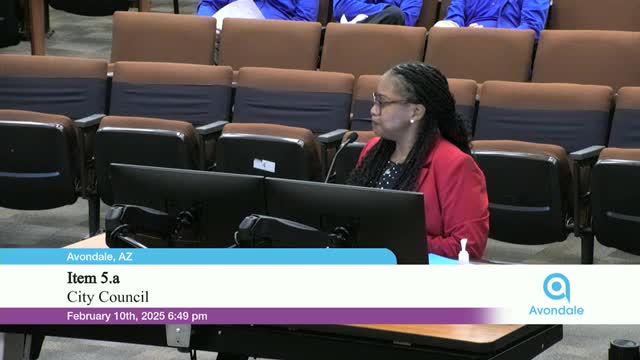
Avondale City Attorney Nicole Harris delivered an extended refresher on ArizonaOpen Meeting Law at the Feb. 10, 2025, City Council meeting, reviewing when a gathering becomes a public "meeting," how electronic communications can create a quorum, agenda and notice requirements, and possible enforcement remedies.
Harris told the council the law is codified in Title 38 of the Arizona Revised Statutes and said the statute "is 10 statutes. It's located in Title 38. It's a pretty easy read." She emphasized that a "meeting" includes in-person gatherings and electronic exchanges among a quorum of members and warned that a sequence of one-on-one contacts that result in a quorum can create a prohibited "walking quorum." Harris also reviewed the limits on email and text exchanges, saying they can become meetings when they "discuss, propose, or take legal action," and urged caution when council members are copied on staff responses.
The training outlined routine administrative requirements: agendas and notices must be posted at least 24 hours before a meeting; minutes or recordings must be available within three working days after a meeting and posted online after council approval; and agendas must list specific matters so the public can decide whether to attend. Harris summarized executive-session categories the council can use (personnel, legal advice, contract negotiations, real-property transactions and, since 2020, security assessments) and stressed that "no legal action or final vote shall take place in executive session." She also described enforcement tools, noting the Arizona attorney general and county attorneys can investigate and sue, and that penalties for knowingly violating the law can range from civil fines (up to $500 for a first offense and up to $2,500 for later offenses) to court-ordered removal from office in extreme cases.
Mayor Pineda and several council members said the refresher was timely for new members. Mayor Pineda said he had nearly made an inadvertent error in trying to gather input outside a public meeting, underscoring how easily the rules can be breached. Council Member White asked how the council's internal rules interact with the open-meeting restrictions when members seek to place items on the agenda; Harris and staff explained council rules allow agenda requests by the mayor, the city manager or by three council members but cautioned that trying to assemble support from enough members to reach a quorum outside a posted meeting risks violating the statute.
Harris recommended that council members forward constituent emails or public inquiries to staff rather than reply-all, and she suggested using the city manager or clerk to help route agenda requests so deliberations remain on the public record. Several council members said they would discuss potential agenda-format changes with the city manager and clerk's office to improve public clarity about plats and other land-use items. Harris closed by noting the city's attorney's office and the Arizona ombudsman and attorney general are available for further guidance and questions.
The training was given during the regular meeting before other business, and council followed with routine agenda items. Harris invited questions at the end of her presentation and answered follow-ups on text-message risks, meeting notice exceptions for true emergencies, and how to use summary-of-current-events agenda slots without proposing new action.