
Senate approves bill letting municipalities repurpose parkland by ordinance
Get AI-powered insights, summaries, and transcripts
Subscribe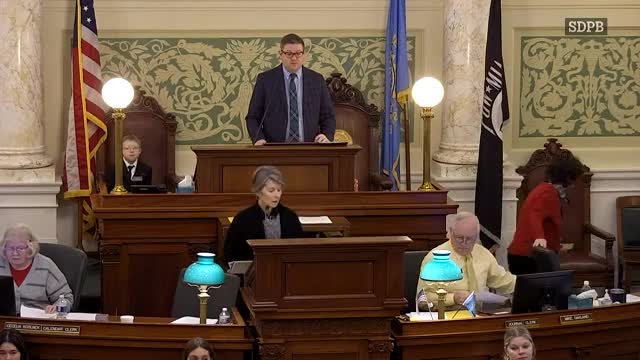
Summary
The South Dakota Senate passed Senate Bill 97 to let first- and second-class municipal governing bodies change the use of municipally owned parkland by ordinance if the land continues to serve a public purpose; the measure includes notification, public hearing and referral safeguards and passed 34-1.
The South Dakota Senate on the floor passed Senate Bill 97, which allows the governing body of a first- or second-class municipality to change the use of municipally owned parkland by ordinance rather than holding a local public vote. The bill passed on final passage by a vote of 34 yeas and 1 nay.
Senator Reid, speaking on the measure, said the bill "allows the governing body of a first or second class municipality to change the use of municipality owned parkland by ordinance versus bringing it to a public vote" and described the procedure the bill requires, including special publication and hearing timelines. Reid said the change is optional for communities and emphasized that the new process requires the land to continue to be used for a public purpose.
The bill prescribes a multi-step ordinance process: an authorizing ordinance must be published in the municipality's official newspaper once a week for at least two consecutive weeks, with the final publication occurring at least 14 days before the first reading; two readings of the ordinance are required with at least five days between readings; a public hearing notice must be published no less than 10 days in advance of the hearing; and, if approved, the ordinance becomes effective 20 days after passage to permit a citizen referral. The bill preserves a referral pathway that residents can use to challenge the governing body's decision after the ordinance process concludes.
Senator Nelson offered a practical example of when the authority would be useful, saying her community is considering relocation of a wastewater treatment plant and that existing parkland west of the current plant may be the only feasible site. Nelson argued the bill would allow municipalities "to use public land to be used for public good" and save communities money compared with acquiring new property.
During final passage, the roll call showed 34 ayes and one nay; the president declared the bill passed and the title correct.
The bill now moves on to the enrollment/signature process as required by legislative procedures.