Get Full Government Meeting Transcripts, Videos, & Alerts Forever!
Get email alerts on the Democratic Republic Of Congo Conflict topic
No spam. Unsubscribe anytime.
UN says M23 offensive risks worsening regional crisis; Human Rights Council orders fact-finding mission
Summary
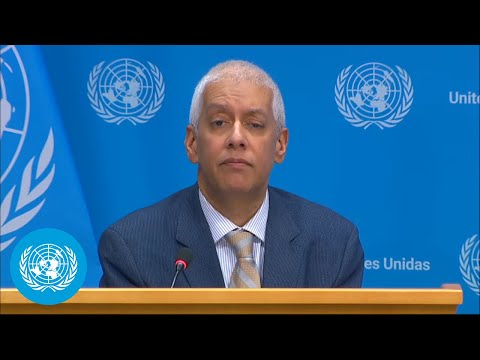
The United Nations spokesman said the Human Rights Council adopted a resolution establishing a UN fact‑finding mission and an independent commission of inquiry to investigate alleged violations in North and South Kivu since January 2022.
The United Nations spokesman said the Human Rights Council adopted a resolution establishing a UN Human Rights Office fact‑finding mission and an independent commission of inquiry to examine alleged violations in North and South Kivu since January 2022.
The move follows reports that the M23 rebel group, which the briefing said is supported by the Rwanda Defence Forces, has driven offensives that produced mass displacement and allegations of sexual violence, gang violence and forced labor. “International criminal law is … an essential element to fighting impunity,” the spokesman said, adding that the International Criminal Court “must be allowed to work in full independence.”
The briefing cited remarks by the UN High Commissioner for Human Rights, Volker Türk, who warned in Geneva that “if nothing is done to end the offensive of the M23 … the worst may be yet to come” for people in eastern DRC and beyond. The UN peacekeeping head in the DRC, Bintou Keita, said hundreds of thousands of displaced people have been forced by M23 to return to places of origin “without any guarantee or humanitarian assistance on their safe and dignified return.”
UN humanitarian agencies and partners reported continuing clashes in South Kivu and North Kivu that are triggering new displacement and disrupting services. The briefing said one assessment estimated nearly 33,000 people had returned to villages in Nyiragongo territory northeast of Goma, while other assessments reported hundreds of thousands still on the move.
The World Health Organization reported damage to health facilities in North Kivu and warned that routine services for cancer, diabetes, hypertension and mental health have been disrupted. The spokesman cited nearly 600 suspected cholera cases and 14 deaths reported in North Kivu since January; WHO said it has deployed emergency medical, hygiene and water‑treatment supplies and plans to increase hospital capacity by 1,000 beds but warned supplies were being depleted rapidly.
The briefing also said three nongovernmental organization workers were killed in North Kivu under circumstances that remain unclear and that one NGO had suspended food and agricultural assistance affecting about 36,000 people.
Why it matters: the Human Rights Council resolution and the commission of inquiry create mechanisms to investigate alleged international humanitarian and human‑rights violations, while UN and partner agencies warn of immediate humanitarian needs for displaced civilians and strained health services.
The spokesman concluded by urging protection of civilians and noting the need for additional resources to sustain the humanitarian response.