Get Full Government Meeting Transcripts, Videos, & Alerts Forever!
Get email alerts on the Education And Libraries topic
No spam. Unsubscribe anytime.
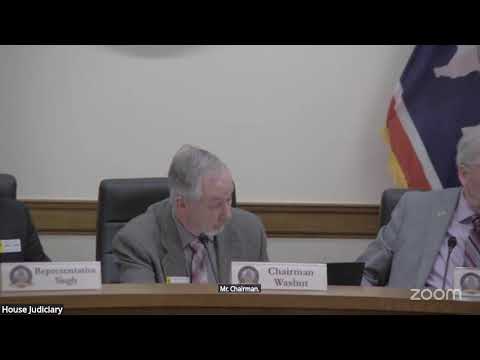
Committee tables contentious bill on minors and library content after hours of debate
Summary
House Judiciary took up House Bill 194, heard extensive testimony and amendments about who would be held accountable for materials deemed harmful to minors, and ultimately tabled the measure for interim study.
The House Judiciary Committee spent several hours debating House Bill 194, a measure that would criminalize knowingly furnishing, making available or disseminating material harmful to minors. Lawmakers and witnesses wrestled with who would bear criminal liability, the scope of institutions covered, and practical enforcement paths for public libraries, schools and other institutions.
Representative Lien moved the bill after earlier procedural attempts to table it failed. Committee debate focused on an exemption and a repealer provision: lawmakers discussed whether bona fide school activities, public libraries, college and university collections, and museums should be exempted. Representative Chastick moved an amendment to preserve certain exemptions and to remove a repeal of existing statutory language; the committee ultimately adopted language that kept public schools and public libraries within the statute's reach while exempting colleges, universities and museums from criminal liability under the provision as amended.
A key thread through testimony was enforceability and unintended consequences. Representative Feiler told the committee, "there's no way we can charge anybody. It's impossible," citing donated and long-standing volumes in library collections and the practical limits of expecting librarians to review every page of every book. Representative Kelly, who described the bill's origins as responses to parent concerns, said he "feels the pain of this" and supported the bill's intent but expressed concern lawmakers were "swinging in the dark" about who would be criminally liable.
Lawmakers debated narrower approaches, including making only library directors or head librarians legally responsible and giving libraries a transition period to review and remove or segregate materials. Representative Lean proposed a date-of-acquisition carve-out (materials acquired after Jan. 1, 2015) and a 12-month review window; members questioned whether such provisions would be administrable for larger institutions and whether narrowing responsibility to a single job title would create recruitment and retention problems for library leadership.
After multiple amendments and extensive debate about practical implementation, Representative Lien withdrew a pending amendment and moved to table the bill as an interim topic so the legislature's management council could refer it for study and public input. The committee approved the motion to table; HB194 will be considered for further study during the interim rather than immediately advanced.
Ending: Committee members said the topic merits additional work outside the compressed session schedule to find workable language that balances parental concerns, librarians' operational realities and constitutional standards.