Get Full Government Meeting Transcripts, Videos, & Alerts Forever!
Get email alerts on the Cdbg Funding Allocation topic
No spam. Unsubscribe anytime.
Tulsa committee approves CDBG/HOME/ESG/HOPWA funding recommendations, sets contingency preference for rental assistance
Summary
The City of Tulsa Housing and Urban Development Community Development Committee recommended a final package of CDBG, HOME, ESG and HOPWA funding and unanimously approved staff’s scenario that raises the local minimum grant and prioritizes public-service awards.
The City of Tulsa Housing and Urban Development Community Development Committee approved final funding recommendations and contingency plans for federal programs including Community Development Block Grant (CDBG), HOME, Emergency Solutions Grant (ESG) and HOPWA.
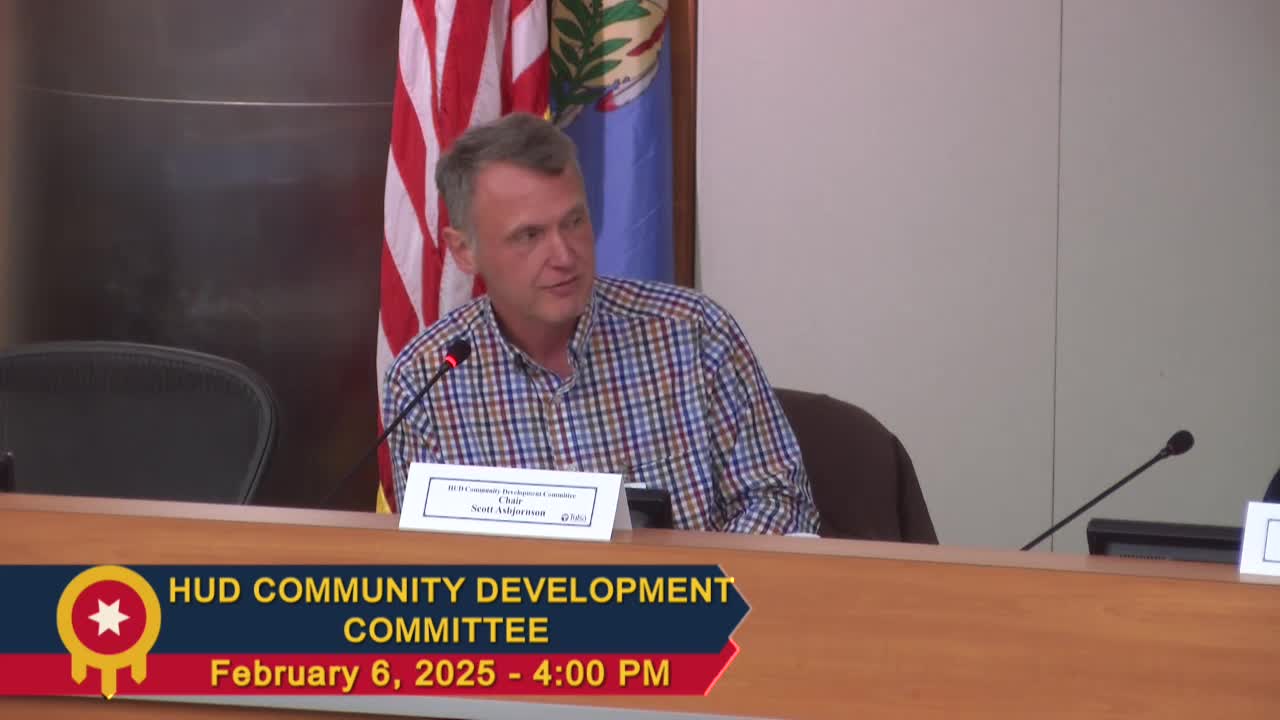
The committee approved the staff-recommended scenario that uses a sliding allocation model (referred to in discussion as “scenario 4”), which raises the local minimum grant award to $25,000 for organizations scoring above 20 on the rubric and allocates $500,000 for CDBG public-service projects. Ryan Lynch made the motion to approve the recommendations and Daniel Jeffries seconded; the committee voted unanimously in favor. Chair Scott Esbjornson announced the vote and opened the meeting to a public hearing following the approval.
Committee members and staff reiterated that the recommended package reflects both the rubric scores and limited available funding. Grants administration staff said they set aside roughly $500,000 for public service (under the 15 percent cap for that category) and noted HOPWA administration will remain at about 3 percent (about $20,000). The staff memo presented contingencies that would be implemented if HUD allocations change, including reducing administration to statutory caps, funding CHDO set‑asides at required levels, and proportionally adjusting remaining HOME/ESG programs.
Members debated which housing program to cut first if allocations fall. Grants administration staff recommended using cuts to rental assistance programs before reducing down‑payment assistance because of historical absorption and administrative complexity. After discussion, the committee endorsed that contingency preference: if funding is reduced, reductions would come from the tenant‑based rental assistance (TBRA) line before the down‑payment assistance line.
The committee also discussed a separate request to redirect funds to exterior renovations at the Bradstone apartment complex. Staff warned shifting money from one recommended project would create gaps in other higher‑scored projects; committee members did not pursue the reallocation. Members noted that shifting roughly $160,000 from the TBRA recommendation would leave that program with a significantly smaller award and might undermine its capacity.
The committee heard brief presentations from several applicant organizations as part of the funding discussion (Operation Aware, Tulsa United Way/2-1-1, Youth at Heart, Housing Solutions). After questions and discussion the committee moved the recommendations forward to public hearing and formal vote by the full council process.
Votes and formal actions taken during the meeting included approval of the meeting minutes from Feb. 6, 2025, and the unanimous recommendation to approve the program funding and contingency packages for CDBG, HOME, ESG and HOPWA as described above. The committee then opened the floor for public comment.