Get Full Government Meeting Transcripts, Videos, & Alerts Forever!
Get email alerts on the Protection Orders topic
No spam. Unsubscribe anytime.
Wyoming Judiciary Committee declines to advance bill creating permanent protection orders after divided testimony
Summary
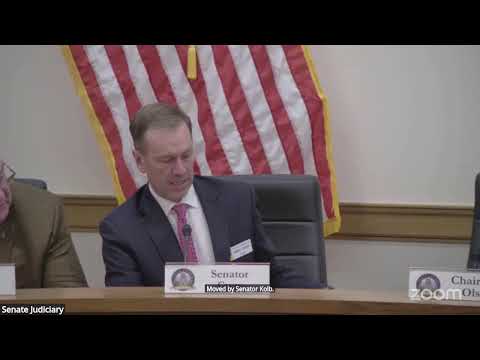
The Senate Judiciary Committee heard hours of testimony on a bill to create permanent protection orders and to remove tolling language, but members did not move the bill after advocates and opponents gave sharply different accounts of its likely effects.
The Senate Judiciary Committee heard extended testimony on Senate File 12 on a proposal to create "permanent protection orders" and to remove the existing tolling provisions for protection orders in Title 7 and Title 35.
Cara Chambers, a member of the Wyoming Attorney General’s Office Division of Victim Services, told the committee the bill would create a new statutory mechanism allowing courts to enter permanent protection orders either when a respondent shows a history and severity of violence or upon conviction of a violent felony already defined in state law. Chambers said the draft mirrors language in both Title 7 (stalking/sexual assault protection orders) and Title 35 (domestic violence protection orders) and that the bill’s length reflects parallel changes required in both titles. "One of the major things that this bill does ... is strike all of that very cumbersome tolling language," Chambers said.
Chambers cited the federal firearms prohibition statute, 18 U.S.C. §922, during her presentation and said the office did not believe the measure would expand the set of people already barred under federal law from possessing firearms. She suggested, if the committee had concerns, adding limiting language so permanent orders would issue only after a demonstrated pattern of violations or prior misdemeanor domestic-violence convictions.
Supporters who testified included Kaylee Kozak, a survivor and national advocate who described her experience with what she called "Kaylee's Law." Kozak said a permanent order spared her repeated re‑traumatization from ongoing court filings by her abuser and would provide victims with lasting protection. "No survivor should have to endure the torment that I've had to face even after 20 years," Kozak said.
Several members of the public opposed the bill. Aaron Dorr, representing Wyoming Gun Owners, argued SF 12 was effectively a civil means of permanently removing firearms rights before criminal charges or conviction and urged the committee to vote no. "This is a civil process ... that allows our guns to be taken away for a lifetime before we have been charged or convicted of a crime," Dorr said.
Mac McQuay said he had been the victim of an assault and later was served with a civil protection order; he described his experience as losing rights without criminal conviction and warned judges could abusively apply permanent orders. "Unless there's a felony conviction, I don't think disarmament should be considered," McQuay said.
Other victims, including Tracy Wilson of Sundance, described repeated stalking and the burdens of the current tolling process that pauses and later reinstates orders when a respondent is incarcerated. Wilson said she believed a permanent order would have prevented cycles of vulnerability while she pursued court actions to protect herself and her grandson.
Committee members raised concerns about the breadth of the bill. Senator Cole said the draft ‘‘casts a large net’’ and lacked sufficient "sideboards" to prevent unintended consequences such as permanent disability of rights without clear standards for relief. Senator Crum urged continued work between agencies and stakeholders to protect victims while preserving fair process for defendants.
After questions and public comment, the committee did not move Senate File 12. The chair stated, "I'm sensing we are not going to get a motion to move the bill," and the committee proceeded to the next agenda item.
Ending: The proposal to create permanent protection orders will return to stakeholders for further refinement; committee members asked agencies and interested parties to work together to address scope, due process concerns and the intersection with federal firearm prohibitions before any future motion to advance the bill.