Houston Public Works recommends dropping conceptual drainage-plan requirement for MUD consent to reduce cost and delay
Loading...
Summary
Houston Public Works proposed removing the pre-consent conceptual drainage-plan requirement for municipal utility district (MUD) formation and territory additions, saying the current step adds months and thousands of dollars to applicants and that final drainage and detention plans will still be required before construction.
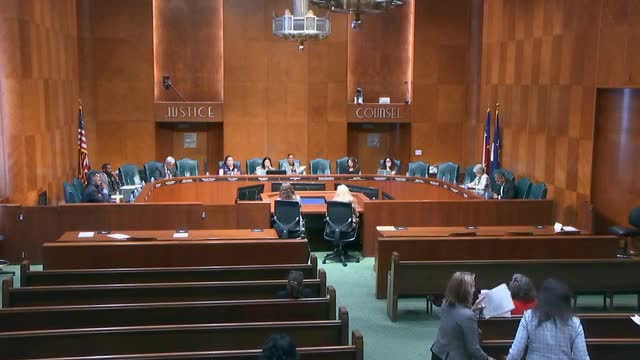
Houston Public Works on Monday recommended that the city remove a requirement that applicants for municipal utility district consent submit conceptual drainage plans at the time they seek council approval to form a MUD or add territory.
"Houston Public Works reviews approximately 50 district applications per year" for council consent, Carly Stelzer, water contracts manager with Houston Public Works (Houston Water's Regulatory Compliance and Utility Development), told the committee. Stelzer said the conceptual-plan requirement was added after Hurricane Harvey and has added an estimated six to nine months and thousands of dollars to the consent process.
Stelzer and Kim Mickelson of the city legal department said the conceptual plans are preliminary, often change during later platting and permitting, and that Harris County Flood Control currently receives conceptual plans but does not review drainage calculations at this stage. "These preliminary plans typically cost thousands of extra dollars to the applicant," Stelzer said.
Under the current practice, applicants submit conceptual drainage information to Harris County Flood Control before filing for city consent; Stelzer said this front-end step increased time and expense and often produces plans that are later revised or replaced when more detailed plats and infrastructure plans are prepared. Final drainage and detention plans must still be submitted to and approved by the appropriate regulatory agency before construction, she added.
Stelzer said the city has two sets of standardized consent conditions, for in-city MUDs and for MUDs in the extraterritorial jurisdiction (ETJ). Those conditions have not been readopted since 1984 (in-city) and 2006 (ETJ), she said. City staff proposed moving conceptual-plan language out of the ordinance and into consent guidance so the consent application would instead include a written statement explaining how drainage and detention will be achieved if the tract is within the 100- or 500-year floodplain.
Council members asked whether applicants denied consent could still pursue formation with the Texas Commission on Environmental Quality (TCEQ). Kim Mickelson said in ETJ cases an applicant can still seek TCEQ approval or legislative relief; for in-city MUDs, the city must consent. Council members also asked about Harris County Flood Control's view of removing the conceptual-plan requirement; Stelzer said she had not yet discussed the specific change with the county but would follow up.
Vice Mayor Pro Tem Peck and Council Member Ramirez expressed general support while also urging staff to ensure the city retains opportunities to work with applicants on larger-scale drainage and flood-mitigation design issues. Stelzer said the city will continue to require and review final, engineered drainage and detention plans before construction, and staff recommended the change to reduce applicant costs and speed the consent process while preserving regulatory review later in the development sequence.
No formal council vote was recorded on the proposal during the meeting; staff presented the recommendation and answered questions.