Get Full Government Meeting Transcripts, Videos, & Alerts Forever!
Get email alerts on the Eastern Drc Conflict Monusco Briefing topic
No spam. Unsubscribe anytime.
MONUSCO says M23 controls Goma; UN base shelters nearly 2,000 as thousands of bodies are recovered
Summary
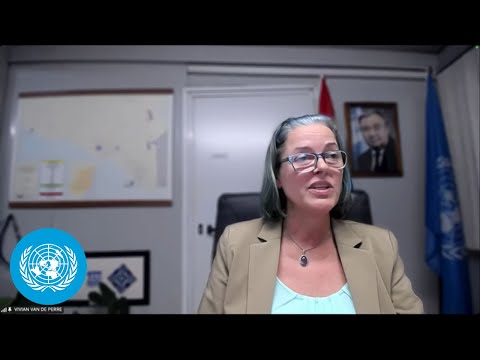
Vivian Van Der Perre of MONUSCO briefed reporters that the March 23 movement controls Goma and key exits, Goma airport is closed, MONUSCO bases are sheltering nearly 2,000 people, and UN and health partners report thousands of fatalities and rising humanitarian risks.
Vivian Van Der Perre, the deputy special representative of the secretary-general for protection and operations and deputy head of the United Nations Organization Stabilization Mission in the Democratic Republic of the Congo (MONUSCO), told the UN Correspondents Association that the March 23 Movement (M23) and other armed groups have consolidated control over Goma and much of North Kivu, leaving the city effectively under occupation.
“The situation is still highly volatile with a persistent risk of escalation,” Van Der Perre said, adding that “all exit routes from Goma are under their control and the airport also under M23 control is closed until further notice.”
The situation has produced a large humanitarian emergency, she said. MONUSCO is sheltering close to 2,000 people at its Goma base, which was not designed for long-term mass accommodation and is “full, full, full.” Van Der Perre warned sanitary conditions are dire and that the World Health Organization is concerned about the risk of epidemic outbreaks.
Van Der Perre said UN and government teams have recovered “so far 2,000 bodies ... from the Goma streets in recent days and 900 bodies remain in the morgues of the Goma hospitals,” and that the total is expected to rise. She said many decomposing bodies remain in some areas and partners are worried about public-health consequences.
The briefing outlined operational constraints for aid and peacekeeping. MONUSCO has relocated noncritical international and national staff while maintaining critical personnel to protect civilians and support humanitarian operations “inside our premises,” she said; however, movement outside UN bases is severely restricted and requires advance notice. Van Der Perre said MONUSCO’s facilities are overwhelmed and were not designed or staffed for large-scale, long-term sheltering.
Air access has been disrupted. Van Der Perre said fighting damaged infrastructure around Goma airport, including the control tower, and that MONUSCO had been denied access for a detailed assessment. She also said Kavumu (Kavumo/Kavumu) Airport near Bukavu “is critical for ongoing civilian and humanitarian use” and that losing both airports would be untenable for humanitarian deliveries. She reported Kavumu is being used for military helicopters by the Armed Forces of the DRC (FARDC) and that M23 positions are approximately 50 kilometers north of Bukavu.
Van Der Perre urged a political response in parallel with humanitarian efforts, saying “the resumption of the Luanda process is urgently needed” and welcoming a planned joint summit of the Southern African Development Community (SADC) and the East African Community (EAC) in Dar es Salaam in July and the upcoming African Union summit as opportunities to revive regional diplomacy. She said any effective peacekeeping presence requires a viable regional political process.
On several contested issues, Van Der Perre described limits to MONUSCO’s ability to verify some reports because movement is restricted. She said she could not provide independent, precise locations or numbers for alleged foreign forces but added: “They are here. I can't give you numbers or locations ... but when we move around yes they are here.”
She also described interference with humanitarian and media work. Van Der Perre said some NGOs were being told to stop work in areas under M23 control and that some partners, including the International Organization for Migration (IOM), have been affected by a recent USAID stop-work order tied to funding, hampering operations. She said MONUSCO had received reports of harassment of journalists and that there were worrying but not yet fully verified reports of ethnically motivated violence and at least one lynching at an IDP site.
On allegations of a prison incident in which people were burned, Van Der Perre said information came from the UN human-rights office and had not yet been fully verified because access is constrained. “We don't know,” she said of the perpetrators, and noted previous prison violence had not always been linked to M23.
Van Der Perre listed MONUSCO’s ongoing activities despite constraints: protecting UN personnel and vulnerable people on mission premises; supporting demining and removal of unexploded ordnance; resupplying key positions; conducting patrols where possible; and engaging with regional leaders and international partners to prevent further escalation. She said noncritical staff have been relocated but critical MONUSCO and humanitarian personnel remain to provide protection and aid where they can.
The briefing concluded with a call for clearer guidance from the UN Security Council once the situation stabilizes: “In the end, we will need from them clear guidance on how to proceed,” she said, while stressing the situation is “very fluid” and changing hourly.
Ending: Van Der Perre urged all parties to cease hostilities and prioritize political dialogue, and she said MONUSCO remains committed to protecting civilians and UN personnel despite the volatile security environment.