Get Full Government Meeting Transcripts, Videos, & Alerts Forever!
Get email alerts on the Forestry Disaster Response topic
No spam. Unsubscribe anytime.
Georgia forestry officials describe large-scale post-storm recovery, prescribe-fire gains and long-term wildfire risk
Summary
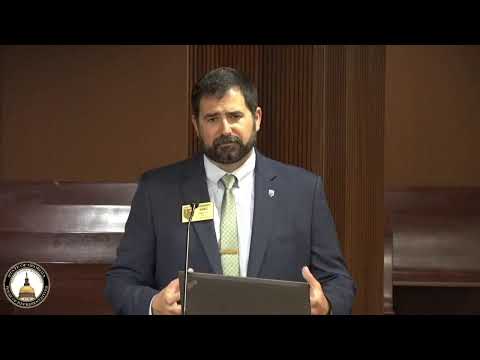
Mr. Sabo, director of the Georgia Forestry Commission, told the Natural Resources & Environment committee that his agency mobilized hundreds of staff and tapped interagency partners to respond to storm damage from Helene and to begin longer-term recovery and resilience work.
Mr. Sabo, director of the Georgia Forestry Commission, told the Natural Resources & Environment committee that his agency mobilized hundreds of staff and tapped interagency partners to respond to storm damage from Helene and to begin longer-term recovery and resilience work.
The forestry agency “is an emergency response organization,” Mr. Sabo said, adding that roughly 400 of the agency’s 524 employees serve as emergency responders and that 289 personnel deployed to other states during recent incidents. He said the commission conducted prescribed burns on “a little over a million and a half acres” last year and that the agency cleared roughly 40,000 miles of roadways during the post-storm response.
Why it matters: Lawmakers were told the immediate response — debris clearance, generator deliveries to nursing homes, aviation support and backhauling trailers — transitions into a long recovery that depends on market capacity, contractor availability and federal program enrollments. That dependency will shape whether damaged timber is salvaged, how quickly fuel mitigation can proceed and how communities manage elevated fire risk over the next several years.
Key facts and figures
- Agency staffing and deployments: Mr. Sabo said about 400 of 524 employees are emergency responders and that 289 personnel were deployed to other states during recent incidents.
- Prescribed fire: The commission treated just over 1.5 million acres with prescribed fire last year, which Mr. Sabo called “one of our best years.”
- Immediate response work: The agency helped clear about 40,000 miles of roadways, delivered generators to nursing homes, flew critical resources using aviation assets and backhauled about 140 trailers during recovery.
- Damage assessment: Foresters established 2,800 assessment plots and are “cruising” roughly 8,900,000 acres to map damage and estimate salvage potential.
- Timber salvage expectations: Based on prior storms, Mr. Sabo said 10%–20% of downed timber is typically harvested for use; the remainder often “lays on the ground and rot[s].”
- Markets and capacity constraints: The director warned of limited mill capacity, insufficient logger availability for widespread salvage operations and contractor shortages for site-prep and planting work.
Program roles and coordination
Mr. Sabo described the Georgia Forestry Commission’s role as the technical adviser and boots on the ground for the federal Emergency Forest Restoration Program (EFRP) administered by the U.S. Department of Agriculture’s Farm Service Agency (FSA). He asked landowners to enroll with FSA so GFC staff can receive the records needed to advise landowners and implement restoration work.
The agency also used maps showing 50- and 100-mile radii around impacted counties to direct mills where to focus salvage activity, he said, and partnered with the Georgia Forestry Association and the University of Georgia to hold regional workshops and technical sessions for landowners and professional foresters.
Fuel mitigation, prioritization and outreach
Mr. Sabo said the fuel mitigation program uses an online application that was time-stamped and prioritized projects toward areas with the highest fuel loadings around schools, communities and critical infrastructure. He described fuel mitigation as both a cost-share for cleanup and a safety tool that creates strategic openings — firebreaks and cleared roads — that give firefighters places to make a stand.
Challenges and equipment needs
Lawmakers pressed the director on practical limits: mills cannot process all down timber before it decays; loggers typically do not relocate long distances; and much of the specialized heavy equipment needed to work in impacted stands is larger than common local tractors. Mr. Sabo said the state can call on contractors, vendors and neighboring states through a Southeastern Compact to obtain larger equipment when needed, but he cautioned differences in equipment size and capability matter on the ground.
Outlook and risks
Mr. Sabo warned that the fuel on the ground will become more receptive to burning in the coming seasons. He said smaller fuels will burn during the next spring and that heavier pine fuels will be especially problematic in two to four years. Hardwood fuels could present the greatest risk in five to seven years if drought conditions develop. The director pointed to an elevated fire outlook for February through April and urged continued regional coordination.
Committee questions and follow-up
Representative Petrie praised the agency’s leadership and urged consideration of pay or incentives for staff with firefighting credentials. Mr. Sabo responded that he would discuss retention and compensation options with committee members. Committee members also asked for counts of outstanding FSA/EFRP applications; Mr. Sabo said he would provide those figures to the committee after checking the records.
Ending
Committee members thanked Mr. Sabo and his staff for the response work and asked the forestry agency to return with additional information as recovery and mitigation work continues.