Lifetime Citizen Portal Access — AI Briefings, Alerts & Unlimited Follows
DBH outlines staffing shortages: school-based clinicians down, St. Elizabeth's reports psychologist vacancies
Loading...
Summary
At a Feb. 5 oversight hearing DBH leaders described workforce shortages affecting school-based behavioral health, St. Elizabeth's Hospital and crisis response teams; DBH said vacancies and national competition for clinicians drive the gaps and outlined recruitment, training and retention efforts.
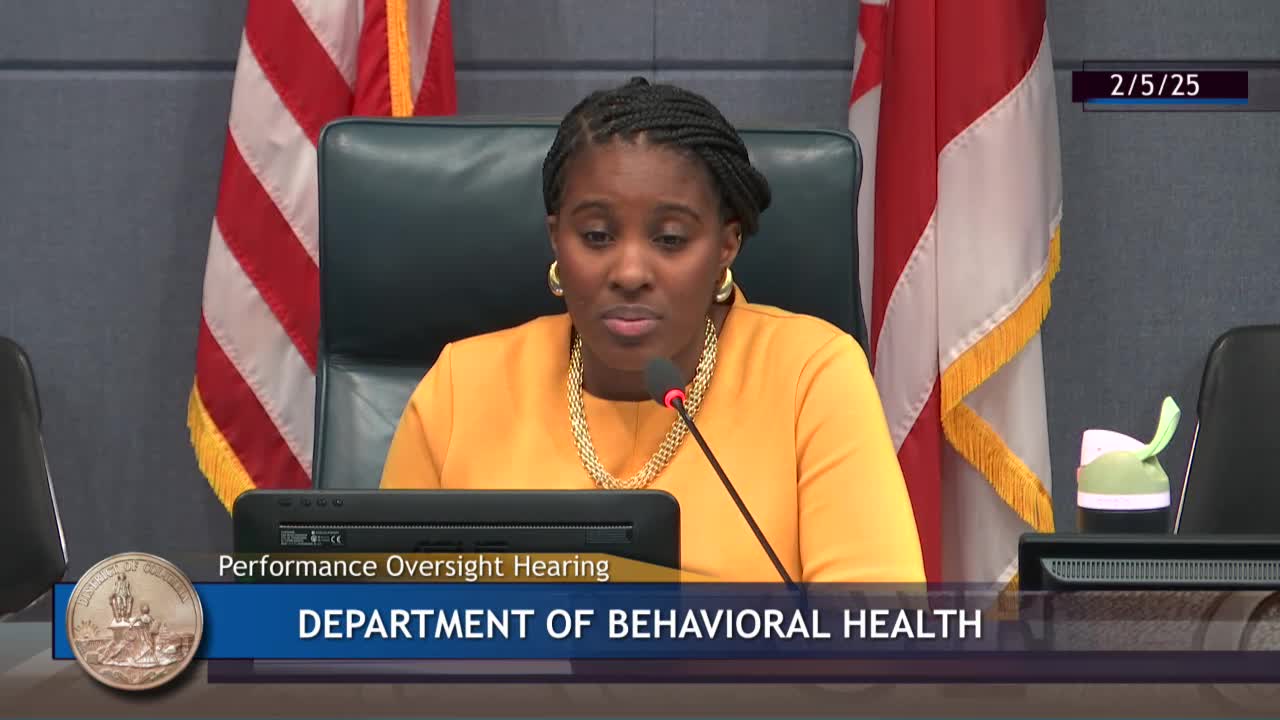
Department of Behavioral Health leaders told the Committee on Health on Feb. 5 that vacancies and workforce shortages are limiting program expansion and service delivery across multiple DBH programs, including school-based clinicians, St. Elizabeth’s Hospital and the Community Response Team.
Dr. Barbara Bazaron, DBH director, said DBH faces nationally driven difficulty filling positions such as psychologists, licensed clinical social workers and nurses. “We do have some hard to fill positions that include psychologists, ... LICSWs ... as well as nurses,” she told the committee. The department reported an 11% vacancy rate at St. Elizabeth’s Hospital and initially reported a 23% vacancy rate for the behavioral health authority; later that figure was updated in hearing remarks to 13% and an attrition rate near 5% in the current year as recruitment improved.
School-based behavioral health also remains below pre-pandemic coverage: DBH said about 90% of public schools had an on-site clinician before the pandemic, and that figure has fallen to roughly 60% today. Dr. Megan Sullivan, deputy director for Child and Adolescent Family Services, told the committee DBH is piloting strategies to help address licensed-clinician shortages but that expansion has been delayed by workforce constraints.
St. Elizabeth’s told the committee it has a training pipeline—residency programs for psychiatrists and psychologists—and DBH reported success hiring some trainees. Still, testimony from council members and DBH staff noted starting pay for psychologists and competitiveness with federal pay scales as barriers; Dr. Bazaron said collective-bargaining negotiations and compensation adjustments were a priority for the agency.
Councillors and DBH discussed crisis response and CRT staffing: DBH reported about 64 funded CRT positions with roughly 17 vacancies called out in committee exchanges (about a quarter of the roster), and DBH said it is recruiting and considering co-location strategies to reduce response times. The department also highlighted workforce development measures, including partnerships with nine universities and expanded internships and training programs at St. Elizabeth’s to strengthen the pipeline of clinicians.
DBH committed to returning to the committee with additional vacancy and recruitment metrics and to continue negotiations on pay and retention strategies for clinical staff.