Lifetime Citizen Portal Access — AI Briefings, Alerts & Unlimited Follows
DBH credits drop in opioid deaths to Live Long DC initiatives; Columbia Heights stabilization center delayed by remediation
Loading...
Summary
DBH reported a 30% decline in opioid-related deaths and described the Columbia Heights stabilization center as a promising low-barrier treatment access point, but officials said remediation and facility work pushed opening estimates into spring 2026 and that bilingual staff will be required.
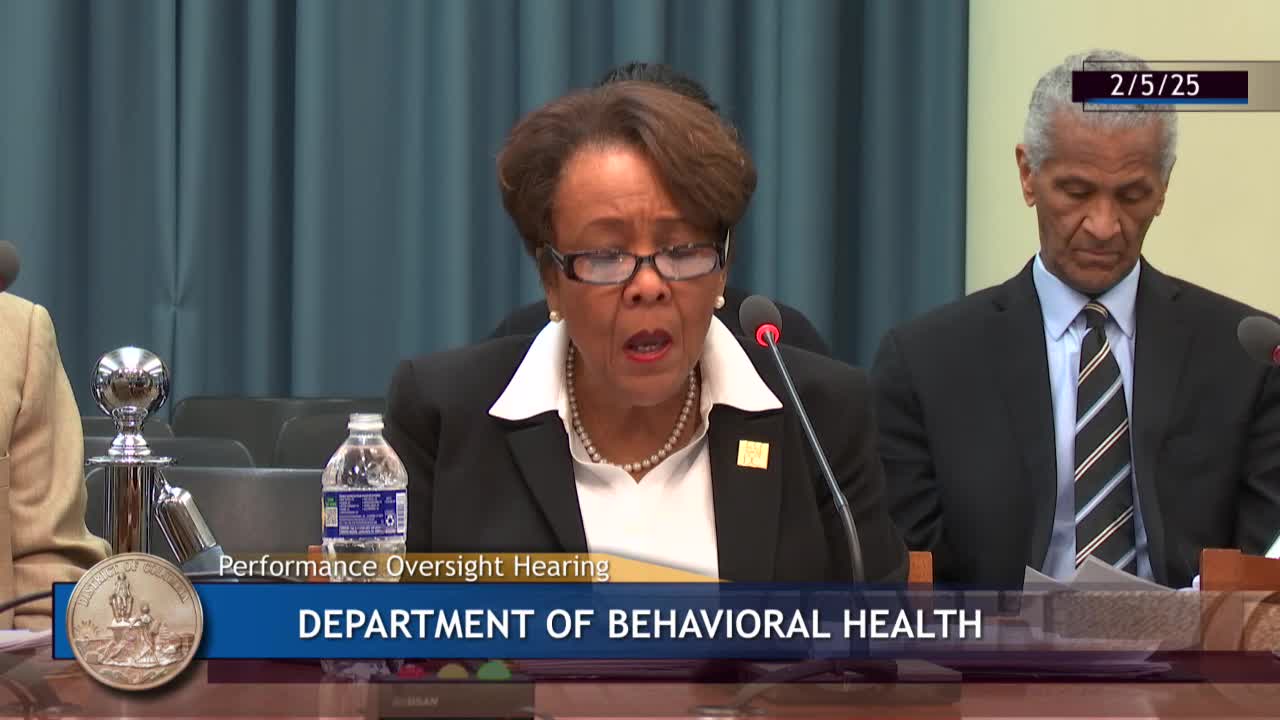
At the Feb. 5 performance oversight hearing the Department of Behavioral Health highlighted a multi-pronged effort to address opioid overdoses while outlining delays at a new Columbia Heights stabilization center.
Dr. Barbara Bazaron, director of DBH, said the District saw a roughly 30 percent decline in opioid-related deaths and a 17 percent decline in nonfatal overdoses in the past year. Bazaron attributed the reductions to a combination of interventions in the city’s Live Long DC plan, increased access to medication-assisted treatment and investments in harm reduction. “There is no 1 reason,” she said, adding that the work is supported by a federal/state opioid response grant and the opioid abatement fund.
DBH said the first stabilization center—the K Street facility—had 7,666 admissions in its first 15 months and linked about 22 percent of those individuals to ongoing treatment. Councilmembers pressed DBH to scale the model to other neighborhoods with elevated overdose risk.
Councilmember Mary Nadeau and others pressed DBH about the Columbia Heights center’s shifting timeline. DBH said remediation work discovered additional environmental issues after interior inspection, delaying construction and shifting the most recent opening estimate to spring 2026. Bazaron said DBH is prioritizing safety and will hold community meetings, publish FAQs and issue an RFA for a clinical operator; she emphasized that services will require bilingual staff and neighborhood engagement to limit disruption from ambulance movements and other operational impacts.
DBH also told the committee it is developing Medicaid billing codes—through the Department of Health Care Finance—to support substance use disorder stabilization services once pilot data refine the appropriate array of services.