Lifetime Citizen Portal Access — AI Briefings, Alerts & Unlimited Follows
DC Behavioral Health says manual grant process slowed payments; electronic grants system planned for August
Loading...
Summary
At a Feb. 5 performance oversight hearing, Department of Behavioral Health leaders described staffing shortages and manual workflows that have delayed grant payments and said they plan to implement an electronic grants-management system this summer, with go-live expected in August.
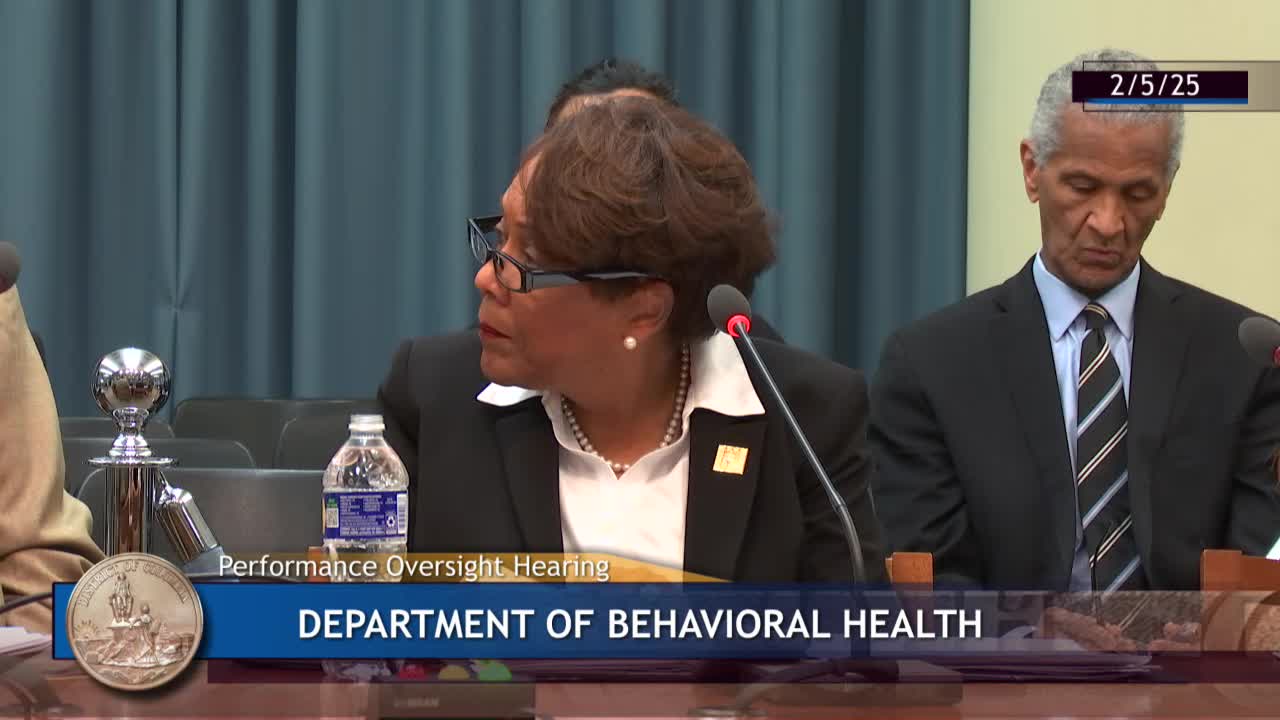
At-large Councilmember Christina Henderson, chair of the Committee on Health, pressed the DC Department of Behavioral Health on delays in grant administration and contractor payments at a Feb. 5 performance oversight hearing.
Dr. Barbara Bazaron, director of the Department of Behavioral Health, said the agency currently processes much of its grant work manually and is finalizing procurement of an electronic grants management system. “We expect to have it implemented or certainly operational for our purposes to start entering in and use it in August of this year,” Bazaron said.
The committee heard that DBH’s fiscal services team that processes grant invoices has vacancies. Michael Neff, DBH chief operating officer, told the committee that on the “fiscal services side of people who process, and review invoices prior to submittal, we have 2 vacancies out of 7 positions,” and that grant volume increased from about 131 grants in FY23 to roughly 196 grants—about a 50% increase in workload.
DBH described practical causes of payment delays: invoices submitted without the correct purchase-order (PO) codes or budget line items; mismatches between an invoice and an approved budget; and the need to reconcile federal grant accounting rules with local close-out requirements. Adrian Reed, the agency fiscal officer, then explained the narrow distinction DBH uses between “claims” (Medicaid billing) and grants when moving work between systems.
To reduce manual handoffs, DBH plans to deploy software compatible with the mayor’s grants process and federal grant rules, convert forms and templates into the system, and produce guidance videos for grantees. Neff said the agency previously issued an RFP that returned only a temporary staffing response; DBH now intends to buy and customize an already-compliant platform.
Committee members expressed concern about organizations that rely on timely grants for payroll and operations. DBH said staff will provide more technical assistance, and that the electronic system should reduce back-and-forth on budgets and invoice formats. Bazaron and fiscal staff committed to returning the committee with detailed metrics on current invoice-to-payment timelines and an updated plan for staffing and the e-grants rollout.
The hearing record also showed the Office of Inspector General’s recommendations for training on uniform administrative grant requirements and for faster deployment of an automated grant system; DBH said it is addressing those items.