Get Full Government Meeting Transcripts, Videos, & Alerts Forever!
Get email alerts on the Development Code Text Amendments topic
No spam. Unsubscribe anytime.
Planning Commission holds workshop on development‑code text amendments, clarifies role and CEQA triggers
Summary
Staff briefed the Fresno Planning Commission on how text amendments to the development code proceed, the commission's review/recommendation role, applicable findings, CEQA implications, and next steps; commissioners requested a Public Works briefing on roadway funding and timing.
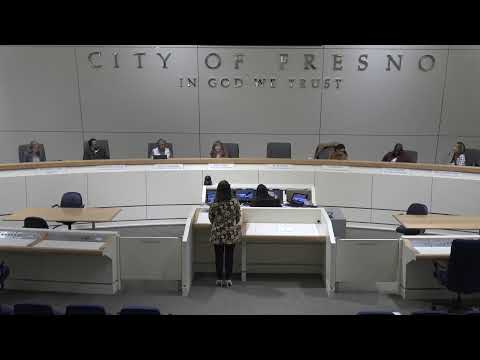
The Fresno City Planning Commission held a workshop on Feb. 5 outlining the process for development‑code text amendments, including who may initiate changes, the findings required for approval, and when CEQA review is triggered.
Ashley Atkinson, assistant director for Planning and Development, led the presentation and said text amendments are changes to chapter 15 of the Fresno Municipal Code. “It’s exactly what it says. We’re just using amendment instead of change. It’s a change to the text of the development code,” Atkinson said, summarizing the purpose of a text amendment.
Staff explained that the commission’s role for text amendments is advisory: the Planning Commission conducts at least one public hearing, takes public comment, and forwards a recommendation to the City Council. Two required findings must be made before recommending adoption: (1) consistency with the general plan and any applicable plans such as the Airport Land Use Compatibility Plan, and (2) consistency with the purpose of the development code to promote orderly growth and protect public health, safety and welfare.
Atkinson and staff noted who can initiate amendments — typically the director or City Council, sometimes the Planning Commission, and less commonly external applicants — and described the review path that may include council district project review committees and the Airport Land Use Commission when applicable. Staff emphasized that text amendments are generally legislative and discretionary, which can trigger California Environmental Quality Act (CEQA) review when appropriate.
Commissioners asked procedural questions about options available at the close of a Planning Commission hearing. Staff clarified that the commission may recommend adoption as presented, recommend adoption with changes, or recommend denial; if the commission recommends denial it still forwards the matter to City Council for final action. Staff also described the possibility of a minority report appearing before the council if the commission’s recommendation was not unanimous.
Several commissioners raised recurring public concern about roadway repair and how new subdivisions intersect with city and county maintenance timelines. Vice Chair Bridal and other commissioners asked staff for a brief overview of how Public Works prioritizes and funds roadway improvements. Staff said they would request a presentation from the Public Works director or staff on the overall work program and funding/timing for roadways.
The workshop closed with staff offering to return with further training on procedure items, minority reports and other technical topics ahead of a busy slate of text amendments planned for the spring.