Get Full Government Meeting Transcripts, Videos, & Alerts Forever!
Get email alerts on the Black History Month Proclamation topic
No spam. Unsubscribe anytime.
Salt Lake County Council proclaims February 2025 Black History Month and spotlights early Black pioneers
Summary
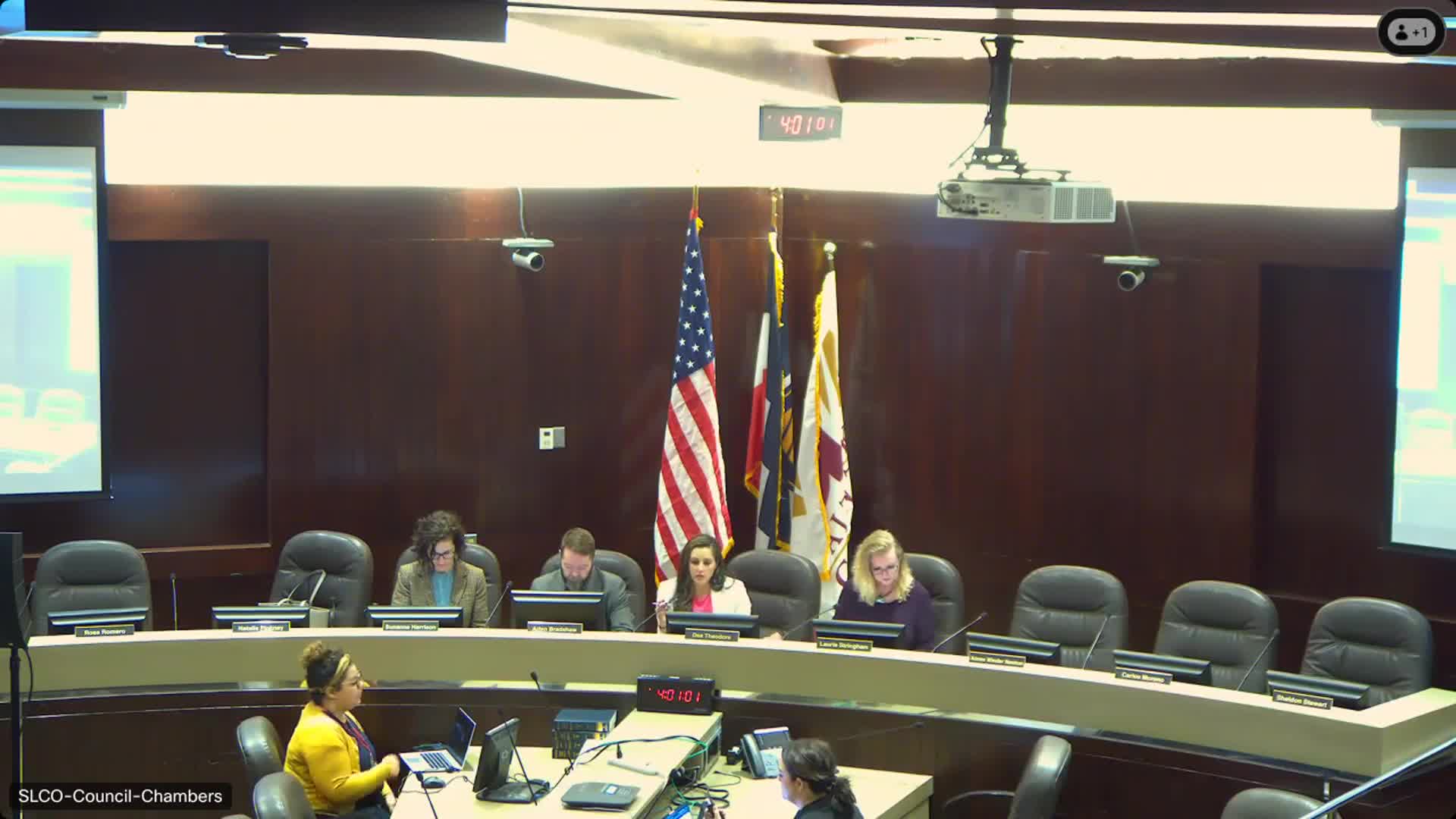
At its Feb. 4 meeting the Salt Lake County Council read and recognized a Black History Month proclamation, heard remarks about early Black pioneers who arrived before Brigham Young, and listened to performances by the Deborah Bonner Unity Gospel Choir.
Salt Lake County Council members on Feb. 4 read and recognized a proclamation declaring Feb. 1–Feb. 28, 2025, as Black History Month in Salt Lake County and highlighted contributions of Black residents past and present.
Councilwoman Natalie Pinkney read the proclamation on behalf of the council, saying, “we recognize the vast contributions made by Black Americans and those living in Salt Lake County, the state of Utah, and across the nation.” The proclamation recounted the origin of Black History Month, cited historic figures and local demographics, and stated that February 1 to 02/28/2025 has been declared Black History Month in Utah.
Councilwoman Lori Stringham, who sponsored the proclamation with Pinkney, introduced the Deborah Bonner Unity Gospel Choir and said the council would “touch on a couple of our pioneer ancestors that really helped settle Utah,” before briefly recounting the lives of four early Black arrivals to the Salt Lake Valley. Stringham told the council the “very first pioneers to walk into the valley were Green Flake, Hark Wells and Oscar Smith” and noted that those men “came in two days before Brigham Young did.” She also summarized Elizabeth Jane Manning James’s long journey to Nauvoo and eventual arrival in the Salt Lake Valley in 1847.
Deborah Bonner, director of the Deborah Bonner Unity Gospel Choir, told the council the choir has existed for 10 years and is “building youth choirs, gospel youth choirs in Utah and my hometown, Flint, Michigan.” Bonner said the youth choirs aim to give participants “hope and joy and confidence.” The choir performed two numbers: “I Love the Lord,” sung by Rebecca, and “How I Got Over,” sung by Rachel, as announced by Bonner.
The proclamation included local demographic figures cited by the reader: it states Utah’s Black and African American population is about 67,000, with 52% of that population living in Salt Lake County; it also states that 40% of Utah’s Black residents are multiracial. The text read at the meeting noted that since 2010 Utah’s Black population grew 55% while the state’s total population grew 18%, and that the number of multiracial Black residents grew about 94% during that period.
The council’s reading honored a range of contributions by Black residents, saying they have served “in armed forces, in government as first responders, advocates, educators, scientists, lawyers, judges, entrepreneurs, essential workers, and frontline service providers, artists, and private and public sector leaders.” The proclamation also recalled previously installed commemorative statues recognizing some of these early figures.
No roll-call vote or motion record was included in the meeting transcript for the proclamation; the item was presented, read aloud, and recognized by the council during the ceremony. The meeting concluded with an invitation to related events; Council members encouraged attendance at an event at Clark Planetarium.
The council’s remarks combined a ceremonial proclamation with historical context and a musical performance by a local gospel choir, underscoring the council’s intent to recognize Black history as part of Salt Lake County’s history.