Get Full Government Meeting Transcripts, Videos, & Alerts Forever!
Get email alerts on the Elections Precincts topic
No spam. Unsubscribe anytime.
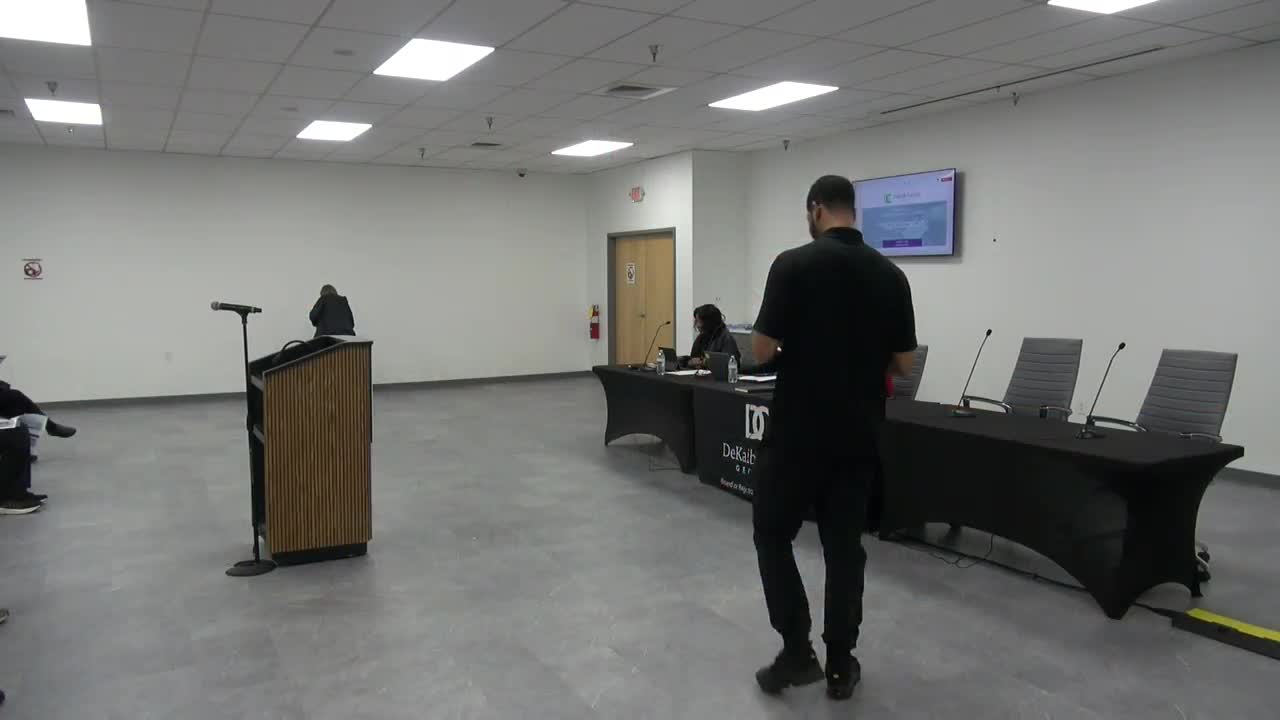
DeKalb elections staff propose shrinking 167 precincts to 148, residents warn of mail, parking and transit impacts
Summary
DeKalb County elections officials presented draft precinct consolidations affecting dozens of polling places and said changes would be mailed and publicly announced; residents raised concerns about postal delivery, school parking during primaries and public-transportation access.
DeKalb County Voter Registration and Elections on Tuesday presented draft changes to polling locations that would reduce the county’s 167 polling sites to 148 if the Board of Registration and Elections approves the recommendations. The changes are intended to move voters away from underused or inaccessible polling places and place more voters in facilities that staff say are closer and better equipped.
“By relocating and consolidating certain sites, the goal is to provide voters with more suitable facilities that meet their needs and enhance their voter experience,” said Keisha Smith, executive director of DeKalb County Voter Registration and Elections.
Smith said the proposals are informational and not final. A public comment period and an online survey remain open through Feb. 12; staff will present a final proposal to the Board of Registration and Elections for consideration the following week. If adopted, staff said implementations would be timed to take effect with the June election cycle unless a municipality requests a different schedule.
Why it matters: county staff said the changes are intended to improve accessibility and operational efficiency. Officials said many of the affected precincts served small numbers of voters on election day because the majority of ballots in those locations were cast during advance voting in November 2024. Staff repeatedly cited early voting rates of roughly 60–80 percent in affected precincts as a rationale for consolidating sites that serve relatively few election‑day voters.
Details staff highlighted: the packet presented dozens of site-specific proposals. Examples included moving the Silver Lake precinct to St. Martin in the Fields (staff said that reduces travel distance by 0.2 miles and would affect roughly 4,532 currently assigned voters), splitting the Stone Mountain Elementary precinct so part of it would vote at Champion Theme Middle School and part at Winbrook Elementary (staff estimated the west half would shift about 0.2 miles and impact about 1,169 voters), and combining Wesley Chapel Library voters into Ray of Hope Christian Church to shorten average travel by about 0.8 miles (impact estimate 2,711 voters). Staff said the proposal would move Bouldercrest Road voters to Cedar Grove United Methodist Church, a change they estimated would shorten travel by about 1.6 miles and involve roughly 1,954 affected voters. If all changes are approved, staff said the county would eliminate 19 polling sites.
Public concerns at the town-hall focused on three recurring themes: postal delivery and the risk of incorrectly triggering voter inactivity, parking at school polling places during primaries, and access by public transportation. Several residents said a single mailed precinct card will not be sufficient to inform voters who rarely vote except in major elections.
“I’m concerned that we will end up erroneously moving a bunch of voters to inactive,” said Bethann Froelen, a resident of Decatur, referencing past problems she said counties have experienced with mail vendors. Froelen and other attendees urged the elections office to assume mail delivery will be imperfect and to plan multiple outreach methods.
Staff response and outreach plans: Smith and other elections staff said the county will mail precinct cards to all voters whose polling place would change, and will supplement mailings with social media, press, community partners, and a mobile outreach unit intended to visit senior centers, recreation centers and other neighborhood sites. Smith said the office will also use a phone number and an email address and that staff will “leverage multiple touch points for our voters” if mail fails to reach some households.
On implementation timing, Smith said: “We are looking at implementing any changes adopted by the board in the June election” unless a municipality requests otherwise. She also said staff will reassess sites election by election and return to the board if changes produce unintended wait times.
Questions about schools and primaries: multiple speakers warned that school parking is already constrained during primaries—the time many local races are decided—and that shifting precincts to high schools or elementary schools in session could worsen parking and access problems. Volunteers and staff at the meeting said schools sometimes host events that conflict with voting and that large precinct consolidations might create new crowding on election day even if advance voting remains high.
“Primary election day voting is actually a much greater percent of the total vote count than it is on election day” for some contests, said Bethann Froelen, noting that precinct crowding on a primary could outstrip the same location’s capacity. Election staff replied that parking and site logistics were considered during the assessments and that the county would coordinate with site contacts to minimize conflicts.
Transit and walk‑distance concerns: commenters flagged particular moves—such as some Canby Lane voters crossing I‑20 to reach the proposed site—with expected transit times of 45–50 minutes. Staff said distances were measured from the geographic center of each precinct and that their analysis aimed to reduce average travel distance and improve access when possible.
What was not decided: no formal vote was taken at the town hall. Staff repeatedly emphasized the recommendations are drafts and that final action is subject to board approval and the public-input process. Staff also noted that precinct boundary changes would alter precinct assignments in some cases (for example, the west half of the Rowland Elementary precinct would be merged into the Austin Drive precinct under staff’s draft), which could affect how voters receive party and civic information tied to precincts.
Next steps and how to comment: the online survey is open through Feb. 12 at dekalbvotes.com, staff said, and voters may email the elections office at voterreg@dekalbcountyga.gov or call (404) 298‑4020. Staff encouraged completion of the survey and said comment cards at satellite locations would be collected and returned to headquarters for consideration.
The county’s elections staff closed the session reiterating that they will present the recommendations to the Board of Registration and Elections, and that any approved changes would be accompanied by a “robust voter notification plan.”