Get Full Government Meeting Transcripts, Videos, & Alerts Forever!
Get email alerts on the Federal Grants And Legislative Program topic
No spam. Unsubscribe anytime.
San Antonio outlines federal legislative priorities and $326 million in federal grants as city readies response to fast-changing Washington actions
Summary
City staff briefed the San Antonio City Council on a seven‑pillar federal legislative program and an FY2025 federal‑grant portfolio of about $326 million, and described an internal review process to track rapid executive‑branch actions in Washington while councilmembers pressed for protections for vulnerable residents.
San Antonio officials on Feb. 5 presented a citywide federal legislative program and a department-by-department accounting of federal grants included in the fiscal year 2025 adopted budget, and said they will monitor rapidly issued federal executive orders for potential local effects.
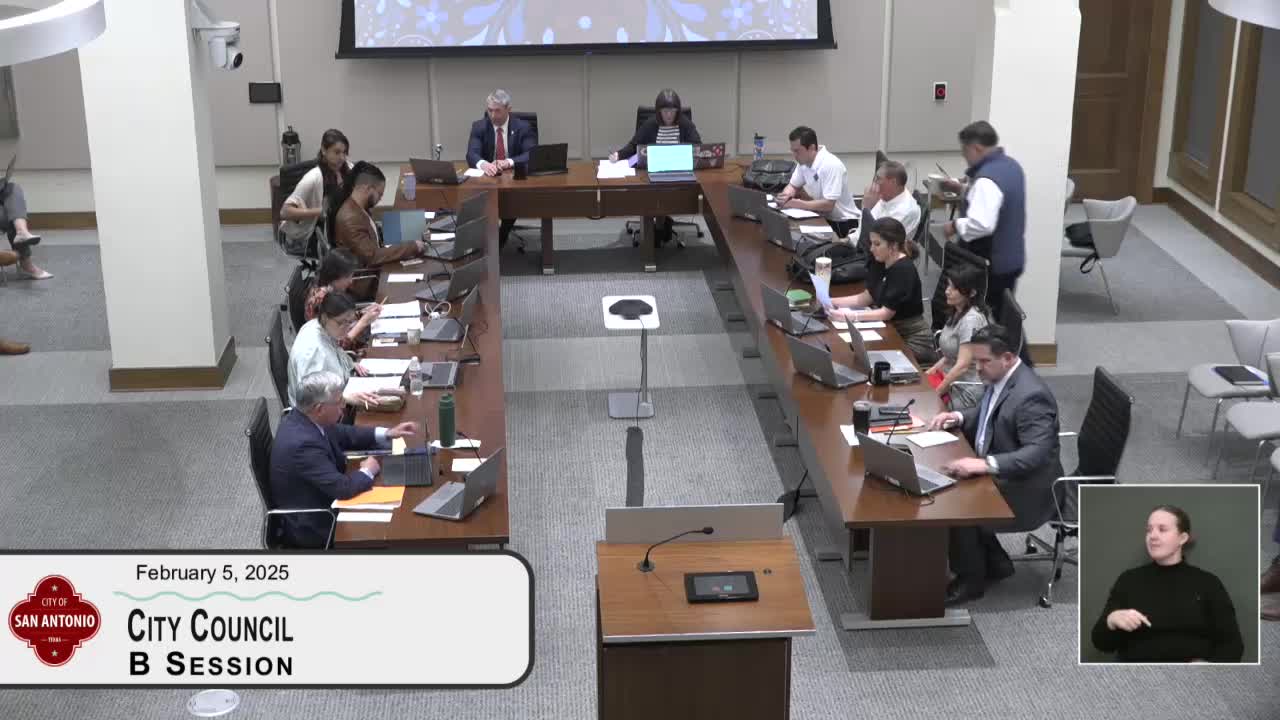
"Of the city's $3,900,000,000 federal grants make up about 8.3% of the total adopted budget or $326,000,000. These grants fund a total of 758 authorized positions," Justina Tate, the city's budget director, said in the presentation to Mayor Nirenberg and the council.
The program, presented by government affairs staff and the city's federal consultants, is organized around seven pillars: economic and community development; military protection; public safety and homeland security; infrastructure resiliency and transportation; workforce; public health and human services; and an "advancement of community interest" pillar meant to capture emerging federal issues. Staff said the program reflects priorities they expect to pursue with the city's federal delegation and outside consultants in Washington.
Why it matters: The briefing combined two functions — a near‑term status report on how executive actions in Washington could affect city programs, and a longer‑running agenda used to coordinate lobbying and grant work with members of Congress, federal agencies and the city's Aiken Group consultants. Council members repeatedly pressed staff for clarity about which programs and vulnerable populations would be protected if federal funding or policies change.
Key details from the budget overview
- Total federal grants in the FY2025 adopted budget: about $326 million (roughly 8.3% of the $3.9 billion adopted budget). - Authorized positions funded by grants: 758. - Largest department recipient: Human Services — about $172 million (almost half of federal grant funds, driven largely by child and youth services). - Major program dollar lines called out in the presentation: childcare services vouchers (~$117 million, supporting about 21,000 children), Head Start (notice of award received; grant roughly $30 million), WIC (~$7 million), airport capital funding (about $73 million), public health (~$31 million), housing and homelessness (~$27 million), and public safety/emergency preparedness (~$14 million, including partial funding for roughly 100 police officers). - FEMA and disaster reimbursement: staff said the city is owed about $12.4 million through FEMA for shelter services and is pursuing additional reimbursement related to the winter storm "Yuri." Officials warned reimbursements can take years and said they are in ongoing contact with FEMA and the state to resolve outstanding claims.
Federal policy and program priorities
Presenters and the city's Washington consultants described a set of federal priorities the city will track and push: strengthening and expanding the Low Income Housing Tax Credit (including the Housing Credit Improvement Act), preserving tax‑exempt municipal bonds, pursuing opportunity‑zone investment in affordable housing, continuing support for Defense Communities Infrastructure Program dollars that benefit Joint Base San Antonio partners, and maintaining funding streams for homelessness, public health, workforce training and emergency management programs such as the Urban Area Security Initiative and Assistance to Firefighters grants.
City manager Eric Walsh described an internal review process to spot potential impacts from federal actions. "That group will meet weekly, and we'll provide updates to the mayor and the council on any potential changes or orders that may be relevant to the city," Walsh said, describing a cross‑department team including budget, finance, human resources and affected departments.
Council reaction and community concerns
Councilmembers commended the Aiken Group consultants and city staff for the briefing but pressed repeatedly for more detail and clearer communications back to residents. Several councilmembers raised concerns about housing affordability, the risk that tariffs or federal policy shifts could raise construction costs, and the potential for changes at the federal level to disrupt federal grants that support Head Start, child care vouchers and homelessness services.
Members of the council also connected the briefing to a student demonstration outside City Hall earlier in the day. Multiple councilmembers said the students sought assurances about immigration enforcement, school safety and protections for LGBTQ+ youth. Several asked staff to prepare public messaging and to consider council resolutions that would clarify the city's stance and how local departments will interact with federal immigration authorities. Councilmembers noted a balance: continue delivering services the city provides while remaining ready to respond if federal policy or funding changes.
What staff said about timing and uncertainty
The city's Washington consultants and staff told council members that many of the administration's executive actions are subject to court challenges and agency rulemaking, and that personnel changes in federal agencies mean it may be weeks or months before permanent appointees are in place. The consultants said an executive‑order tracker the Aiken Group maintains will be used to keep the city informed.
Staff also emphasized that, unless notified otherwise, the city will continue to administer federally funded programs as required by grant agreements and will not preemptively stop services. Councilmembers asked staff to identify contingency language for future contracts that would allow the city flexibility if anticipated federal funds were delayed or rescinded.
Looking ahead
City staff said the federal legislative program will return to council for formal approval in upcoming meetings and that the city will continue to coordinate with its congressional delegation — including members serving on appropriations and committee assignments the staff identified as relevant (for example, Senate Finance; House Appropriations subcommittees) — to advocate for the priorities listed.
Council members asked staff to provide more‑frequent public updates and to prepare targeted briefings about specific risks (tariffs, FEMA reimbursement timing, Head Start and child care funding, municipal bond protections and Defense Communities funding) so the council can consider policy responses or public statements.
The presentation and the council Q&A constituted a policy‑level briefing and monitoring plan; no formal vote or ordinance was taken during the meeting on Feb. 5.