Get Full Government Meeting Transcripts, Videos, & Alerts Forever!
Get email alerts on the Biomarker Testing Coverage topic
No spam. Unsubscribe anytime.
Committee hears sponsor testimony on bill to require insurer coverage for biomarker testing after diagnosis
Summary
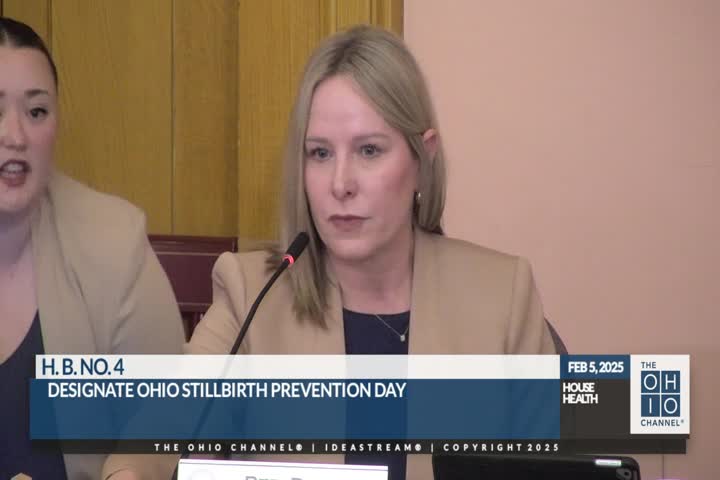
Representative White presented sponsor testimony for House Bill 8 in the Ohio House Health Committee’s first hearing on the proposal to require health plans to cover biomarker testing when it meets specified medical and scientific evidence standards.
Representative White presented sponsor testimony for House Bill 8 in the Ohio House Health Committee’s first hearing on the proposal to require health plans to cover biomarker testing when it meets specified medical and scientific evidence standards. White said the bill would standardize coverage for tests that identify genetic or other biomarkers used to match patients to targeted therapies, and that more than 70 health-care and advocacy organizations support the measure.
White said the requirement would apply only when testing is supported by rigorous evidence — citing U.S. Food and Drug Administration, Centers for Medicare and Medicaid Services and nationally recognized clinical-practice guidelines such as the National Comprehensive Cancer Network — and that the bill ties coverage to those standards rather than mandating testing in all cases. She said the bill excludes routine screening and applies post-diagnosis.
Sponsor testimony stressed potential clinical and economic benefits. White and proponents referred to studies and business-case analyses they said show average test costs are a few hundred dollars and that broader use of comprehensive biomarker testing can reduce unnecessary treatments and, in some analyses, produce modest per-member-per-month cost impacts that are offset by downstream savings. White said the proposal had been revised across sessions to add a medical-necessity provision, align definitions with state insurance dispute law and remove consensus statements from the authorized-evidence list.
Committee members raised cost and implementation concerns. Representative King asked about the effect on small-business-sponsored plans and whether caps or Medicare-referenced pricing could be considered. Representative Gross asked whether Medicaid already covers these tests and whether the bill would impose a Medicaid expansion; White answered that Medicaid covers many biomarker tests now and that the bill would require coverage only for tests meeting the statutory evidence standard, not universal coverage for all tests. Members also asked whether prior authorization would be required; White said the bill does not specify or prohibit prior authorization mechanisms and that such administrative details remain part of plan-provider negotiations.
Several lawmakers urged proponents to supply more detail on costs and reference pricing. White said the bill’s advocates plan to provide the committee with studies, cost analyses and expert witnesses in subsequent hearings after budget work concludes. No vote was taken; the committee concluded the first hearing and plans further testimony.