Get Full Government Meeting Transcripts, Videos, & Alerts Forever!
Get email alerts on the Demolition 2600 Mlk topic
No spam. Unsubscribe anytime.
Neighbors secure postponement of demolition hearing for 2600 E. Martin Luther King Jr. Blvd.
Summary
The Historic Landmark Commission postponed consideration of a demolition request at 2600 E. Martin Luther King Jr. Blvd. after neighborhood residents requested more information about developer intent and ownership; the applicant said the commission's action is needed to move an associated rezoning forward.
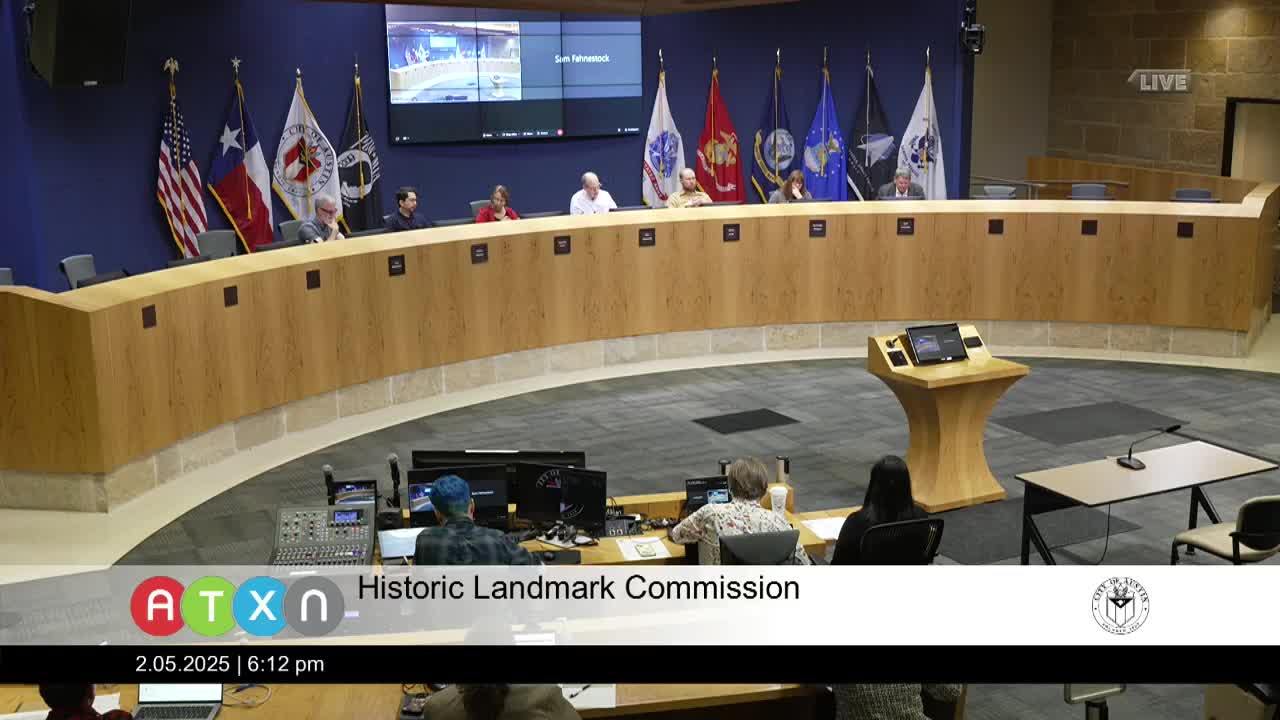
The Historic Landmark Commission on Feb. 5 postponed consideration of a demolition request for a property at 2600 East Martin Luther King Jr. Boulevard after neighborhood representatives said they needed more time to confirm the developer's intent and purchase status.
Leah Bojo, representing the applicant, told the commission the project team has met with neighbors ‘‘twice and had several correspondences’’ and said the applicant cannot move its rezoning case forward ‘‘until this commission has acted on this permit.’’ She asked the commission to hear the case that night.
Residents and neighborhood leaders said they were still awaiting documentation showing the developers’ purchase or binding commitment to build. Barry McBride of the Rogers Washington Holy Cross Neighborhood Association said the neighborhood ‘‘are pro development’’ but cannot support simultaneous rezoning and demolition without evidence that the developers ‘‘will truly develop the property’’ and, at minimum, a contract or purchase agreement.
Messiah Ramos, president of the Rogers Washington Holy Cross Neighborhood Association, cited concerns about potential demolition impacts to the nearby historic district and asked for more time to negotiate assurances with the developer. Megan King of Preservation Austin also urged postponement, citing environmental concerns of demolition and the need to protect the district.
Commissioners discussed whether to hear the applicant’s presentation or to postpone so neighborhood negotiations could continue. A motion to postpone the case to the commission’s March meeting was made and seconded; the commission voted to postpone the item unanimously.
Ending: Staff and the applicant said they would continue neighborhood outreach. The commission’s postponement means the applicant will not receive final action from the HLC until the March meeting.