Get Full Government Meeting Transcripts, Videos, & Alerts Forever!
Get email alerts on the Privacy Constitutional Amendment topic
No spam. Unsubscribe anytime.
Committee hears testimony on proposed constitutional right to privacy; no committee vote recorded
Summary
Senate Joint Resolution 9, proposing an explicit right to privacy in the Wyoming Constitution, drew extensive discussion and public testimony but the Judiciary Committee did not take a final vote during the meeting; supporters cited statewide gaps in privacy protection and pointed to model language used by other states.
Senate Joint Resolution 9, which would add an explicit individual right to privacy to the Wyoming Constitution, received extended presentation, questions from committee members and public testimony, but no committee vote was recorded during the session.
Sponsor Senator Rafas told the committee the proposal is intended to add a simple, explicit right: modeled on language used in other states such as Hawaii and Montana, the resolution would declare that "the right of individual privacy is essential to the well-being of a free society and shall not be infringed." Rafas said the intent is broad — covering more than digital data — and aims to restore or clarify privacy protections at the state level.
Committee members asked a range of questions about scope and legal effects. Senator Hicks and others asked whether a constitutional privacy guarantee might complicate criminal discovery or be used as a defense in litigation; Rafas said he was not aware of litigation outcomes in other states but expected privacy claims could arise in litigation and that state precedent would develop. Questions also raised whether the proposed right could affect school policies or restroom access; Rafas replied that a constitutional right to privacy typically constrains government action and would be balanced by existing legal tests such as compelling-state-interest standards present in other states' language.
Supporters argued Wyoming's current constitutional and statutory privacy protections are limited and that an explicit state provision would reinforce individual protections. Rafas noted twelve states already include explicit constitutional privacy provisions. He framed the measure as giving voters the choice: if the legislature approves the amendment it would go to the ballot for Wyoming voters to accept or reject.
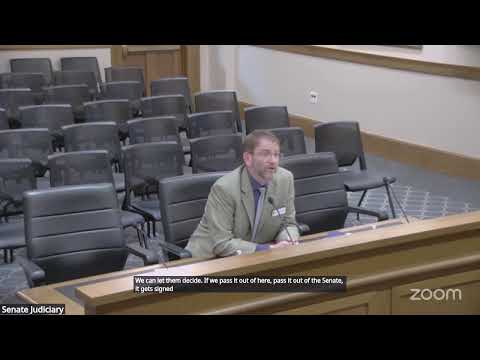
Public testimony was taken, and committee members closed the record without a final vote. The chair indicated additional committee business remained and the meeting adjourned; no committee recommendation on SJR9 was recorded in the transcript.
Ending: Sponsors said the amendment would be placed before voters if the legislature advances it, allowing the public to decide whether to enshrine a right to privacy in the state constitution.