Get Full Government Meeting Transcripts, Videos, & Alerts Forever!
Get email alerts on the County Facilities Plan topic
No spam. Unsubscribe anytime.
Grimes County begins 10-year facilities planning as growth strains jail, court and annex buildings
Summary
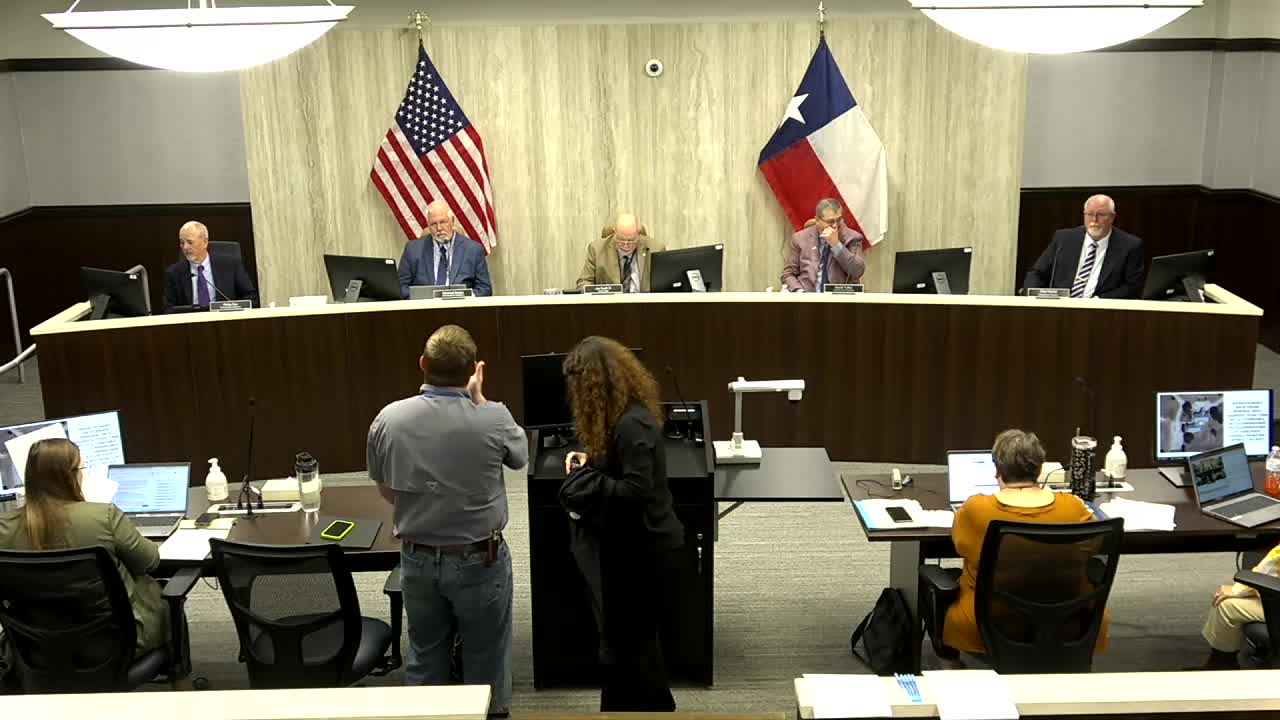
Grimes County Facilities Director Rodney Floyd asked the Grimes County Commissioners Court on Wednesday to begin a formal 10-year planning process to prioritize repairs, expansions and new construction as the county grows.
Grimes County Facilities Director Rodney Floyd asked the Grimes County Commissioners Court on Wednesday to begin a formal 10-year planning process to prioritize repairs, expansions and new construction as the county grows.
“I asked for this to be a meeting ... where you all see the needs of your precincts as well as the county as a whole,” Facilities Director Rodney Floyd said, opening the discussion. Floyd told the court he wants a written plan so his department can align budgeting with anticipated projects.
The commissioners focused first on what officials described as the most immediate and costly need: additional inmate housing and related upgrades at the county jail. Commissioners and the sheriff said the jail is close to capacity. The sheriff reported restrictions on accepting some misdemeanors and said that if the jail reaches its limit the county would have to transfer inmates to other facilities. Commissioners heard a planning recommendation to involve architects and jail-standards experts early; the court was urged to budget for architectural and engineering work in the 2026 budget cycle so planning can begin sooner.
County officials discussed cost estimates heard at the meeting: a ballpark construction cost range of about $525 to $575 per square foot for jail space, with architecture and engineering fees around 10 percent of construction costs. Commissioners said those figures underscore the scale of resources required for an expansion.
The court also reviewed space and system constraints at smaller facilities. At the JP‑1 office (the Iowa annex), Floyd and local judges described electrical limits — the building has a 200-amp service — that prevent adding computers or printers without upgrades. The annex currently lacks a public restroom usable outside secured office space, which officials said raises security concerns when staff must open secured doors to let visitors use the facilities. Judges and constables raised accessibility issues for residents who travel long distances to reach services and asked staff to explore satellite or mobile options for license and registration services.
Officials described foundation and septic problems at the Navasota annex and “choppy” interior layouts caused by multiple additions; those conditions are producing recurring plumbing problems, moisture intrusion and the need to weigh repair-versus-replace options. Floyd said the annex could be reconfigured to add several offices, but the court must decide how much to invest versus building new space on available county land nearby.
The commissioners discussed statutory triggers tied to population growth. County officials cited a state statute discussed in the meeting that requires an additional justice of the peace (JP) and constable precinct when the county population reaches 50,000, and noted a statutory requirement that a justice of the peace must reside in the precinct they serve and have a place to hold court. County staff estimated Grimes County’s population at roughly 30,000 now and discussed several local development proposals and growth-rate projections that could move the county toward the 50,000 threshold within coming years.
Other facility topics included long‑deferred mechanical work at St. Joseph hospital (previously estimated at about $1.4 million for electrical and condenser upgrades), aging ductwork and hangers at the AgriLife building, and options for the fairgrounds and expo center. Modular buildings were described as an immediate but short‑term solution: usable quickly, affordable up front, but higher maintenance over a longer horizon.
On budget strategy, commissioners discussed setting aside a designated capital fund or using contingency balances to seed multi-year capital projects. Facilities Director Floyd said he will prepare a spreadsheet and a more detailed three-, five- and 10-year plan with square‑footage estimates and cost ranges for the court to review ahead of the next budget season.
The court took no binding decisions on construction or funding during the special meeting; the only formal action recorded was a motion to adjourn. Floyd and commissioners agreed to continue the discussion and to bring more detailed cost and scope information back to the court for budget deliberations and possible architectural contracting.
Ending: Facilities Director Floyd described the meeting as “step 1” in a multi-stage planning effort. Commissioners directed staff to gather data, explore site options and report back with estimates and recommended priorities before the 2026 budget cycle.