Get AI Briefings, Transcripts & Alerts on Local & National Government Meetings — Forever.
Committee hears broad testimony on bill to allow jury trials in administrative cases; agencies warn of cost and separation‑of‑powers issues
Loading...
Summary
Representative Strzok introduced House Bill 120, which would allow people to request a jury trial in contested administrative proceedings for fines of $20 or more or when a significant liberty interest or license suspension is at stake.
Representative Strzok introduced House Bill 120, a proposal to give individuals the option of a jury trial in contested administrative proceedings when an agency seeks a fine of $20 or more, suspends a license, or takes other actions affecting a significant liberty interest. The bill would let a person elect trial by jury in lieu of a traditional administrative hearing; the right could also be waived.
Proponents told the committee the change is meant to protect people who face serious agency sanctions. Jesse Rubino, speaking in a personal capacity, and several members of the public described licensing disputes they said were costly and unfair. Kelsey James, owner of an independent pharmacy in Cheyenne, said her business had spent hundreds of thousands of dollars in legal fees during a licensing dispute and that the board’s handling of the case denied her due process; she urged the committee to consider a mechanism that would allow community review by a jury in particularly serious matters.
State officials and administrative‑process experts warned of structural problems and large administrative costs. A representative from the governor’s office said the proposal raises separation‑of‑powers concerns and could impose substantial costs and logistical burdens across many agencies. The governor’s office and Office of Administrative Hearings officials noted contested‑case proceedings under the Wyoming Administrative Procedure Act (Title 16) are intended to be an in‑house, specialized forum with judicial review available afterward.
JC Demers, director of the Wyoming Office of Administrative Hearings (OAH), told the committee OAH receives roughly 900–1,000 contested‑case referrals annually across a wide range of matters (workers’ compensation, driver’s license revocations, professional licensing, Medicaid waiver disputes and others). He said the office lacks facilities and personnel to run jury trials statewide and that converting many contested cases into jury trials would substantially increase time and cost per matter.
Kit Wendland from the governor’s office said the bill’s $20 threshold is very low and could sweep in high volumes of matters — for example, civil driver’s license revocation hearings alone produced hundreds of requests in recent years (436 in one year and 527 in 2023 were cited in committee testimony). Wendland also warned that jury trials require in‑person facilities, voir dire, jury instructions and additional staffing that contested‑case processes are not structured to provide.
Professional boards and licensing‑system representatives likewise cautioned the committee. Kevin Bonham, executive director of the Board of Medicine, and Rachel Philbrandt, executive director of the Board of Nursing, said licensing boards are composed of peers and are required to make detailed findings of fact and conclusions of law — a process they said juries of laypeople are not prepared to replicate. Bonham also voiced concern that permitting jury trials could slow disciplinary actions and impede enforcement in cases involving public safety or urgent license suspensions.
Proponents said the bill’s right to a jury would be waivable and that many contested matters would not warrant a jury trial; supporters suggested raising the monetary threshold and leaving waiver and cost provisions on the table. Jesse Rubino noted the bill as drafted does not change exhaustion requirements for appealing administrative decisions to district court.
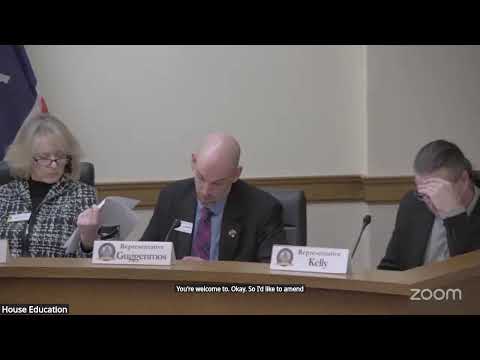
Committee members closed public testimony after robust attendance and testimony, and the chairman and vice chair said they would hold the bill over to a later working session (a Friday meeting) so committee members can consult further with agencies and consider possible amendments that address cost, volume and separation‑of‑powers concerns.
Speakers included Representative Strzok (bill sponsor), Jesse Rubino (support witness), Kit Wendland (Governor’s Office), JC Demers (Director, OAH), Kevin Bonham (Executive Director, Board of Medicine), Rachel Philbrandt (Executive Director, Board of Nursing), Kelsey James (pharmacy owner), and Chuck James (supporting public commenter).