Get Full Government Meeting Transcripts, Videos, & Alerts Forever!
Get email alerts on the Personhood Definitions topic
No spam. Unsubscribe anytime.
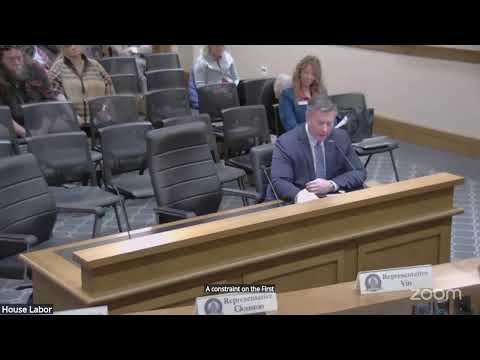
Committee hears hours of testimony on bill to define ‘person’ in state law
Summary
House Bill 250, a proposal to specify rules of construction and definitions for the term “person” in Wyoming statutes, drew extended debate and public testimony at the Labor, Health & Social Services Committee hearing.
House Bill 250, a proposal to specify rules of construction and definitions for the term “person” in Wyoming statutes, drew extended debate and public testimony at the Labor, Health & Social Services Committee hearing. The bill’s sponsor, identified in the transcript as Speaker (Mr. Speaker), framed the measure as an effort to define when human life qualifies for constitutional protection and to clarify legislative intent for courts.
The bill would change statutory interpretive language so that, “when applicable to the individual, ‘person’ is someone who possesses at least one of the following” listed biological functions including heart function, respiratory system function, central nervous system or brain function, skeletal or organ development, and others. The sponsor said the proposal is intended to create a statutory definition that shows legislative intent for the courts and to establish protections for unborn life subject to narrow exceptions for medical necessity.
The committee’s nut graf: supporters called the bill a clarification that would protect unborn life; opponents, including medical and advocacy witnesses, warned of broad unintended consequences for medical care, end‑of‑life decisions and criminal and family law.
During committee questioning Representative Yin said the bill “is essentially an attack on the judiciary” because it directs how courts should interpret the Constitution; the sponsor replied that judges had asked for legislative definitions to help determine legislative intent. Representative Bien asked why the Wyoming Health Care Decisions Act (end‑of‑life statutes) had been explicitly exempted in the draft; the sponsor said the focus of the bill was the beginning of life.
Public testimony spanned supportive and critical perspectives. Jeanette Ward testified in favor, saying “that second patient is a person worthy of protection.” The committee heard a physician‑in‑training, Dr. Marcus Coolidge, raise clinical concerns about how the bill’s prohibition on health care decisions that “cause harm to the function” could affect routine pediatric cancer treatments, vaccines or other therapies; he said the provision as written could “basically ban… any harm to an organ function” and asked for clarification.
Several witnesses warned of substantial unintended consequences. Witnesses said the measure could interact with existing abortion statutes, contraceptive access, management of miscarriage care, child endangerment laws, and routine medical treatment for children and pregnant patients. The American Cancer Society Cancer Action Network representative urged the committee to consider how “any essential cancer treatments, including chemotherapy, prescription drugs, or surgeries could fall outside the state's definition of healthcare” under current draft language.
Opponents framed the bill as a continuation of a larger political project: one public commenter said the measure “proves that the religious of the day… do not understand why the founders put the first [amendment] first,” while other faith‑based and pro‑life witnesses described the proposal as an effort to codify protections for the unborn.
Several witnesses urged technical fixes and medical review. Testimony repeatedly requested that statutory language be clarified to avoid unintended limits on accepted medical practice and to identify precisely who determines “no chance of meaningful recovery,” noting the draft places exception determinations with the Wyoming Board of Medicine.
Committee staff counted approximately six in‑person public speakers and about five online who had indicated they planned to testify. The committee did not take a vote on House Bill 250 during this session; members requested additional clarification and technical drafting before any committee action.
The record shows the committee will continue to accept public comment and will reconvene after adjournment to complete testimony. No committee decision or vote on final passage was recorded during the session.