Get Full Government Meeting Transcripts, Videos, & Alerts Forever!
Get email alerts on the Wildfire Management topic
No spam. Unsubscribe anytime.
Minerals Committee passes wildfire mitigation and utility liability bill (HB192) with amendments
Summary
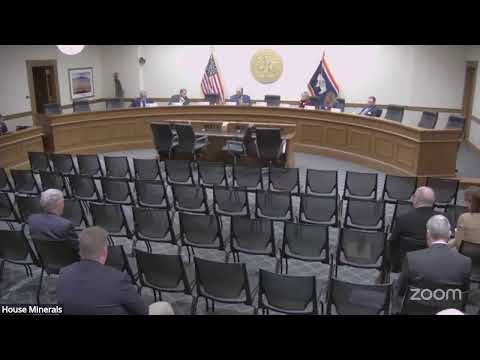
After extensive public testimony from utilities, insurers, firefighters and other stakeholders, the Minerals Committee passed House Bill 192 8‑0 (1 excused) with amendments that add firefighter and forestry input, limit non‑economic damages, and require pre‑suit negotiation.
The Minerals, Business & Economic Development Committee passed House Bill 192 on Feb. 5, 2025, with amendments, voting 8‑0 with one member excused. The bill creates a statutory framework tying certain liability protections to utility wildfire mitigation plans and sets procedural requirements for wildfire‑related claims.
Committee members heard more than a dozen witnesses in support and two witnesses expressing concerns. Testimony from industry and insurers detailed changes in the liability and reinsurance markets; Phil Irwin, president and CEO of Federated Rural Electric Insurance Exchange, told the committee that available upper‑layer liability coverage for cooperatives has dropped (from as much as $62,000,000 in 2022 to $42,000,000 currently for some cooperatives) and that reinsurance pricing has risen sharply. Irwin said reinsurers’ pricing for higher layers has increased by 40%–65% in some regions; he gave examples of the cost per million dollars of coverage rising from a few thousand dollars per million in 2022 to $11,000 per million last fall and a recent quote of $23,000 per million.
Other supporters included the Wyoming Mining Association, the Wyoming Farm Bureau Federation, Lower Valley Energy, the Petroleum Association of Wyoming, Rocky Mountain Power, the Wyoming Office of the Consumer Advocate and the Wyoming Public Service Commission. Witnesses argued the bill would improve availability of coverage and give utilities a clearer standard of care tied to wildfire mitigation plans, while preserving the Public Service Commission’s role in reviewing prudency of costs.
Representing insurers, the National Association of Mutual Insurance Companies (NAMIC) said it supports mitigation plans but raised concerns that limiting utility exposure could shift costs to insurers and ultimately to policyholders. NAMIC also warned that terms such as "substantially comply" will be litigated and could add costs.
Legal counsel Mark Aronowitz, representing the Wyoming Trial Lawyers Association, said the group was neither endorsing nor opposing the bill but asked for clarifying language on non‑economic damages; the committee accepted an amendment (moved by Representative Larson) that changes the non‑economic damages provision to bar recovery "unless his or her claim is based on the injury or death of any person in a wildfire." Aronowitz had also proposed the specific drafting clarification the committee adopted.
The committee adopted three floor amendments during consideration: (1) an amendment (moved by Representative Volley, seconded by Representative Larson) adding language that the utility wildfire plans consider input from the Wyoming State Forestry Division, the Wyoming Rural Firefighters Association and other appropriate federal, state or local fire entities; (2) an amendment (moved by Representative Larson, seconded by Representative Lolli) incorporating the Trial Lawyers Association's revision on non‑economic damages; and (3) an amendment (moved by Representative Lawley, seconded by Representative Larson) requiring that an electric utility and a landowner with an alleged wildfire‑related claim must negotiate in good faith and that the utility must respond to a landowner’s written, itemized damages within 90 days before a lawsuit permitted by the act may be filed (the committee deleted the prior related paragraph and inserted the negotiation requirement).
After amendments passed, the committee took a roll‑call vote on the amended bill. The clerk recorded ayes from Representatives Campbell, Knapp, Larson, Volley, Schmidt, Tarver, Weber and Chairman Heiner; Representative Riggins was excused. The clerk reported the final tally as 8 ayes, 0 noes, 1 excused. The committee announced the bill as passed with amendments and will forward the measure according to the legislative calendar.
The committee record shows a convergence of utilities, industry groups and firefighters in support of mitigation‑linked liability protections, while insurers and trial lawyers flagged areas for clarification and proposed text changes that the committee adopted in part. The Public Service Commission noted that vegetation management standards are already part of safe, adequate and reliable service reviews and that focusing on formal wildfire plans may provide clearer standards for utilities and regulators.
The committee’s action sends HB192, as amended, to the next stage of the legislative process.