Get Full Government Meeting Transcripts, Videos, & Alerts Forever!
Get email alerts on the Regional Government Environment topic
No spam. Unsubscribe anytime.
Loudoun environmental commission presents countywide energy, natural-resources work to Leesburg advisers
Summary
William (vice chair, Loudoun Environmental Commission) briefed the Leesburg Environmental Advisory Commission on Loudoun County’s energy and natural‑resources initiatives, including an NREL contract to measure data‑center emissions, a county landfill methane project and recommendations to relax zoning limits for certain solar projects.
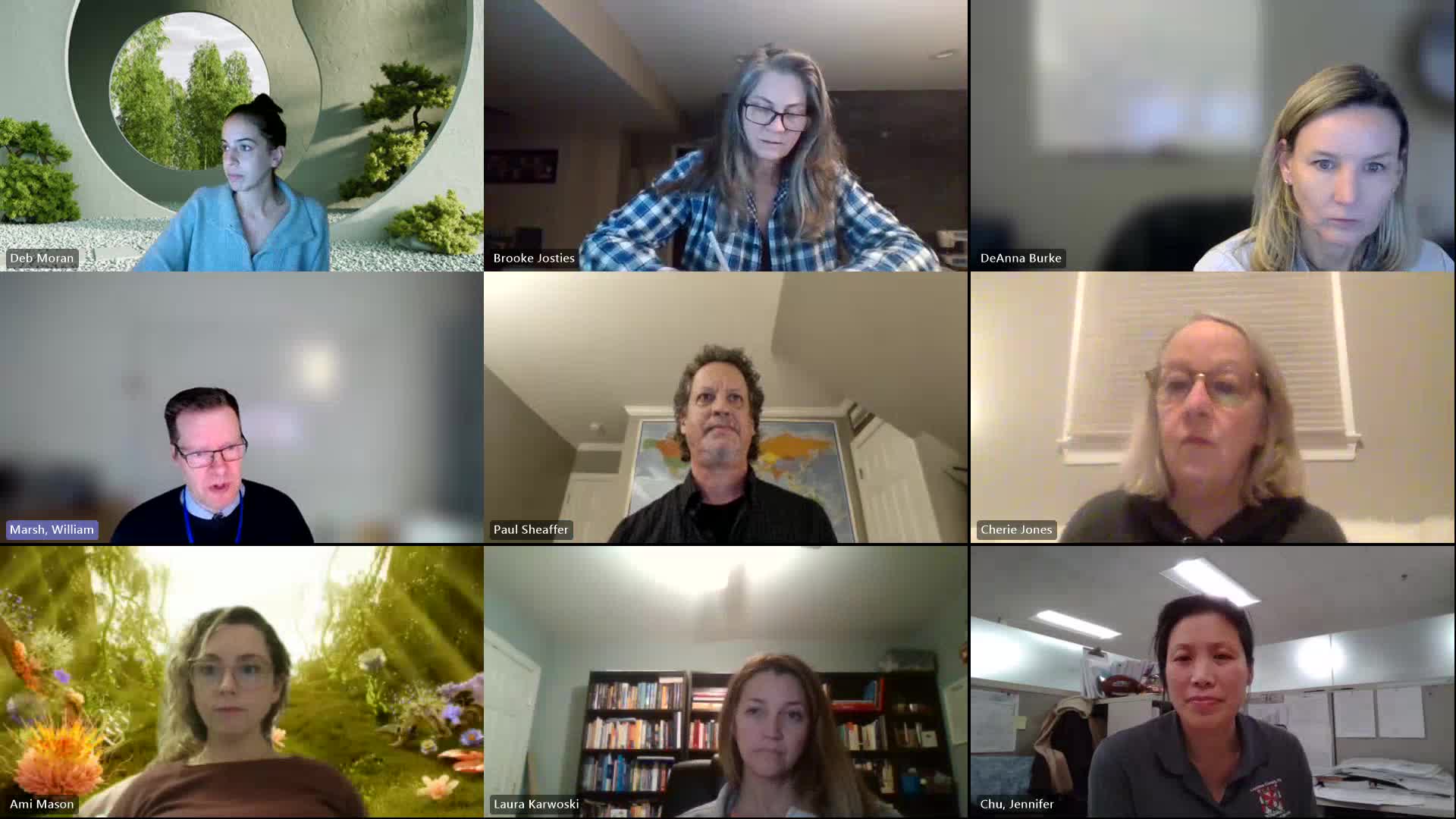
William (vice chair, Loudoun Environmental Commission) briefed the Town of Leesburg Environmental Advisory Commission on the Loudoun commission’s recent activities and areas for potential collaboration.
William said the Loudoun commission was formed in 2021 and has about 16 appointed members who advise the Board of Supervisors on environment, sustainability and energy. He described the group as a “sounding board” for the county General Services Department and outlined several projects the commission is advising on, including a natural‑resources strategy, a tree‑canopy study, watershed management plans for Bull Run, and an implementation study for a countywide energy strategy. He said Loudoun had hired a consultant for that implementation plan and had a separate NREL (National Renewable Energy Laboratory) agreement to measure greenhouse‑gas emissions from data centers; he said that contract had been signed with the Department of Energy and work was scoped but had not yet started.
Why it matters: The topics William described — measurement of large industrial emissions, landfill methane capture and a county energy implementation plan — could affect regional planning and give Leesburg officials and volunteer advisers signals about where county resources and incentives may be focused.
Key details: William described county interest in beneficially using landfill methane, a district energy pilot linking county capital facilities, and a recommendation from the commission to change Loudoun zoning to allow more community‑scale and utility‑scale solar (noting Loudoun’s zoning currently limits utility solar to mining or general industry zones). He also noted a state program — the Virginia Home Energy Rebates Program — that will distribute funds for residential energy upgrades through two rebate tracks (one general and one for lower‑income residents), each described in his presentation as roughly $90 million in federal funding passed through to the state; he said outreach to Loudoun residents should be ready when the state launches the program.
Commission response: Leesburg commissioners asked where the two groups could collaborate. Commissioners suggested joint outreach at Leesburg events (the county had proposed a presence at the Leesburg Flower and Garden Show) and discussed coordinating awards and public forums. Laura (commissioner, Jack Kent Cooke Foundation) and Paul Schaffer (chair, Leesburg Environmental Advisory Commission) asked for details about district energy pilots and data‑center partnerships; William said that pilot work was under the county’s capital planning offices and that some county commissioners and regional entities are actively pursuing data‑center partnerships.
Limits and next steps: William emphasized that many Loudoun efforts are advisory and will run through county General Services and the Board of Supervisors. He encouraged Leesburg advisers to share outreach priorities and said the Loudoun commission would invite Leesburg to a March county stakeholders roundtable and to the Loudoun public forum on May 22. He also shared that the county had recommended establishing an environmental leadership team within county government to coordinate departmental action on environmental issues.
Ending: Leesburg staff said they would follow up on potential joint outreach at the Flower and Garden Show and on shared public forums; William provided contact information for follow‑up and left commissioners with links to the Loudoun annual report and the county energy materials.