Get Full Government Meeting Transcripts, Videos, & Alerts Forever!
Get email alerts on the Special Education Costs topic
No spam. Unsubscribe anytime.
Special-education costs and nonpublic placements drive sharp increases in FY26 draft budget
Summary
District leaders told the board that nonpublic placements, contracted related-service providers and specialized transportation are major drivers of FY26 costs; one case alone illustrates why nonpublic tuition assistance can run well into six figures.
Cecil County Public Schools officials told the Board that special-education placements and contracted services are a major budget pressure for FY26, and they walked members through the line items that reflect those costs.
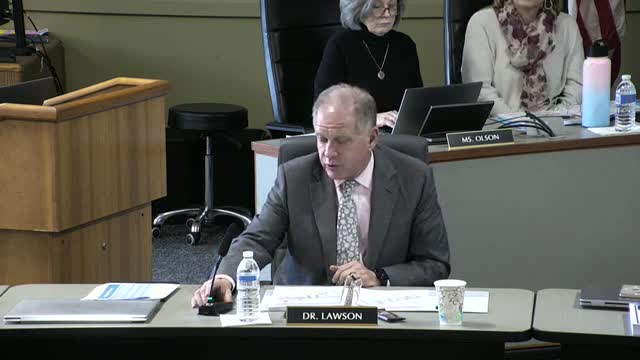
Doctor Miller, the district special-education lead, described a small number of students whose out-of-county or out-of-state nonpublic placements require high levels of staffing and nursing supports; staff gave the example of a single student with two paraprofessionals and a nurse whose annual placement cost runs substantially higher than typical tuition-assistance levels. Doctor Miller said, “we have 51 students in nonpublic settings with roughly $4,200,000 in services” and that some cases can cost in excess of $100,000 per student.
Staff explained the current nonpublic tuition-assistance reimbursement process: the district pays an initial amount (about $31,000 up front was described) and then the state reimburses a percentage; under current practice the state covers roughly 70% and the district covers 30% of excess costs for many placements. Officials said pending legislation could change that formula (staff described a hypothetical transition toward a 60/40 split and eventual 50/50 in later years), which would increase county and district obligations.
Related-service provider shortages and contracting: board members were told the district increasingly relies on contracted therapists (PTs, OTs, SLPs and others) because hiring full-time staff is difficult; contracted providers are typically more expensive per hour. Doctor Miller and staff explained the district converts some contractors to employees when possible but contractual terms (including multi-year agency agreements) can limit immediate transfers without buyouts and can increase FY26 contracted-services lines.
Transportation and other costs: student transportation for special education (including specialized routes) and placements are significant line items. Staff noted other increases for interpreters, virtual service facilitators and assistive-technology refreshes.
Why it matters: special-education costs are a large, legally required part of the district budget and are difficult to reduce without changing services to individual students. The board asked for clarifications on case counts and cost drivers and staff committed to provide more granular reports on placements, caseloads and the statutory reimbursement picture.
Ending: No formal action was taken. Staff will return with detail on placement counts, reimbursement percentages and the fiscal impact of possible state-level changes to nonpublic tuition assistance.