Get Full Government Meeting Transcripts, Videos, & Alerts Forever!
Get email alerts on the Local Governance topic
No spam. Unsubscribe anytime.
Lockhart council defeats bid to repeal policy limiting enforcement of Lockhart Freedom Act
Summary
After wide public comment and a lengthy legal explanation, the Lockhart City Council voted down a resolution that would have repealed an earlier policy statement and cleared the way for enforcing the voter-approved Lockhart Freedom Act; the council left enforcement questions to be resolved in court and by future policy actions.
The Lockhart City Council on Tuesday rejected a resolution that would have repealed a December policy statement and, in effect, allowed the city to move toward enforcing the Lockhart Freedom Act, a charter amendment approved by 68% of local voters in November.
Supporters of the amendment urged the council to uphold the will of the electorate; opponents warned of legal exposure and practical enforcement problems. After more than an hour of public comment and council discussion the motion to adopt Resolution 2025-O3 — which would have repealed Resolution 2024-37 — failed at a voice vote, leaving the council with its previous December position and pending court decisions as the primary source of legal clarity.
The stakes were plainly stated by speakers on both sides. Pat Stroka, a Lockhart resident, told the council, “If you do pass it this evening, I think that you should consider where your legal advice is gonna come from,” and urged council members to respect the voters who approved the Freedom Act. Samantha Benavides, director of the San Marcos campaign to decriminalize low-level possession of marijuana, said, “People continue to show up here tonight because they still believe…that there is power in their votes and in their voices.”
Opponents focused on enforcement details and legal exposure. David Peyton, who identified himself as a resident and said he was “against the Lockhart Freedom Act,” warned that the charter language would decriminalize “four ounces of marijuana” and said the measure could force police officers into conflicts between state law and city policy. “You would have either a suit from the state and a suit from an officer or a suit from those that want the Freedom Act enforced,” Peyton said.
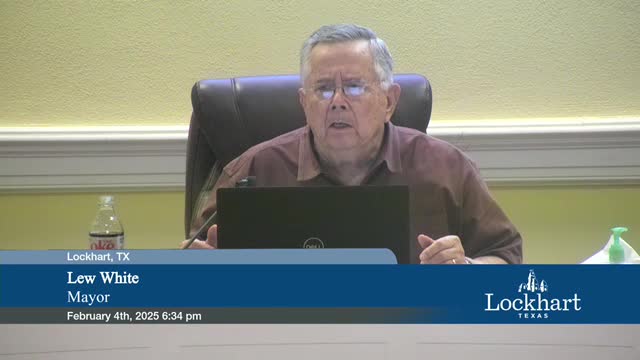
Council debate mixed legal explanation and policy preference. City Attorney Brad Bullock told council members that the charter amendment went into effect when the November vote was canvassed and that the December resolution was only a policy statement acknowledging state law. “The moment that the vote was canvassed, the charter amendment went into effect in the city,” Bullock said. He warned council members that some provisions of the Charter could conflict with state law and that enforcement choices could produce lawsuits that would be addressed case by case.
Council members expressed divided views. Councilman Larson moved to adopt Resolution 2025-O3; Councilman Castillo seconded the motion. After further discussion, Councilman Larson later rescinded an earlier motion and made a new motion; that motion was put to a voice vote and defeated. The council did not record a roll-call tally in the public record for that vote.
The resolution’s supporters pointed to specific charter provisions they said are implementable in ways that avoid conflict with state statutes, including a “safe harbor” clause and a severability clause. Council members who opposed immediate repeal cited state law and potential legal costs. City staff and the attorney noted pending lawsuits in other Texas cities as the courts weigh similar measures.
What happens next is uncertain. Council members and commenters said the outcome will likely depend on rulings in state appellate courts and, ultimately, higher courts. City staff and the police department will need to update internal policies if the council chooses to enforce the charter amendment in whole or in part. Bullock said several cases are pending that may provide guidance, but he cautioned that a definitive statewide answer could take months or longer.
For now, the council’s December policy statement remains in place and enforcement choices will be handled on a case-by-case basis as legal questions are resolved.
Ending: Council members and members of the public said they expect the issue to return for discussion as appellate decisions circulate and as practical enforcement questions arise. The council recessed for a work session after the vote and will monitor court developments before making further enforcement policy decisions.