Get Full Government Meeting Transcripts, Videos, & Alerts Forever!
Get email alerts on the Animal Control topic
No spam. Unsubscribe anytime.
Commission weighs trap–neuter–vaccinate–return and animal-control ordinance updates
Summary
Commissioners discussed launching a trap–neuter–vaccinate–return (TNVR) program for community cats, revising the city’s animal-control ordinance to align with state law, and reactivating an animal-advisory committee; staff were directed to prepare a workshop and draft ordinance revisions.
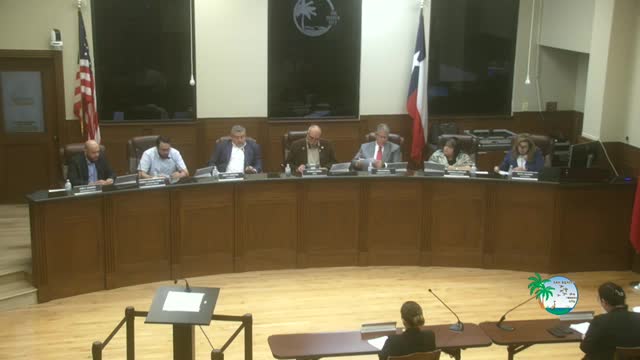
San Benito commissioners on Feb. 4 discussed feasibility and funding for a trap–neuter–vaccinate–return (TNVR) program targeting community cats and reviewed plans to align the city’s animal-control ordinance with Texas law.
Commissioner Deborah Morales, who introduced the TNVR discussion, said the approach — trap, neuter, vaccinate and release — is more humane and can reduce the population over time. Morales contrasted TNVR with the city’s current practice of impound-and-release, and she said staff would gather numbers from other organizations to detail costs.
“The best thing to do, the most humane thing to do is to trap, neuter, vaccinate, and release,” Morales said, urging alternatives to euthanasia and noting the reproductive rate of cats.
Commission discussion addressed funding, staffing and which department should oversee animal-control functions. Commissioners and staff noted the animal-control unit is currently under the police department and that moving program administration might be appropriate. Staff said the existing animal holding period is three days but that shelter staff have often held animals longer.
Mayor Pro Tem and other commissioners proposed a workshop to review budgetary implications, staffing needs and ordinance language. Diana Garza and other staff agreed to prepare materials for a workshop and to return draft ordinance language aligning the city code with state law; Morales asked staff to reactivate an animal-advisory committee that would include a commissioner, a veterinarian, an animal-control officer and community members.
No formal ordinance or budget change was adopted at the meeting; commissioners directed staff to prepare a workshop and draft ordinance revisions for a future meeting.