Get Full Government Meeting Transcripts, Videos, & Alerts Forever!
Get email alerts on the Territorial Act And Its topic
No spam. Unsubscribe anytime.
Presenters defend Georgias Territorial Act and joint transmission model as backbone of reliability and economic development
Summary
Representatives of Georgias electric membership cooperatives, MEAG Power, municipal utilities and Georgia Power told a legislative special committee that the Territorial Electric Service Act and the integrated transmission system have supported reliable, affordable power and economic development for decades.
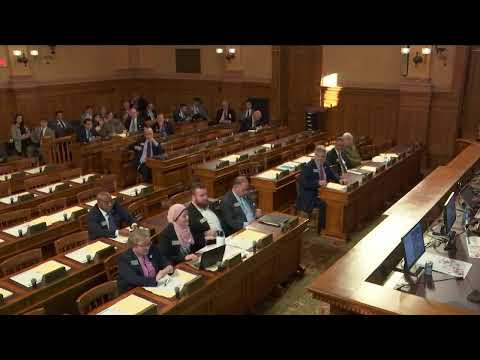
Representatives of Georgia’s electric membership cooperatives (EMCs), MEAG Power, Electric Cities of Georgia and Georgia Power told the Special Committee on Resource Management that the state’s Territorial Electric Service Act and the integrated transmission system (ITS) underpin reliability, customer choice for large industrial recruits, and long‑term system planning.
Chris Stevens, president and CEO of Calaway Defade EMC, told the committee that Georgia’s Territorial Act, passed in 1973 and created after extensive legislative review, divides the state into service territories and eliminated costly and unsafe duplication of distribution facilities. ‘‘The Territorial Act does three basic things,’’ Stevens said: it ensures ‘‘reliable, safe and affordable electricity,’’ avoids duplication of facilities and enables long‑term planning for providers serving defined territories.
How the system is organized: EMC speakers said Georgia has roughly 41 distribution electric cooperatives (serving roughly 4.4 million Georgians and most of the state’s land area), Oglethorpe Power for generation, Georgia Transmission and Georgia System Operations for transmission coordination, and Green Power EMC for renewables. Paul Warfel of MEAG Power and Daryl Ingram of Electric Cities of Georgia described 52 municipal utilities, 49 of which take wholesale supply through MEAG Power, and their role in local economic development and distribution service.
The integrated transmission system, speakers said, is a joint, state‑wide high‑voltage grid (tens of thousands of miles of transmission were cited) jointly planned and operated by Georgia Power, Georgia Transmission, MEAG/MEAG participants and others. That shared grid, presenters argued, removes redundancy, improves efficiency and enables customer choice for large loads to take service from another provider within the ITS without duplicative construction.
Key statutory and program details discussed at the hearing: - The Territorial Act created defined service territories (Stevens said the statute divided the state into 94 service territories). It preserves ‘‘pre‑1973 rights’’ that allow providers with pre‑existing lines to serve nearby customers in limited circumstances. - The Territorial Act includes a customer‑choice provision for large loads (roughly 900 kW or greater) designed to support economic development recruiting. - EMCs emphasized their not‑for‑profit governance model and service obligation to members; Georgia Power and municipal utility representatives described different regulatory models but agreed on coordination through the ITS.
Capital investment and planning: EMC and MEAG representatives said planning and predictable territories enable multi‑year investment. Oglethorpe Power’s current plan includes two new generation assets (Talbot and Monroe counties) with a combined investment of about $2.1 billion, presenters said. Speakers also pointed to the ITS and joint planning as critical for economic development and said Georgia’s average residential electricity price (cited by speakers) remains below the national average.
Storm response and infrastructure age: Committee members asked how utilities coordinate storm restoration and whether infrastructure age is a concern given state growth. Presenters described mutual‑aid agreements across utilities and national mutual‑aid networks that stage crews from other states and that Georgia utilities routinely inspect poles and prioritize investments in circuits with lower reliability. They said the territorial model helps prioritize investments and protect rate bases that finance upgrades.
Why this matters: presenters argued that the combination of defined territories, joint transmission planning and a mix of municipal, cooperative and investor‑owned utilities has helped Georgia achieve comparatively low rates, strong reliability during past severe winter storms and a favorable climate for business recruitment. They urged lawmakers to recognize the benefits of the territorial structure while the special committee examines long‑term resource management.
The presenters and committee deferred deep technical follow‑ups to staff working groups and hearings. No legislative action or formal vote occurred during the session.