Get Full Government Meeting Transcripts, Videos, & Alerts Forever!
Get email alerts on the Land Use topic
No spam. Unsubscribe anytime.
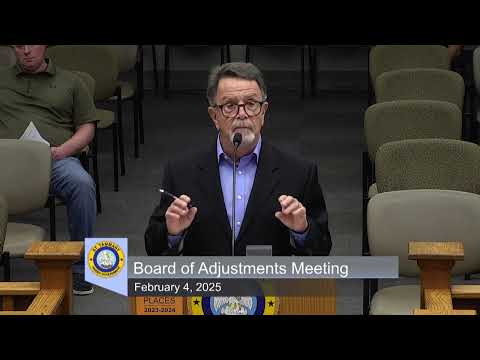
St. Tammany BOA approves reduced Bayou Vincent buffer for Leon Lowe commercial excavation
Summary
The St. Tammany Parish Board of Adjustments on Feb. 4 approved a variance allowing a commercial excavation near Bayou Vincent to be located closer than the 500-foot waterway buffer in the Unified Development Code, subject to site-plan conditions and preservation buffers.
The St. Tammany Parish Board of Adjustments on Feb. 4 approved a variance allowing Leon Lowe and Sons Partnership to locate a commercial excavation and associated pond closer to Bayou Vincent than the 500-foot waterway buffer in the parish Unified Development Code, provided the applicant submits a revised site plan and adheres to specified no-cut buffers and grading requirements.
The board’s approval covers a commercial excavation proposed on an approximately 83‑acre parcel along the T.J. Smith Senior Memorial Expressway in the Pearl River area. The applicant sought to reduce the required waterway setback from 500 feet to about 100 feet to accommodate a roughly 30‑acre excavation and an associated pond; the board approved the request with conditions tied to the drawing and additional plan details, staff said.
Board members and the applicant spent the meeting addressing why a 500‑foot buffer was listed in the code and the nature of Bayou Vincent. In describing the project, the applicant said the development would be a commercial sand-extraction operation and noted the site is surrounded by industrial uses. “I intend is to develop a commercial excavation operation project on this site in order to extract sand,” the applicant said during the hearing.
The applicant told the board he obtained a written response from Brad Laboy of the U.S. Army Corps of Engineers indicating the corps had no additional concerns after its jurisdictional determination and that the waterway is non‑navigable; the applicant quoted the response to the board as saying, “you can as long as you stay out of jurisdiction on wetlands and you have the full approval to go ahead and run piping into that waterway. It’s, it’s non navigable. You’re welcome to do it.” The board did not attribute that statement directly to the Corps; it was presented in the meeting as the applicant’s summary of the Corps’ written response.
Board members pressed on drainage and long‑term management. A member noted nearby regional retention ponds and state/regulatory oversight: the applicant and other speakers said the site would be monitored and pumped as required by DEQ and that a nearby, previously permitted excavation was later used as a regional detention pond. Staff also noted the property had been the subject of earlier, related actions: the parcel was rezoned to I-2 by the zoning commission earlier and a site-review plan had been submitted in November.
The board’s approval included conditions described in the staff report and reiterated during the motion: the variance approval is tied to the submitted drawing and requires the applicant to provide a revised site plan showing the exact driveway location and dimensions, the no‑cut buffer, grading and maneuvering area around the pond, circulation and stockpile areas, and other intended uses. Staff had recommended submission of those details for final approval and inspection.
Discussion vs. decision: the meeting record shows extended discussion about whether Bayou Vincent is a mapped blue‑line, navigable waterway or effectively a drainage ditch and whether the 500‑foot provision was an anomaly in the code. The board approved the variance as a formal action; staff was directed to receive and review the required revised plans and enforce the no‑cut and grading conditions spelled out in the approval.
The board meeting was attended by four members; the chair reminded applicants at the start that with only four members present certain approvals require unanimity. The motion to approve the variance carried on the board’s recorded vote.
What’s next: the applicant must submit the revised, stamped site plan and the staff‑requested exhibits before work proceeds; the board’s action does not itself authorize construction permits beyond compliance with other parish and state regulatory approvals, including any DEQ or Corps requirements.