Get Full Government Meeting Transcripts, Videos, & Alerts Forever!
Get email alerts on the Zoning Humanitarian Services topic
No spam. Unsubscribe anytime.
Winchester planning staff proposes zoning definition and limits for humanitarian service facilities
Summary
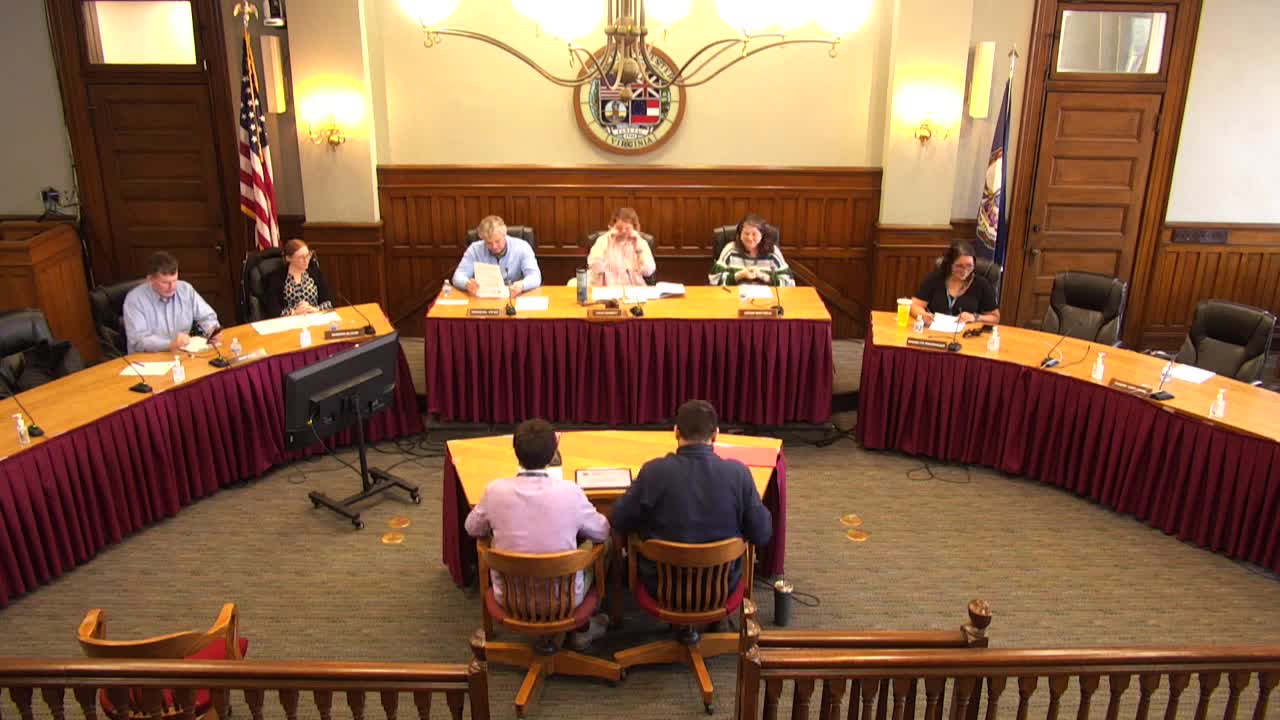
Winchester planning staff presented a city-sponsored text amendment, TA-2,547, proposing to amend the City of Winchester zoning ordinance to define “humanitarian service facilities,” set performance standards for them, specify which zoning districts may host them and repeal the existing land-use category for “philanthropic and charitable institutions.” The commission discussed initiating the resolution at a forthcoming meeting and scheduling public hearings.
Winchester planning staff presented a city-sponsored text amendment, TA-2,547, proposing to amend the City of Winchester zoning ordinance to define “humanitarian service facilities,” set performance standards for them, specify which zoning districts may host them and repeal the existing land-use category for “philanthropic and charitable institutions.” The commission discussed initiating the resolution at a forthcoming meeting and scheduling public hearings.
The proposal would create a new land-use definition — renamed from “humanitarian shelter” to “humanitarian service facility” — to capture temporary housing plus coordinated services such as benefits assistance, health help and education. Planning staff said the amendment has four principal objectives: define the use; list permitted and prohibited activities under that definition; identify appropriate zoning districts; and repeal the broader, older “philanthropic and charitable institution” label.
Planning staff told the commission the amendment would make humanitarian service facilities allowable only by conditional use permit in the identified districts rather than as a by-right use. Staff said the draft would add industrial M-1 and the medical center (MC) and health-services (HS) districts to the list of zones where the use could be considered, and that all approvals would require a conditional use process. "This is a city-sponsored text amendment," the planning staff member said. "We changed the land use name right from ‘humanitarian shelter’ to ‘humanitarian service facility’ because it's more than just a shelter."
Staff explained how the change would affect existing operators. Facilities now operating under the older, undefined philanthropic label would be treated as legal nonconforming uses and could continue under the current ordinance unless they moved, expanded their footprint or added residential components. "They can continue operating indefinitely as long as the use doesn't discontinue for a period of 2 years or longer," the planning staff member said, adding that the nonconformity provisions are in Article 17 of the zoning ordinance.
Commissioners and other participants raised several concerns and questions during the work session. Some commissioners praised the move to require conditional use permits and supported removing B-1 and RB-1 from the list of districts in the new draft. Other speakers urged caution about including the HS (old hospital) district because it sits amid an established residential area; one participant said they would be "strongly opposed to HS being included." Several commissioners expressed concern about potential overconcentration of unhoused services downtown and emphasized access to transit and job opportunities as factors in siting decisions.
Staff described tradeoffs behind the proposed district map: the draft removes much of downtown from eligible districts but would allow larger, collaborative campuses in other parts of the city where industrial or medical zoning could accommodate wraparound services and access to employment. Staff also said that expanding the list to include some industrial and medical zones could bring facilities closer to work opportunities for clients and to improved transport options such as the city's recent on-demand mobility service, WinReady.
The commission discussed process and next steps. Staff said the present session was a high-level review and that the formal initiation of the resolution was expected at the commission's next regular meeting in two weeks. Staff said the item would return with more detailed drafts showing the precise code sections affected, a proposed repeal list for the existing “philanthropic and charitable institutions” references, and a briefing on nonconforming-use rules. The planning staff member indicated they would provide a written summary by email and that a public hearing would be scheduled after the commission completes the drafting and initiation steps.
Background: a prior 2021 text amendment on similar topics was tabled by city council and has not been acted on since. Staff said the current draft is largely similar to that earlier effort but updates the land-use name and proposes new performance standards and a more limited map of eligible districts.
The Planning Commission did not take a formal vote on initiation during the work session; members were asked if they wished to initiate the item at the next meeting and staff confirmed the initiation would be considered at that time. Staff also agreed to provide commissioners with the draft ordinance language and a summary of which articles and sections of the zoning code would be altered or repealed.
Next steps: the commission will revisit TA-2,547 at its next regular meeting for possible initiation, follow-up questions and to set a public hearing date if the commission chooses to proceed.