Get Full Government Meeting Transcripts, Videos, & Alerts Forever!
Get email alerts on the School Transportation topic
No spam. Unsubscribe anytime.
Cleveland City Schools reports bus fleet, driver gains and launches stop‑sign camera pilot
Summary
Transportation Director Taylor told the school board the district has increased drivers and buses, uses GPS and dash cams, averages about 2,300 daily riders, and is piloting a camera program to cite motorists who run school bus stop signs.
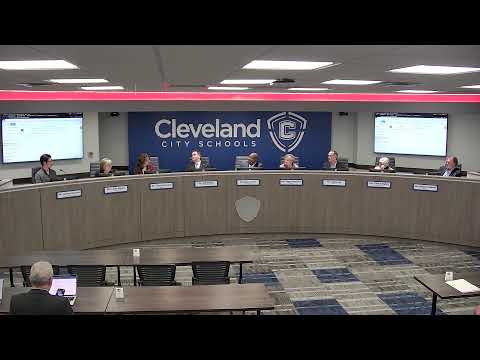
Transportation Director Taylor told the Cleveland City Schools Board of Education on Monday evening that the district’s transportation program has expanded its fleet and workforce, improved vehicle monitoring and routing, and begun a pilot program to record motorists who fail to stop for school buses.
Taylor said the district currently operates 35 regular education buses (with one additional bus expected in March), nine special‑education buses — for a total of 45 school buses in service — and three vans that are being used to transport certain cross‑zone homeless and TAB program students. He said all buses are equipped with GPS and interior cameras and that newer vehicles are being fitted with dash cams.
Taylor said the district’s driver workforce has increased after the board raised part‑time wages last year: the system now employs 37 bus drivers, has four drivers in training, three van drivers and five bus monitors. He said drivers now cover 33 routes, with most routes combining a high‑school or middle‑school run with an elementary run, and one remaining split run that staff expect to eliminate within about a month to six weeks.
Why it matters: Higher driver staffing and more routes reduce overcrowding and early/late schedule burdens on school staff, Taylor said. He reported the district assigns 3,266 students to a transportation plan and averages about 2,300 daily riders. The district transports about 73 special‑education students to their front doors each day and carries 10–15 homeless/TAB students across zones.
Taylor said the district drives about 2,600 miles per school day. Since August 2023 the system has recorded eight bus accidents; three were judged preventable and none resulted in reportable student injuries, he said.
Taylor also described a pilot with a private vendor called Bus Patrol that mounts cameras on buses to document motorists who fail to stop for a school bus’ extended stop sign. The district tested the system on five buses between Jan. 7 and Jan. 29 and recorded stops at 294 unique locations and an estimated 154 violations during that period. Taylor cautioned the five buses were chosen because they had higher rates of stop‑sign incidents and said those pilot numbers likely overstate the systemwide rate; the vendor reported the five buses were about six times higher than the national average for violations.
If the board pursues the program, Taylor said citations require local law‑enforcement review and the city chief’s cooperation; the district would present a formal request to the city council before citations could be issued. Taylor said the program costs nothing for the pilot and that staff will return with more video and fuller statistics before asking the board to approve broader deployment.
Taylor said routing and parent communications have improved through the Transact routing system linked to PowerSchool: students are assigned routes within a day of registration, parents receive automated alerts about late buses, and staff can target notices to a specific run or stop. That system, he said, allowed the district to notify parents during recent cold weather when buses were running late so students could avoid waiting outdoors.
Board Chair Nate Tucker thanked Taylor for the update; no formal action was requested.