Get Full Government Meeting Transcripts, Videos, & Alerts Forever!
Get email alerts on the Homelessness topic
No spam. Unsubscribe anytime.
Council approves two pilot micro-shelter programs and operations funding for Faith Chapel and Urban Alchemy
Summary
The Birmingham City Council approved contracts to fund two pilot micro-shelter projects and related wraparound services — one at Faith Chapel and one to be operated by Urban Alchemy — as part of a broader 'Home for All' strategy to expand emergency and transitional housing services.
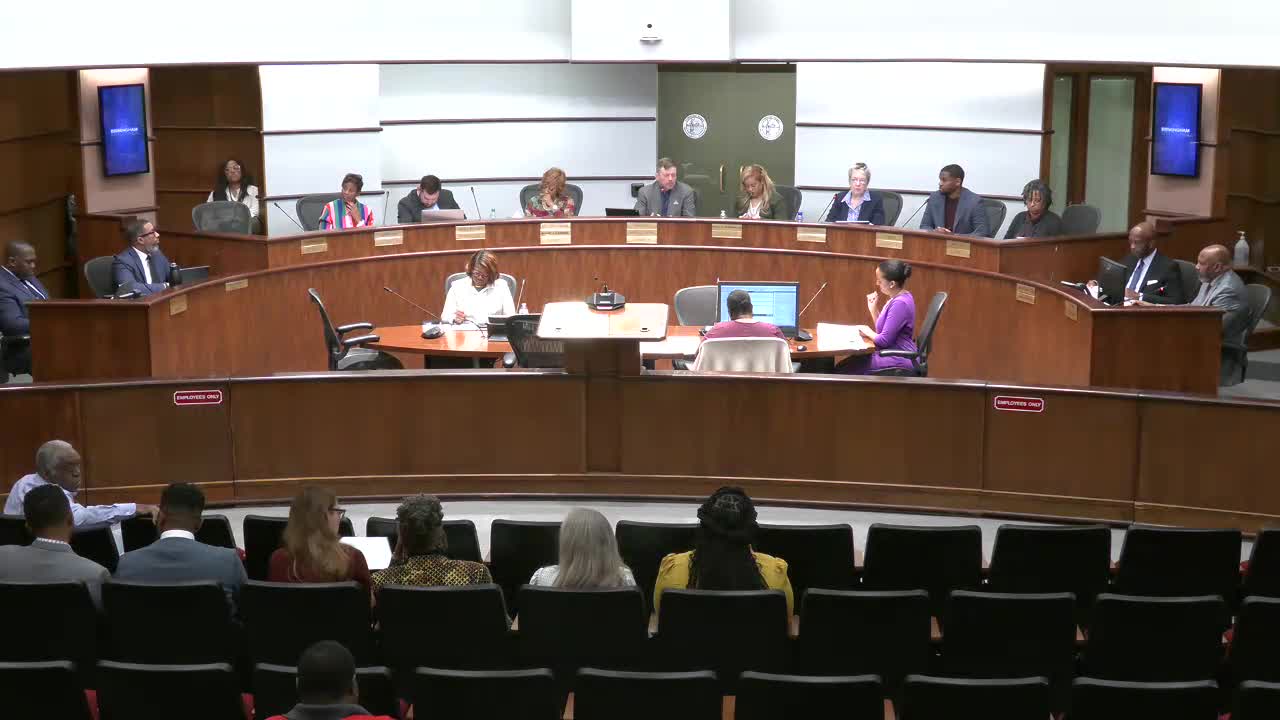
Birmingham City Council on Feb. 4 approved two separate contracts to fund pilot micro-shelter programs and one year of on-site wraparound services aimed at people experiencing homelessness.
The Faith Chapel contract authorizes up to $1,196,510 to operate a low-barrier micro-shelter campus serving up to 15 residents at a time with case management, counseling, meal support, laundry access and connections to partners. The City also approved a separate agreement with Urban Alchemy, not to exceed $1,541,293, to stand up a second micro-shelter site and provide operations and one-on-one “concierge” case management to residents.
City staff said the two pilots are complementary pieces of a wider homelessness strategy that also includes the HEART community-based public safety team, pallet/micro shelters previously approved by the council and planned use of HOME-ARP funds for longer-term supportive housing.
Megan Venable Thomas, director of Community Development, told the council the Faith Chapel site is identified and can move to minimal construction and set up this spring, with a target to open in summer. Urban Alchemy is a newer provider in Birmingham and the city will assist with site identification; its timeline for opening is later in the year, city staff said.
Thomas and staff described the pilots as low-barrier, trauma-informed and intended to build a pipeline: outreach teams would connect unsheltered residents to the micro-shelters, where individualized casework would prepare people to move to more permanent housing when ready. Faith Chapel’s program budget includes staff wages, on-site services, partnerships with local social-service providers and facility operations. Faith Chapel staff described an on-site laundry area and a network of established partner organizations that will deliver food, workforce and clinical supports.
Council discussion covered program design and conditions of stay. Council members noted the pilots are intended to accept people with active substance-use issues but to maintain a drug-and-alcohol-free policy on shelter premises; Faith Chapel and Urban Alchemy staff described the projects as “low demand, low barrier,” meaning residents are not turned away for current substance-use disorders and are offered wraparound supports. Council members also asked about the program budget and the Urban Alchemy per-night estimate; city staff clarified the $94 per-person-per-night figure presented in budget notes is part of the overall operating-cost estimate for Urban Alchemy and is included within that provider’s total budget request rather than an additional charge to the city.
The council took separate final votes on the two contracts. The Faith Chapel contract passed with council approval and one recorded abstention noted in the public record. The Urban Alchemy contract passed after a brief executive-session discussion and a subsequent public vote in favor.
The city’s community development director said the pilots will be monitored and the council will be presented with site-specific development proposals prior to construction, and that additional federal HOME-ARP funds will be used later to support permanent supportive housing development.
The council approved the contracts as part of the City’s larger “Home for All” homelessness effort and the city expects to report back with operational outcomes and any recommended expansion or changes to the pilots.