Get Full Government Meeting Transcripts, Videos, & Alerts Forever!
Get email alerts on the Juvenile Detention topic
No spam. Unsubscribe anytime.
Kaufman County judges and law enforcement back 32‑bed juvenile detention center; commissioners call May bond election
Summary
Kaufman County Commissioners moved to place a bond election on the May ballot to build a 32‑bed juvenile detention center and juvenile alternative education program, after judges, police chiefs and school leaders described bed shortages, long transport distances and public‑safety concerns.
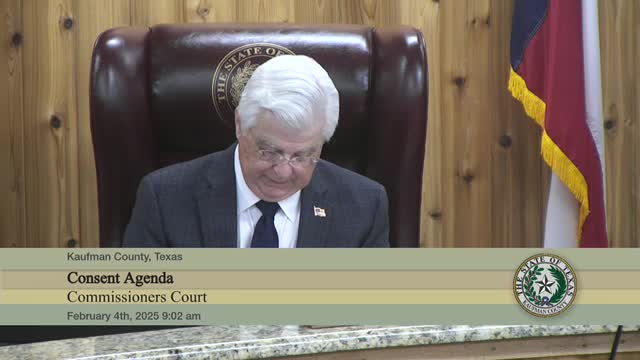
Kaufman County Commissioners on Thursday approved an order calling for a bond election in May to fund construction of a 32‑bed juvenile detention center and an on‑site juvenile alternative education program.
County officials said a targeted construction budget of $40 million will cap the project. County consultants reported a program for a 32‑bed facility with supporting intake, medical, secure and educational space and indoor and outdoor recreation areas could be delivered within that cap, with a current design footprint of about 34,000 square feet.
The consultants said estimated construction costs for the detention building, allowances for subsurface/foundation work, and other project contingencies come to just over $32 million in today’s dollars. Adding soft costs and owner contingencies pushes the total to about $37.5 million; when escalated to a 2026 construction start the county’s estimate rises to roughly $39.34 million—still within the $40 million cap, the consultant said. County staff estimated annual operating costs, once fully staffed, could be on the order of $3 million a year.
Why it matters: Judges, chiefs and school officials told the court the county currently lacks local juvenile detention capacity, forcing long transports that take officers off patrol and sometimes result in juveniles’ release when no bed is available.
“My court handles all the juvenile crime in our county,” Judge Russell said, citing a rise in both volume and severity of juvenile offenses over the last eight years and saying limited bed space reduces short‑term consequences and accountability for repeat offenders. “It comes down to the safety of our community, the safety of our officers, the safety of our children.”
Forney Police Department leadership described operational impacts. “In 2024, we had an occasion to have 30 cases against juveniles. Sixteen of them were released to their guardians because we could not either find them a bed or driving,” Chief White said, adding the department averaged long round‑trip transports when beds were found. The department’s materials, distributed to the court, reported average round‑trip mileage of about 277 miles for transports in 2024 and gave a rough annual cost estimate; the chief characterized the figure as a preliminary estimate.
Law enforcement officials said extended transports remove officers from local patrols, increase overtime costs and raise liability concerns during long trips. Chief White and other police chiefs said transporting juveniles to distant counties also makes family contact and school‑based rehabilitative services more difficult.
School and juvenile‑justice stakeholders said a local facility would also allow an on‑site juvenile alternative education program (JJAP) so students could continue to receive instruction and special education services while detained. “We want our students who are going to be our community members ... to get an education,” Angela Wiggins, executive director of leadership development for Crandall ISD, told the court, urging voter support.
Project status and next steps: County staff and the project committee voted last month to recommend asking voters to authorize the bond. Commissioners called the bond election, and the court approved the order and related resolution during the meeting; commissioners said they would complete and sign the related paperwork before leaving the courthouse. If approved by voters, county staff said construction is planned for 2026.
What the county said about scope and cost: An architect who participated remotely said the program preserves four 8‑bed housing units, secure education and an alternative‑education wing, and includes allowances for geotechnical foundation work and a 5% owner contingency. The consultant cautioned that professional fees and foundation allowances could change once geotechnical studies are complete. County staff reiterated the board set the $40 million project cap tied to the bond.
Voices at the hearing: Testimony came from Judge Russell (Judge, Kaufman County Court at Law), multiple municipal police chiefs and sheriff’s representatives, county juvenile committee members, school district leaders (including Crandall ISD), the project architect and county commissioners who sponsored the bond request.
The court’s action: Commissioners approved an order calling for the bond election; a motion to approve was made and seconded and the court voted to place the question on the ballot. The court also directed staff to complete the associated resolution and paperwork.
Provenance: The court moved the juvenile detention discussion up on the agenda and the topic was discussed throughout the meeting, beginning when the county chair said items 6 and 17 would be moved up for the attendees. The committee’s facility and cost presentation began with the county’s architect (remarks beginning with a program description and cost estimate) and continued through public testimony by juvenile court and law enforcement officials. The formal vote calling the bond election occurred later in the meeting and was recorded as approved.
Ending: The bond election now goes to Kaufman County voters in May; if the measure passes, county staff expect to move ahead with final design and a 2026 construction schedule.